
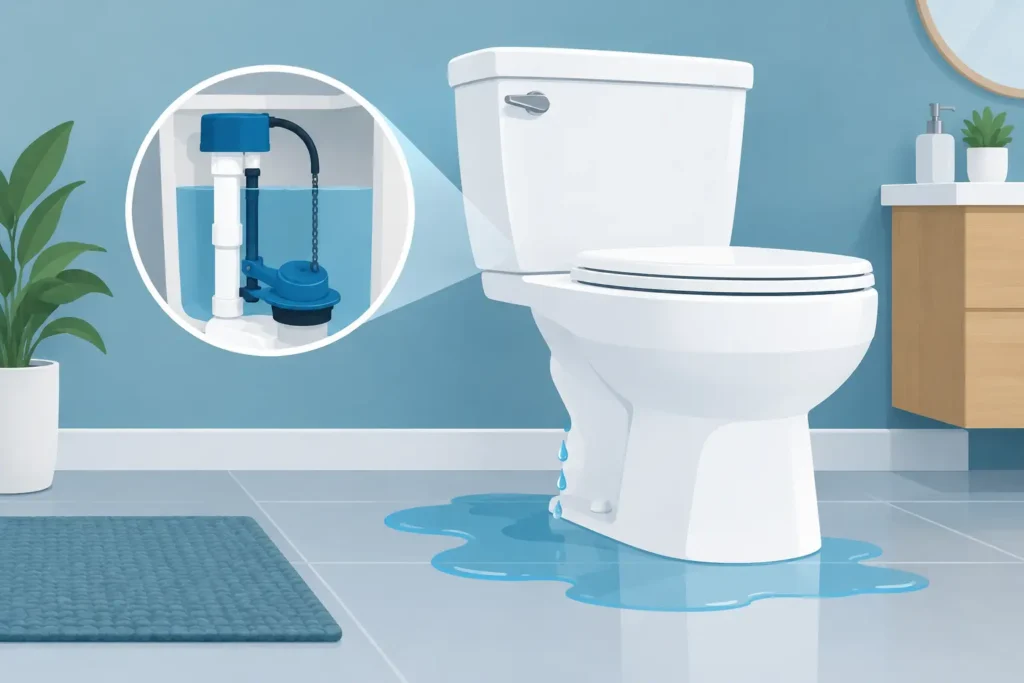
A toilet can leak for weeks without making a dramatic mess. You may first notice a soft spot in the bathroom floor, a musty smell near the base, a toilet that refills by itself, or a water bill that suddenly makes no sense. That is why toilets leak deserves a closer look: the location of the water usually points directly to the failed part.
Some toilet leaks are a five-minute fix. Others can damage subflooring, seep into a slab, or signal a drain problem that needs professional equipment. The goal is not to guess. Find where the water is starting, stop the damage, and repair the actual cause.
Why Toilets Leak: Start With Where the Water Appears
Before tightening bolts or buying parts, dry the toilet and surrounding floor completely. Flush once, then watch closely. Also check the toilet after it has sat unused for 10 to 15 minutes. A leak during a flush is different from water that appears between flushes.
Water on the floor behind the bowl often comes from the supply connection, shutoff valve, tank bolts, or the tank-to-bowl gasket. Water at the front or sides of the base may be condensation, splashing, a cracked bowl, or water that traveled from the back. Water that only appears at the base when you flush is the bigger warning sign. That commonly points to a failed wax ring or a problem with the toilet flange below the bowl.
Do not assume every puddle is clean water. A failed seal at the base can allow wastewater to escape during flushing. Keep children and pets away from the area, clean up carefully, and avoid repeated flushing until the source is clear.
A Running Toilet Is Leaking Water Too
Not every toilet leak reaches the floor. A toilet that fills on its own, hisses after a flush, or sends a faint ripple across the bowl is usually leaking water from the tank into the bowl. It can waste hundreds of gallons before anyone notices.
The usual culprit is the flapper at the bottom of the tank. Rubber flappers wear out, warp, collect mineral buildup, or fail to sit flat on the flush valve seat. Tampa Bay’s hard water can speed up that wear. A chain that is too tight, too loose, or tangled can also keep the flapper from sealing.
The fill valve may be the problem if water rises above the overflow tube. In that case, the tank is not holding too much water because of a drain issue. The valve is simply not shutting off when it should. Adjusting or replacing it is often straightforward, but old components can be brittle. Shut off the water before working inside the tank.
A simple test helps: add a few drops of food coloring to the tank and do not flush. If color appears in the bowl within 15 to 20 minutes, water is slipping past the flapper or flush valve seal.
Leaks Between the Tank and Bowl
Two-piece toilets have several places where clean water can escape. Tank bolts pass through the bottom of the tank, and a large gasket seals the tank to the bowl. When those rubber parts age, water may run down the outside of the bowl each time the toilet is flushed.
Look under the tank while someone flushes. If water forms around a bolt or drips from the center connection, the bolts, washers, or tank-to-bowl gasket may need replacement. Avoid overtightening anything made of porcelain. A cracked tank or bowl is not a repair you want to gamble with, especially if the fixture is older or already shows hairline cracks.
Sometimes the tank appears to leak when it is actually sweating. In humid Florida bathrooms, cold tank water can create heavy condensation on the outside of the porcelain. If the tank is damp all over rather than wet at one fitting, condensation is possible. Better bathroom ventilation, insulation, or a tempering solution may help. Still, rule out a true leak first.
Water at the Toilet Base Usually Means a Seal Problem
The wax ring sits between the toilet and the drain opening in the floor. It creates the seal that sends wastewater into the drain instead of onto the floor. Wax does not typically fail for no reason. The toilet may have shifted, the mounting bolts may be loose, the flange may be broken, or the floor beneath the toilet may have deteriorated.
A toilet that rocks even slightly is a problem. Every movement can weaken the seal. Do not keep wedging it with random material or caulking around the entire base to hide the leak. The toilet needs to be lifted, the old seal removed, and the flange and floor checked before it is reset correctly.
In homes with slab foundations, a leak at the base can still damage flooring, baseboards, and the bathroom subfloor or underlayment. In older homes, long-term leakage can rot wood around the flange. The repair may be more involved than replacing a wax ring if the flange is corroded, sits too low after new flooring, or no longer has solid material to anchor into.
Supply Line and Shutoff Valve Leaks
The small water line running from the wall or floor to the bottom of the toilet tank is another common source. A loose connection, worn supply line, corroded shutoff valve, or damaged compression fitting can leave water behind the toilet.
Touch the line and valve with a dry paper towel rather than relying on what you can see. Slow drips can hide along the fitting and show up only as a damp towel. If the valve will not turn, do not force it. Old shutoff valves can break, and a small toilet repair can become an active water emergency fast.
A braided supply line that looks rusty, bulged, kinked, or heavily corroded should be replaced. These parts are inexpensive compared with the damage from a failed line. If water is spraying or the valve will not shut off, turn off the home’s main water supply and call for help right away.
Cracks, Clogs, and Problems That Look Like Toilet Leaks
A hairline crack in porcelain can weep slowly. Check the tank and bowl for visible cracks, especially around bolt holes and near the base. A cracked toilet should be replaced, not patched. Repairs may hold briefly, but porcelain under pressure and daily use is not the place for a temporary promise.
A partial drain blockage can create another confusing situation. If the toilet backs up, overflows, or bubbles when nearby fixtures drain, the issue may be farther down the line. In Tampa Bay, root intrusion, aging drain piping, and buildup in older plumbing systems can restrict flow. Repeated plunging may clear a minor toilet clog, but it will not fix a damaged or obstructed sewer line.
If the bathroom has multiple plumbing issues at once – a slow tub, gurgling toilet, sewage odor, or water around the base – a camera inspection can remove the guesswork. It shows what is happening inside the drain instead of treating symptoms over and over.
What You Can Do Before Calling a Plumber
If the leak is active, shut off the toilet’s local valve if it turns easily. For a leak from the tank into the bowl, lift the tank lid and raise the float to stop the fill valve temporarily. Put down towels, take a few photos of where the water appears, and avoid flushing until you know whether wastewater is escaping at the base.
You can safely check for a loose supply connection, a failing flapper, or obvious condensation. But lifting a toilet, replacing a wax ring, repairing a flange, or dealing with a corroded valve is different. A toilet is heavy, porcelain cracks easily, and the hidden condition of the floor matters.
H.I.P. Home Service & Drain handles residential toilet leaks across Wesley Chapel and the greater Tampa Bay area with upfront pricing before work begins. No call-center runaround, no subcontractor sent to figure it out later. The right repair starts with finding the source, checking the parts beneath the water, and making sure the toilet is solid when the job is done.
If the floor is wet, the toilet rocks, or the bowl keeps refilling, do not wait for a bigger puddle to make the decision for you. A quick inspection now can protect the bathroom you already paid for.