
A wet bath mat is one thing. Water showing up on the ceiling below the bathroom, along a baseboard, or in a room that has nothing to do with your shower is another. If you are asking, why is my shower leaking, the answer may be simple surface damage – or it may be water escaping behind the wall every time someone turns on the valve.
The key is finding where the water starts, not just where it finally appears. Water travels. A stain on the first-floor ceiling can come from a failed shower drain, a loose valve connection, cracked grout, or a door seal that lets water out during every shower. In Tampa Bay homes, moisture can do real damage fast, especially when a small leak keeps feeding drywall, framing, and flooring.
First, Stop the Water From Making Things Worse
If water is actively running from a wall, ceiling, or light fixture, stop using the shower. Shut off the home’s main water supply if the leak continues after the shower valve is off. Do not touch a wet light fixture or try to open a ceiling around electrical wiring.
If the leak happens only while someone is showering, dry up standing water, run an exhaust fan, and keep the area as dry as possible until the cause is identified. Take photos of stains, warped trim, or damaged flooring. That documentation helps show whether the problem is growing and can be useful for an insurance claim.
A slow leak may not feel urgent. It is still worth acting on. Mold growth, soft drywall, and damaged subflooring are far more expensive than catching a failed seal or pipe connection early.
Why Is My Shower Leaking? Start With When It Leaks
The timing gives you a strong clue about what is failing.
It leaks only when the shower is running
This often points to a problem with the showerhead arm, valve, supply piping, tub spout, or the waterproofing around the shower enclosure. A leak behind the handle trim plate can be especially misleading. Water may drip inside the wall only while the valve is open, then show up well away from the fixture.
Try this simple check: plug the drain or cover it, then run the shower without aiming water at the walls, door, or curtain. If water still appears outside the shower or below it, the issue is more likely in the valve, supply piping, or drain connection than the enclosure itself.
It leaks only when water hits the walls or door
Worn caulk, cracked grout, damaged tile, and failed shower-door sweeps are common culprits. These are surface issues, but they should not be brushed off. Grout is not waterproof by itself. The waterproof layer behind the tile is what protects the wall, and once water gets behind a failed system, it can spread quietly.
A door that does not close squarely or a shower curtain that sits outside the tub can also send a surprising amount of water onto the bathroom floor. If the floor is wet after every shower but there is no ceiling stain below, start by checking the door sweep, threshold, curtain placement, and caulk at the tub or shower pan.
It leaks when the shower is off
Water appearing when nobody is using the shower is a bigger warning sign. It could be a pressurized water line leaking behind the wall, a failed valve cartridge allowing water through, or a separate plumbing leak traveling into the bathroom area.
Watch your water meter with all fixtures and appliances off. If the meter continues moving, you may have an active plumbing leak. A sudden higher water bill is another reason not to wait. Older Tampa Bay homes can develop pinhole leaks in aging pipes, and those leaks rarely improve on their own.
It leaks only after the shower drains
If the shower holds water fine but leaks as it drains, suspect the drain assembly, trap, or drain line below the floor. In a second-story bathroom, that often means a stain or drip on the ceiling below. In a slab-foundation home, you may notice damp flooring, musty odors, or unexplained moisture around nearby walls instead.
A plumber can test the shower pan and drain separately. That matters because tearing out tile before confirming the source can turn a targeted plumbing repair into an unnecessary remodel.
The Most Common Shower Leak Sources
A shower has several places where water can escape, and they do not all require the same fix.
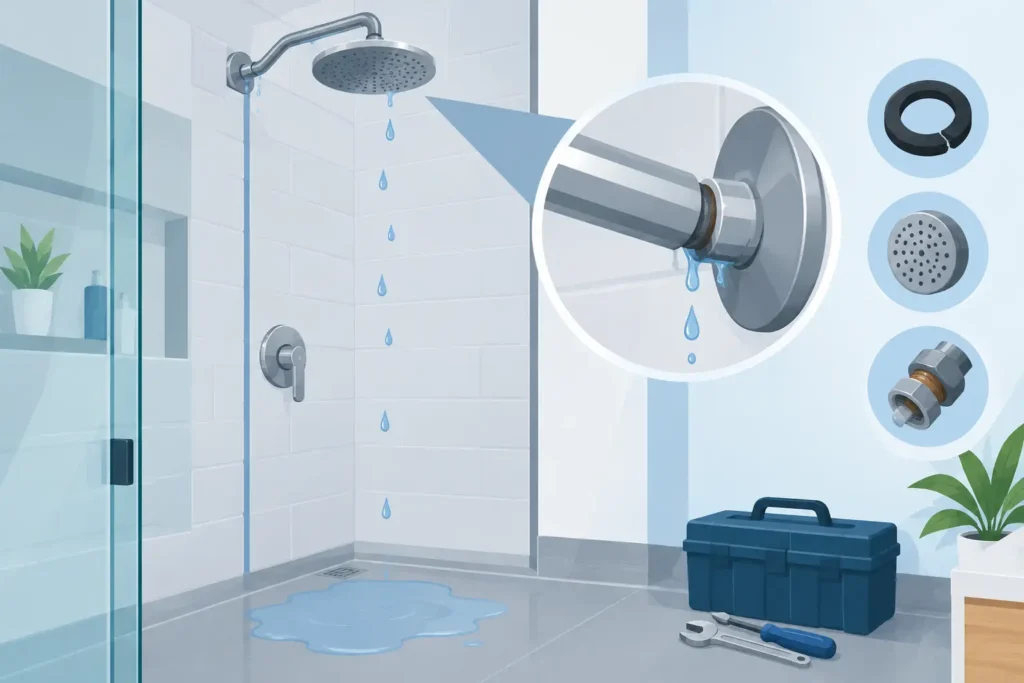
A loose showerhead or failing shower arm connection usually leaks near the top of the wall. You may see water dribbling from the arm, rust around the connection, or moisture running down the outside of the wall. Tightening the showerhead may solve a minor connection issue, but water coming from behind the wall calls for a closer look.
A worn valve cartridge can cause dripping from the showerhead or tub spout after the handle is turned off. That wastes water, but it does not always explain water damage behind the wall. If there is moisture around the handle plate, a leaking valve body or supply connection may be involved.
Failed caulk around a tub, shower pan, corner seam, or trim plate lets splash water reach areas it was never meant to reach. Re-caulking can be a sensible repair when the surrounding material is solid and the failure is limited. But caulk is not a cure for soft drywall, loose tile, a cracked pan, or a leaking pipe.
A damaged shower pan is more serious. Fiberglass and acrylic pans can crack, flex, or lose their seal at the drain. Tile showers can also fail below the surface if the pan liner or waterproofing system has deteriorated. If the shower leaks only when the base fills with water, this is a likely direction.
Drain leaks often happen at the seal between the drain and the shower base, or at a connection under the floor. They can be small enough to avoid notice for months. By the time a stain appears, the surrounding materials may have been getting wet after every shower.
Don’t Let a Surface Fix Hide a Pipe Leak
It is tempting to scrape out old caulk, apply a fresh bead, and call it done. Sometimes that is exactly the right repair. The trade-off is that a fresh caulk line can hide the warning signs while a leak continues behind the wall or below the floor.
Before treating this as a cosmetic issue, look for peeling paint, bubbling drywall, loose flooring, a musty smell, black spotting, or a ceiling stain that grows after someone showers. Those signs point beyond a simple door sweep or grout touch-up.
A qualified plumber can isolate the source using controlled water tests, moisture readings, and leak-detection equipment when needed. Camera inspection can help with a drain-line concern. Acoustic or thermal methods can help locate hidden plumbing leaks with less guesswork. The goal is simple: repair the actual failure and avoid opening more wall or floor than necessary.
When to Call a Plumber Right Away
Call for professional help if water is coming through the ceiling, the bathroom floor feels soft, a stain is expanding, the water meter indicates a leak, or you cannot tell whether the leak is coming from the shower enclosure or the plumbing behind it. The same goes for recurring leaks after caulk has been replaced.
For homeowners in Wesley Chapel and across Tampa Bay, H.I.P. Home Service & Drain can test the shower, trace hidden water, and give you a clear upfront price before repair work begins. No call-center runaround. No long sales pitch while water damage gets worse.
A shower leak is not always a disaster, but it deserves a real diagnosis. Catch the source while it is still a repair, not after it becomes a ceiling, flooring, and mold-remediation project.