A water softener versus conditioner decision usually starts at the worst possible time: when the glass shower door will not come clean, the water heater is losing efficiency, or a faucet aerator keeps clogging with white grit. Tampa Bay homeowners deal with mineral-heavy water in many neighborhoods, and the wrong system can leave you spending money without fixing the problem.
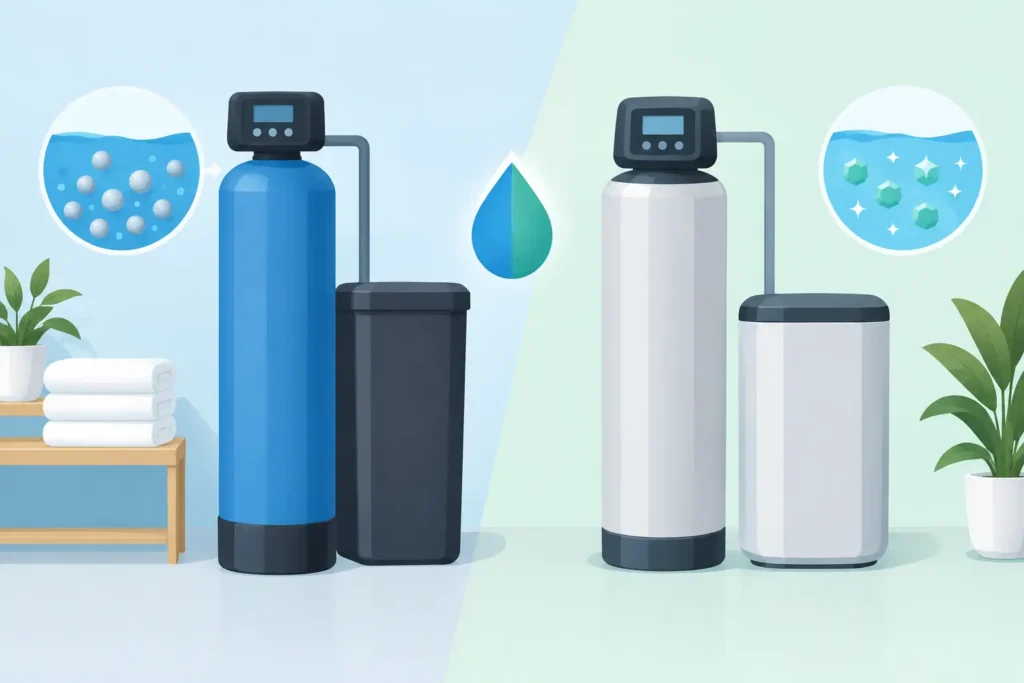
Here is the plain answer: a water softener removes hardness minerals from the water. A water conditioner usually changes how those minerals behave, but does not remove them. Both may have a place in a home. They are not interchangeable.
Water Softener Versus Conditioner: The Core Difference
Hard water contains dissolved calcium and magnesium. Those minerals are not usually a health concern, but they are hard on plumbing fixtures, water heaters, dishwashers, washing machines, and any surface that water touches regularly. When water dries or heats up, the minerals can form scale.
A traditional water softener uses ion exchange. Water passes through resin beads that pull calcium and magnesium out of the water and exchange them for a small amount of sodium or potassium. The system periodically regenerates the resin with a salt brine solution, flushing the captured minerals to a drain.
That means a properly sized softener delivers genuinely softened water. You will generally notice less spotting, softer laundry, easier cleaning, better soap lather, and reduced mineral buildup in appliances.
A water conditioner is a broader term, and that is where homeowners get tripped up. Some conditioners use a salt-free media to change the way minerals crystallize. The minerals remain in the water, but the goal is to make them less likely to stick to pipes, heating elements, and fixtures. Other products marketed as conditioners use electronic or magnetic methods. Results from those devices can vary widely based on the product, water chemistry, and installation.
Do not let a sales pitch blur the distinction. If a system does not use ion-exchange resin and regeneration, it is not removing hardness minerals the way a conventional softener does.
When a Water Softener Makes Sense
A softener is usually the stronger choice when hard water is actively causing problems throughout the house. Think persistent white scale on faucets, crusted showerheads, stiff towels, cloudy dishes, frequent aerator clogs, or a water heater that is collecting sediment faster than it should.
For many Tampa Bay homes, the water heater is the biggest reason to take hardness seriously. Mineral scale acts like insulation on a heating element or inside a tank. Your heater has to work harder to heat water, and that extra strain can shorten its service life. Tankless water heaters are especially sensitive because their heat exchangers have narrow passages that need regular flushing and descaling.
A softener can also be worthwhile if you have a large household. More showers, laundry loads, dishwasher cycles, and hot-water use mean more minerals moving through the system every day. If you are replacing appliances or repiping a home with a history of scale-related damage, removing hardness at the source is often the practical long-term move.
There are trade-offs. Softening systems need salt, electricity, drain access, and routine attention. The resin tank and brine tank take up space, usually in a garage, utility room, or exterior equipment area. Regeneration also adds a small amount of sodium to the water, which is worth discussing with a doctor if someone in the household is on a strict sodium-restricted diet. Potassium chloride is an alternative, though it costs more.
A softener should be sized to the home, not sold as a one-size-fits-all box. Household size, water hardness, plumbing flow rate, and water use all matter. An oversized system wastes salt and water. An undersized one may not keep up when everyone showers, runs laundry, and starts the dishwasher on the same evening.
When a Water Conditioner May Be the Better Fit
A conditioner can make sense for homeowners who want scale control without salt bags, brine discharge, or regular regeneration. It is also an option when the main goal is protecting plumbing and appliances rather than changing the feel of the water.
Because the minerals stay in the water, a conditioner will not produce the same soap performance or spot-free results as a softener. You may still see mineral residue on glassware and fixtures. You may still need to wipe down shower doors. If a company promises that a salt-free conditioner will deliver all the benefits of a softener, ask direct questions before you agree to the installation.
That does not make conditioners useless. A quality salt-free scale-control system can be a reasonable fit for a smaller household, a homeowner who does not want to maintain a brine tank, or a home where drain access is difficult. Some homeowners also prefer this approach because it does not add sodium to the water.
The key is setting the right expectation. A conditioner is generally about reducing the tendency for hard-water scale to adhere. A softener is about removing the minerals that create hardness.
Watch Out for Vague “No-Salt Softener” Claims
“No-salt softener” is a common marketing phrase, but it can confuse the purchase. In most cases, a no-salt unit is a conditioner, not a softener. The name may sound like a minor technical difference. It is not.
Before you buy, ask these questions: Does the system remove calcium and magnesium? Does it require salt and regeneration? What maintenance does it need? What evidence supports its performance with your water conditions? A straight answer now is better than disappointment after the system is installed.
Start With Your Water, Not the Sales Pitch
City water and well water require different planning. Municipal water may need treatment for hardness, chlorine taste, or sediment. Well water can bring additional issues such as iron, sulfur odor, low pH, or bacteria. A standard softener may not solve every one of those problems.
For example, iron can foul softener resin, and heavy sediment can damage valves and reduce performance. A sediment filter or dedicated iron treatment may need to go ahead of the softener. If your water smells like rotten eggs, that is a separate diagnosis. Throwing in a conditioner without identifying the source is not a repair plan.
A proper recommendation starts with water testing and a look at your home’s plumbing setup. It should also include the condition of the water heater, the available drain and electrical connections, and whether existing scale is already causing restrictions at fixtures. The price should be clear before work begins, including installation, equipment, and future maintenance.
Do Not Expect Either System to Erase Old Damage
Water treatment can slow future scale buildup, but it will not magically dissolve every old deposit inside a water heater or pipe. Existing scale may need professional flushing, descaling, or fixture cleaning. In older homes, mineral deposits can hide weakened valves, corroded supply lines, or worn-out shutoffs. Once the buildup is disturbed, a failing part may finally show itself.
That is not a reason to avoid treatment. It is a reason to have the system installed and evaluated by a plumber who looks at the whole home rather than dropping off equipment and leaving you with the consequences.
For homeowners in Wesley Chapel and across Tampa Bay, the best choice comes down to the result you want. If you want actual soft water and the strongest defense against hard-water buildup, choose a properly sized softener. If you mainly want lower-maintenance scale control and understand that minerals remain in the water, a conditioner may be enough.
When white scale, poor hot-water performance, or recurring fixture buildup is already costing you time and money, get the water tested before you buy. H.I.P. Home Service & Drain can help you look at the plumbing problem in front of you, give you a clear recommendation, and keep the decision simple: the right equipment for your home, installed correctly.