A water heater can look fine from the outside while a layer of gritty mineral sediment is building at the bottom of the tank. That is why water heater flushing Wesley Chapel homeowners schedule is not just a nice-to-have maintenance task. It can help a tank heat more efficiently, run quieter, and avoid working itself to death years before it should.
Florida water brings its own challenges. Minerals settle out as water is heated, especially in a household that uses plenty of hot water for showers, laundry, and dishes. Leave that sediment alone long enough, and it becomes a hard layer between the burner or heating elements and the water your family needs.
What Sediment Does Inside a Water Heater
Tank-style water heaters are simple in principle: cold water enters, the unit heats it, and hot water leaves through the top of the tank. The problem begins at the bottom, where dissolved minerals can settle and collect. Over time, that material can turn into a crusty blanket.
On a gas water heater, the burner has to push heat through that buildup before it reaches the water. On an electric model, sediment can make the lower element work harder and can contribute to premature element failure. Either way, the unit may burn more energy and take longer to recover after several people shower back-to-back.
A little sediment is normal. A thick buildup is where homeowners start noticing trouble. You may hear popping, rumbling, or a kettle-like sound while the tank heats. Hot water may not last as long as it used to. In some cases, the water coming from hot-side faucets can look rusty or carry bits of mineral scale.
Sediment is not the only possible cause of those symptoms. A failing dip tube, a worn heating element, a thermostat problem, or corrosion inside an aging tank can create similar complaints. That is why guessing can get expensive. A proper inspection separates a maintenance issue from a water heater that is nearing replacement.
How Often Should Wesley Chapel Homeowners Flush a Water Heater?
For many homes, flushing a conventional tank water heater once a year is a sensible starting point. Households with harder water, high hot-water demand, or visible sediment may benefit from more frequent service. A family of five using a 50-gallon tank every day puts more demand on it than a part-time household with two occupants.
The age and condition of the tank matter too. If a heater has never been flushed and is already well into its expected service life, opening the drain valve can reveal issues that sediment was hiding. A corroded drain valve may leak. Heavy scale may not drain well. A tank that is rusting internally will not become healthy because it was flushed.
That does not mean maintenance should be avoided. It means the service should be approached honestly. A technician should assess the tank, the shutoff valves, the drain valve, the temperature-and-pressure relief valve, and the visible connections before recommending the next step. If flushing is the right move, great. If replacement makes more sense, you deserve a straight answer and an upfront price before work starts.
Signs It Is Time to Schedule Service
If you cannot remember the last flush, that alone is a good reason to have the water heater checked. Other common warning signs include reduced hot-water capacity, new popping or rumbling noises, cloudy hot water, and longer recovery times.
Pay close attention to water around the base of the tank. Moisture may come from a fitting or relief valve and be repairable, but water leaking from the tank body itself usually points to internal failure. Flushing will not fix a split or corroded tank. If the unit is leaking, turn off its water supply if you can do so safely and call for help promptly.
What a Proper Water Heater Flush Involves
A real flush is more than opening a valve for a minute and calling it maintenance. The process starts by safely shutting down the heat source. Gas units need the gas control set appropriately, while electric units must be de-energized at the breaker before the tank is drained. Running an electric element without water around it can destroy the element quickly.
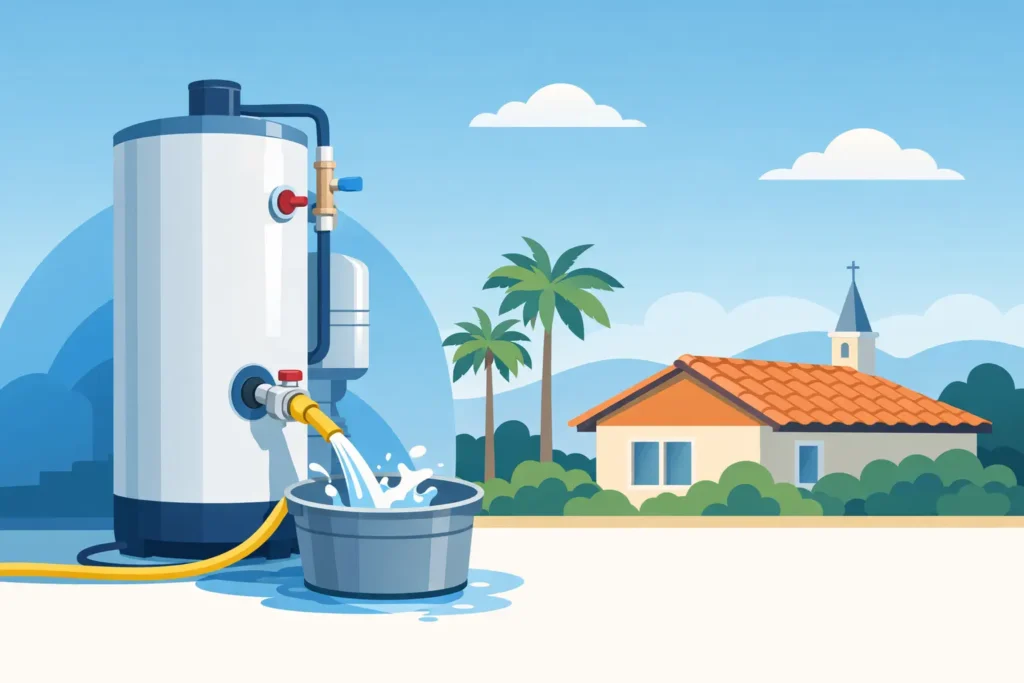
The technician connects a hose to the tank drain, directs water to a safe discharge point, and drains the tank while managing water temperature and pressure. Then the water supply is used to agitate and move sediment out until the discharge runs clearer. Depending on the amount of buildup, this can take time. A heavily scaled tank may need a more careful approach than a newer unit with light sediment.
Once the tank is refilled, the system must be checked before the heat source goes back on. Air needs to be purged from hot-water lines, fittings need to stay dry, and the unit needs to heat normally. This is also a useful time to inspect the anode rod when access allows. That sacrificial rod is designed to corrode before the steel tank does. Replacing it at the right time can sometimes extend tank life, but it depends on the model, its age, and the condition inside.
Can You Flush Your Own Water Heater?
Some homeowners are comfortable doing basic maintenance, and a newer, accessible tank with a working drain valve can be a reasonable DIY project. The trade-off is risk. Hot water can burn you, old valves can fail to close, and electric or gas equipment should never be handled casually.
Do not force a stuck drain valve. Do not drain scalding water onto a lawn, driveway, or area where someone can be hurt. And do not relight a gas water heater or restore power to an electric one until the tank is completely full and the system has been checked.
DIY flushing is usually not the best choice when the tank is old, making loud noises, showing corrosion, installed in a tight attic or closet, or connected to piping you are not comfortable touching. It is also worth calling a professional if your hot water is discolored or if there is any active leak. Those are moments for diagnosis, not a gamble with a hose and a bucket.
Tankless Water Heaters Need Descaling, Not a Standard Flush
Tankless water heaters do not store a tankful of water, but they still collect mineral scale inside the heat exchanger. The service is different. Instead of draining a tank, the unit is isolated and a cleaning solution is circulated through it to remove scale.
For Wesley Chapel homes with tankless systems, annual descaling is often a smart plan, particularly when water conditions are hard or hot-water use is high. Skipping it can reduce flow, hurt efficiency, and lead to error codes or overheating issues. The exact interval depends on the manufacturer and the water quality in the home.
A tankless system is efficient and space-saving, but it is not maintenance-free. Anyone promising otherwise is selling a shortcut, not long-term reliability.
When Flushing Is Not Enough
There is a point where maintenance stops being the practical answer. If the tank is leaking from its body, severely rusted, repeatedly losing heat, or well past its useful life, replacement may protect your home from a much bigger mess. Most tank-style heaters last roughly eight to 12 years, though installation quality, water conditions, use, and maintenance can move that number in either direction.
A good replacement decision is not only about the age stamped on the label. It should account for the fuel type, available space, household demand, venting requirements, code updates, and whether a larger tank or tankless unit would actually fit how your family uses hot water. Bigger is not automatically better. A properly sized system is what prevents cold-shower complaints without wasting energy or money.
H.I.P. Home Service & Drain handles residential water-heater maintenance, diagnosis, repair, and replacement with its own local technicians. No call-center runaround, no vague service window, and no pressure to replace equipment that can be repaired. You get the issue explained, the price quoted before work begins, and a clean, practical path forward.
A quiet water heater is easy to ignore. Give it attention before the rumbling starts, the showers run cold, or a slow leak turns into damaged flooring. A quick check now can be the difference between planned maintenance and an emergency call at the worst possible time.