A sewer backup can turn a normal Florida afternoon into a stop-using-the-water emergency. When a camera inspection finds a cracked, root-filled, or collapsed sewer line, homeowners usually ask the same question: trenchless versus traditional sewer repair – which one is actually better? The honest answer is that the right repair depends on the pipe’s condition, its location, and what is above it.
Trenchless work can save a driveway, landscaping, or patio from major excavation. Traditional digging can be the safer, more permanent answer when the line has failed badly. A good plumber should explain both options, show you the camera findings, and give you a clear price before work starts.
What Trenchless Sewer Repair Actually Means
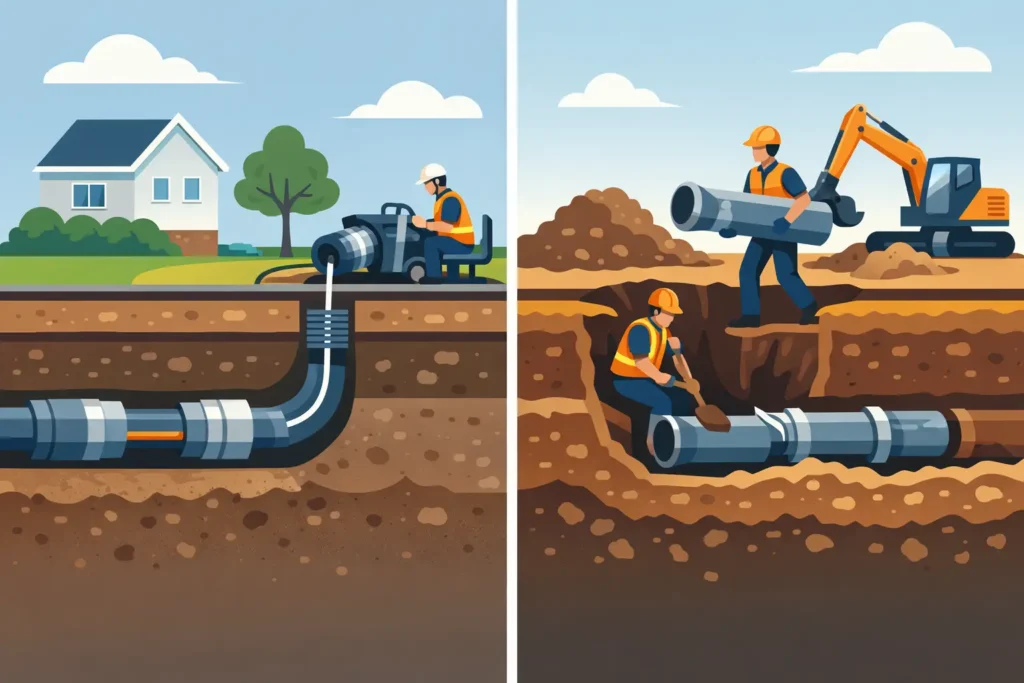
Trenchless sewer repair is a method of repairing or replacing an underground sewer line with little to no continuous trench across the yard. Access points are still needed, usually at one or both ends of the damaged pipe, but crews do not necessarily have to dig up the entire pipe path.
The two common approaches are pipe lining and pipe bursting. With lining, a resin-saturated liner is installed inside the existing pipe and cured into a new, jointless pipe within the old one. This can seal cracks, small offsets, and areas affected by root intrusion. With pipe bursting, a new pipe is pulled through while a bursting head breaks apart the failing old pipe.
Neither method is magic. The existing line must meet specific conditions. A camera inspection is the starting point because it shows whether the pipe is intact enough for lining, whether it has enough slope, and whether it has collapsed or shifted beyond what trenchless equipment can handle.
Where Trenchless Repair Can Make Sense
Trenchless repair is often a strong option when the sewer line runs beneath expensive hardscaping, mature landscaping, a driveway, or part of a slab foundation. Avoiding major demolition may save time, cleanup, and restoration costs.
For Tampa Bay homeowners, root intrusion is a frequent reason to consider it. Roots can work their way through old pipe joints, especially in established neighborhoods with mature trees. If the pipe still holds its shape and the damage is limited to cracks, joint gaps, or recurring root entry, a liner may provide a durable long-term solution.
Trenchless methods can also reduce disruption. Less excavation generally means less damage to irrigation lines, sod, flower beds, walkways, and outdoor living areas. That matters when you want the sewer fixed without rebuilding half the yard afterward.
The Limits of Trenchless Work
A trenchless option is not automatically the cheaper option. The equipment, materials, and specialized labor can make the upfront repair price higher than a straightforward dig-and-replace job, particularly for a short and easily accessible line.
It also cannot correct every underlying problem. A line with major bellies, severe misalignment, a full collapse, or a damaged section that no longer has a usable path may need excavation. Lining follows the route of the existing pipe, so it will not fix a pipe that was installed with poor slope or has settled enough to hold standing wastewater.
There is another practical consideration: pipe lining slightly reduces the inside diameter of the existing line. In most residential applications, that reduction is minimal and not a performance issue. But a plumber should assess the pipe size, household drain use, and condition before recommending it.
Traditional Sewer Repair: When Digging Is the Better Call
Traditional sewer repair means excavating down to the damaged line, removing the failed section or entire run, and installing new pipe. It is more disruptive, but it provides direct access to the problem. There is no guessing about what is hidden underground.
For a collapsed sewer line, extensive pipe separation, severe sagging, or incorrect slope, digging is often the honest choice. The crew can remove damaged material, rebuild the line with the correct pitch, replace fittings, and inspect connections as the work is completed.
Traditional repair may also be more practical when the line is shallow and easy to reach. If the pipe runs through an open side yard with no pool deck, driveway, or major landscaping over it, excavation can be efficient and cost-effective. There is no reason to push a trenchless method simply because it sounds less invasive.
What Homeowners Should Expect From Excavation
Excavation is not as simple as digging a hole and dropping in pipe. A proper repair starts with locating the line, identifying utilities, confirming the failed area by camera, and planning access. The goal is to expose only what is necessary while protecting the rest of the property.
The trade-off is restoration. Sod, mulch, landscaping, pavers, concrete, fencing, or irrigation may need repair after the plumbing work is done. Make sure you understand what the quoted price includes and what restoration will remain your responsibility. Clear answers upfront beat a low initial number followed by surprise charges.
New PVC sewer pipe, correctly installed and supported, is a reliable long-term repair. It resists root intrusion at glued joints far better than aging cast iron, clay, Orangeburg, or separated pipe systems. If a large portion of the line is failing, replacing the problem run can stop the cycle of repeated drain cleaning and emergency backups.
Trenchless Versus Traditional Sewer Repair: The Real Comparison
The biggest difference is not simply “no digging” versus “digging.” It is whether the existing pipe can support a trenchless solution without leaving important problems behind.
Trenchless repair usually wins on property preservation. If your sewer crosses beneath a driveway, pool deck, patio, or carefully maintained landscape, avoiding a long trench can be valuable. It can also be faster in the right conditions because there is less excavation and restoration work.
Traditional repair wins when access is needed to correct the pipe’s route, slope, depth, or complete structural failure. It is often the more direct approach for a collapsed pipe or a line that has shifted enough that wastewater no longer flows properly.
Cost depends on the job, not the sales pitch. A short repair in an open yard may cost less with excavation. A line beneath concrete may cost less overall with trenchless work once demolition and rebuilding are considered. The only useful comparison comes after a camera inspection and an on-site evaluation of access, pipe material, depth, and damage.
Durability depends on proper diagnosis and workmanship. A well-installed liner can provide a long service life for an appropriate pipe. A properly installed new pipe can do the same. What does not last is a shortcut applied to the wrong failure.
Signs You Need a Sewer Line Evaluation
A slow drain is not always a sewer-line emergency, but recurring problems should not be ignored. If multiple fixtures back up at once, toilets bubble when a shower drains, wastewater appears in a tub or shower, or you smell sewage outdoors, the main sewer line needs attention.
Frequent clogs that return after snaking are another warning sign. So are unusually green or wet spots in the yard, sinkholes, cracks near a buried line, and trees whose roots repeatedly show up in drain cleaning equipment. In older Tampa Bay homes, aging cast-iron systems can also develop internal corrosion that catches debris and reduces flow.
Camera inspection takes the guesswork out of the decision. You should be able to see where the blockage or break is, how far it is from an access point, and whether the pipe has roots, cracks, offsets, scale buildup, standing water, or a collapse. That evidence matters more than a generic recommendation made before anyone looks inside the line.
Questions to Ask Before Approving Sewer Repair
Ask whether the proposed repair addresses the full problem or only the most visible symptom. If the line has roots in one spot, is that the only weak section? If a pipe is holding water, can lining solve it, or does the slope need correction? If digging is recommended, how much of the yard will be opened and what will need to be restored afterward?
You should also ask who is doing the work, whether they are licensed and insured, what permits may be needed, and what warranty comes with the repair. Avoid vague ranges and high-pressure pressure tactics. You deserve a written explanation of the repair plan, the price, and the work included.
At H.I.P. Home Service & Drain, the approach is simple: inspect first, explain the findings plainly, and recommend the repair that fits the pipe and property. No call-center handoff. No mystery subcontractor arriving at the door.
If your drains keep backing up, do not wait for the next load of laundry or heavy rain to force the issue. A camera inspection now can give you options while the problem is still manageable – and help you protect your home, yard, and budget from a much bigger mess.