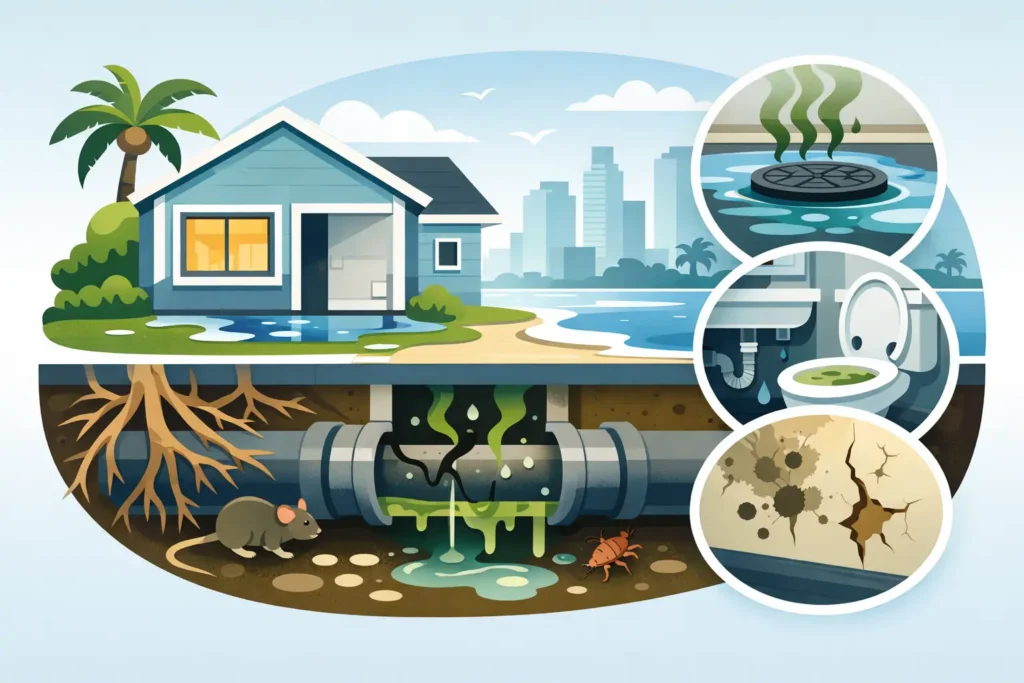
That slow toilet in the guest bath may not be a toilet problem. When several fixtures start acting up at once, the issue can be farther down the line: the sewer pipe carrying wastewater from your home to the municipal connection or septic system. Knowing the top signs of sewer damage can help Tampa Bay homeowners act before a messy backup reaches the floor, walls, or yard.
A sewer line rarely fails without giving some warning. The trouble is that those warnings often look like ordinary clogs at first. A plunger may buy you time, but it will not repair roots in a pipe, a broken section underground, or a line that has shifted out of place. Pay attention to patterns, especially if the same symptoms keep coming back.
Top Signs of Sewer Damage You Should Not Ignore
Multiple drains clog or drain slowly
One slow sink is usually a local drain issue. A slow kitchen sink could be grease buildup. A slow shower may be hair and soap residue. But when the kitchen sink, showers, tubs, and toilets all drain slowly, the blockage may be in the main sewer line.
This is one of the clearest differences between a simple drain clog and a sewer problem. Water from multiple fixtures has to travel through the same main line. If that line is narrowed, cracked, filled with roots, or partially collapsed, wastewater has nowhere to go quickly.
Do not keep pouring chemical drain cleaner into every fixture. These products can damage some pipes, create a hazard for the person clearing the line, and do nothing to solve a broken sewer pipe.
Toilets gurgle or water moves in other fixtures
A toilet that gurgles after you run the washing machine or drain a bathtub is sending a message. Air is being displaced in the sewer line because wastewater is struggling to pass through it. You may also see toilet water bubble, rise, or drop unexpectedly.
Another common warning is water appearing in a shower or tub when a toilet is flushed. Since tubs and showers are often the lowest drains in the house, they can become the first place wastewater pushes back out. Treat this as an urgent plumbing problem, not a wait-and-see situation.
Sewage backs up into a tub, shower, or floor drain
A backup is the sign nobody wants, but it is also the least subtle. Black or gray wastewater coming up through a shower drain, tub, toilet, or floor drain means the line is blocked or unable to carry waste away.
Stop using water immediately. Do not flush toilets, run the dishwasher, take a shower, or start a load of laundry. Every gallon you send down a drain can add to the backup. Sewage can contain harmful bacteria, so keep children and pets away from the affected area and arrange professional service as soon as possible.
Sewer odors inside or outside the home
Your plumbing system is designed to keep sewer gas inside the pipes and safely vent it outdoors. A persistent rotten-egg or sewage smell around drains, in a bathroom, near the laundry room, or outside in the yard is worth checking out.
Odors can come from a dry drain trap or vent issue, so they do not automatically mean the sewer line is damaged. Still, an odor paired with slow drains, gurgling, or wet spots outside points to a more serious problem. The longer wastewater leaks underground, the more likely it is to damage soil, landscaping, and nearby structures.
A wet, sunken, or unusually green patch in the yard
In Florida, grass grows quickly when it is hot and wet, so a green yard alone is not proof of a sewer leak. What matters is an isolated patch that stays soggy when the weather has been dry, smells unpleasant, or grows much faster and greener than the surrounding lawn.
A broken sewer pipe can release wastewater into the soil. Over time, that can create a soft or sunken area as dirt shifts around the damaged line. Tampa Bay’s heavy summer rain can make the symptom harder to spot, but it can also worsen the problem by saturating the soil around an already compromised pipe.
Recurring clogs that keep coming back
A drain that clogs once is frustrating. A drain that clogs every few months after it has been cleared deserves a closer look. Repeated clogs may mean the pipe was only opened temporarily, while the underlying cause remains.
Tree roots are a frequent culprit in older neighborhoods throughout Pasco County and the greater Tampa Bay area. Roots seek moisture and can work their way into tiny openings at pipe joints or cracks. Once inside, they catch toilet paper and debris until the line restricts or blocks completely.
Hydro-jetting can remove roots and buildup in some cases, but it is not always the right long-term answer. If a camera inspection shows a crushed, offset, severely cracked, or deteriorated pipe, clearing the line alone may simply delay another backup.
Rodent or insect activity near drains and the yard
This is not the first symptom most homeowners notice, but damaged sewer lines can create openings that attract pests. If you are seeing more sewer flies, cockroaches, or rodents around a particular drain or outdoor section of the property, it may be connected to a pipe defect.
Pest activity has many possible causes, so it should not be used as a diagnosis by itself. Combined with sewer odors or drainage trouble, though, it is another reason to inspect the system rather than guessing.
Why Sewer Lines Fail Around Tampa Bay
Sewer damage does not always mean someone did something wrong. Pipes have a service life, and local conditions matter. Older homes may have cast iron, clay, Orangeburg, or aging galvanized components that are more vulnerable to corrosion, cracking, and joint failure. Newer homes are not immune either. Poor installation, construction debris, ground movement, or a damaged PVC connection can cause trouble early.
Root intrusion remains a major issue where mature landscaping sits over or near the sewer route. Ground settlement can also shift pipe sections, creating low spots where waste and paper collect. Those low spots are often called bellies, and they tend to cause recurring slow drains even after a basic cable cleaning.
Heavy rain can expose a weak sewer system, but rainwater itself is not usually the direct cause of an interior backup in a properly functioning private line. If problems show up during storms, a camera inspection can help determine whether the pipe has cracks, bad connections, or another condition allowing water and soil to affect the line.
How a Sewer Camera Inspection Finds the Real Problem
Nobody should recommend major sewer work based on a guess. A professional camera inspection puts a live camera into the line through an appropriate access point. It can show root masses, grease buildup, cracks, separated joints, pipe corrosion, standing water, and collapsed sections.
That footage helps separate a cleanable blockage from structural damage. It also helps locate the affected area, which matters if repair is needed. The right repair depends on what the camera finds, where the pipe runs, its material, and whether the line serves a city sewer connection or a septic system.
For example, a root-packed line with otherwise sound pipe may respond well to thorough cleaning and maintenance. A line with major offsets or a collapse may need repair or replacement. There is no honest one-size-fits-all answer, and no homeowner should be pushed into excavation without clear diagnostic evidence and upfront pricing.
What to Do When You Suspect a Sewer Problem
If you have only one slow fixture, start by limiting use of that drain and arrange service if normal clearing does not solve it. If multiple drains are slow, toilets are gurgling, or wastewater is backing up, stop using water throughout the home and call for professional help right away.
Avoid repeated plunging on a toilet that is causing water to rise elsewhere. Avoid chemical drain cleaners. And do not let a recurring clog become an annual routine without asking what is actually inside the line. A temporary opening can feel like a repair until the next load of laundry sends sewage back through the lowest drain.
For homeowners in Wesley Chapel and surrounding Tampa Bay communities, H.I.P. Home Service & Drain uses camera diagnostics to identify the problem before recommending the next step. You should know what failed, what it takes to fix it, and what the price is before work begins.
A sewer line is out of sight, but it should not stay out of mind when your drains start talking. Acting on the first pattern of trouble can protect your home from the kind of plumbing emergency that no family wants to clean up.