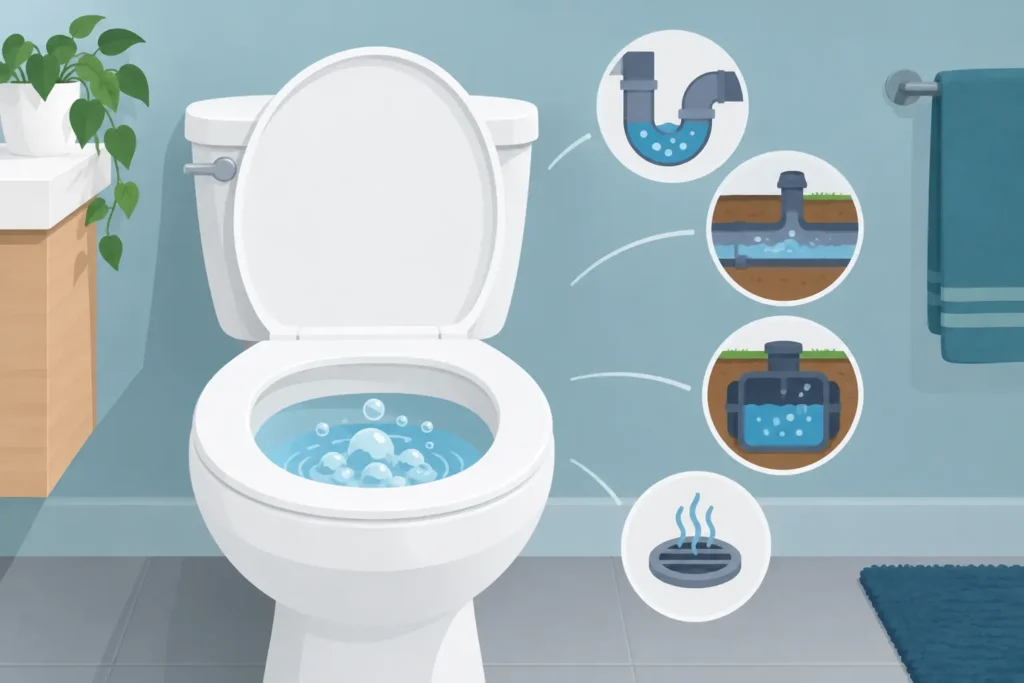
A toilet that bubbles when you flush, shower, or run the washing machine is not being quirky. Those bubbles are usually air being forced back through the plumbing system because wastewater cannot move where it should. The most common toilet bubbling reasons involve a developing drain blockage, a sewer line problem, or a venting issue. Ignore it long enough, and a strange sound can become a messy backup.
For Tampa Bay homeowners, the right next step depends on when the toilet bubbles and what else is happening in the house. A single toilet with a weak flush is different from every bathroom making gurgling noises. Here is what those symptoms can tell you.
Why a Toilet Bubbles Instead of Draining Normally
Your home’s drain system needs two things to work properly: a clear path for wastewater and a way for air to move through the pipes. When water travels down a drain, air has to move too. The plumbing vent system, which runs upward and exits through the roof, keeps pressure balanced so fixtures can drain smoothly.
When a clog, collapsed pipe, blocked vent, or sewer line restriction interrupts that process, air looks for another way out. Often, the toilet is the easiest place for it to escape. You may hear a gurgle, see bubbles rise in the bowl, or notice the water level moving after another fixture drains.
The timing matters. Bubbling only when that toilet flushes often points to a local issue. Bubbling when the shower drains or the washer empties points farther down the line, where the problem can affect multiple fixtures.
The Most Common Toilet Bubbling Reasons
A Partial Clog in the Toilet or Nearby Drain
A partial blockage is one of the simplest causes. Too much toilet paper, a non-flushable wipe, a small object, or buildup in the toilet trap can slow water enough to create gurgling. The toilet may still flush, but not with its usual force. It may also need a second flush or leave the bowl water level unusually high or low afterward.
A standard flange plunger can help if the clog is close to the bowl. Use one made for toilets, not a flat sink plunger, and make sure there is enough water to cover the rubber cup. If several careful attempts do nothing, stop forcing it. Aggressive plunging can push an object deeper or send dirty water over the floor.
A toilet auger can clear some obstructions beyond the trap, but it is not a fix for a blocked sewer line. If the toilet keeps bubbling after a clog seems to clear, the restriction may be farther out.
A Blocked Main Sewer Line
This is the cause homeowners should take seriously. Your main sewer line carries waste from every drain in the home out to the public sewer connection or septic system. When it begins to clog, water from one fixture can push air and wastewater toward another. The toilet, because it connects to a large drain line, often reacts first.
Common signs include a toilet bubbling while the tub drains, shower water appearing near the toilet, or a bathroom sink that gurgles when the washing machine drains. You may also notice slow drains in more than one room, sewer odor, or water backing up into the lowest shower or tub in the home.
In older parts of Pasco County and throughout the Tampa Bay area, root intrusion is a frequent problem. Tree roots seek moisture and can work their way into tiny openings in aging sewer pipes. Grease, paper products, scale, and debris then collect around those roots until the line cannot pass normal household flow. A camera inspection shows whether the issue is a removable clog, roots, pipe damage, or a sagging section of line that repeatedly collects waste.
A Clogged or Damaged Plumbing Vent
A vent blockage can create toilet bubbling without an obvious sewage backup. Leaves, nesting material, small animals, and storm debris can obstruct a roof vent. In some homes, a poorly installed vent or a pipe issue inside a wall can also prevent the system from pulling air correctly.
The symptom is often a gurgling toilet or sink paired with slow, inconsistent drainage. You might hear a glugging sound after flushing, even though the bowl eventually empties. Because roof work has real fall risk, this is not a job for climbing up with a garden hose and hoping for the best. A licensed plumber can test the drainage system and determine whether the air problem is actually in the vent or is being caused by a sewer restriction.
A Sewer Line That Is Cracked, Bellied, or Collapsing
Not every sewer problem is a clog. Underground pipes can crack, shift, separate at a joint, or develop a low spot called a belly. Wastewater and solids settle in that low area, causing repeat blockages even after a drain cable temporarily opens the line.
Florida soil conditions, aging materials, nearby roots, and past ground movement can all contribute. Homes with older cast iron or clay sewer lines are more likely to have structural concerns, but newer homes are not immune to installation defects or damage from landscaping and construction.
This is where guessing gets expensive. Clearing the line without seeing its condition may get the toilet working today, but it does not tell you why the trouble returns. A sewer camera inspection provides a clear view of what is inside the pipe and where the problem sits.
A Septic System That Is Full or Failing
If your property uses a septic tank, bubbling toilets can signal that the tank is overdue for service or that the drain field is not accepting wastewater properly. Septic trouble may also cause slow drains, sewage odor outside, wet ground near the drain field, or backups in lower fixtures.
Do not keep sending more water into the system to test it. Limit water use and have the septic system evaluated promptly. A plumbing professional can help identify whether the issue is inside the home’s drain line or beyond it at the tank and drain field.
When Toilet Bubbling Is an Emergency
A bubbling toilet is not always a middle-of-the-night emergency. If it happens once after a weak flush and clears completely, you can watch it closely and avoid flushing wipes, paper towels, feminine products, or anything marked “flushable.”
It becomes urgent when wastewater is coming back into the home. Call for help right away if you see any of these signs:
- Water or sewage rises in a shower, tub, or floor drain when a toilet flushes.
- More than one toilet, sink, or shower is draining slowly or gurgling.
- The toilet bowl water climbs toward the rim or spills over.
- You smell sewer gas indoors or see wastewater around a cleanout, drain, or bathroom fixture.
Until the line is checked, stop using water wherever possible. Do not run the dishwasher, washing machine, showers, or additional toilet flushes. Every gallon sent down a restricted main line can add to the backup.
What Not to Do When Your Toilet Gurgles
Chemical drain cleaners are a poor answer for toilet bubbling. They rarely solve a main sewer or vent issue, can damage certain pipes and seals, and create a safety hazard for anyone who later has to open the drain. They also do nothing for roots, broken pipe sections, or a full septic system.
Avoid repeatedly plunging a toilet that bubbles when other fixtures run. That pattern is a strong clue that the problem is not in the toilet itself. Also, do not remove a sewer cleanout cap unless you understand the pressure behind it. If the main line is backed up, sewage can discharge quickly from that opening.
How a Plumber Finds the Real Cause
A good drain diagnosis starts with the symptoms, not a sales pitch. A plumber should ask which fixtures are affected, when the bubbling began, whether the home is on sewer or septic, and whether backups happen during laundry, showers, or heavy rain.
From there, the right equipment depends on the problem. A drain cable can clear many obstructions. Hydro-jetting uses controlled high-pressure water to remove heavy buildup and root debris from suitable pipes. A sewer camera inspection identifies cracks, roots, bellies, and recurring blockage points before anyone recommends a larger repair.
That process matters because the cheapest first visit is not always the cheapest outcome. A quick cable may be the right fix for a simple blockage. But if the line has roots or pipe damage, you need an honest explanation of what was found and a quoted repair option before work begins.
H.I.P. Home Service & Drain handles residential drain and sewer problems across Wesley Chapel and the greater Tampa Bay area with in-house technicians, clear pricing, and the diagnostic tools to find the cause instead of treating the noise. If your toilet is bubbling along with other drains, do not wait for the first backup to make the call.
A quiet toilet is what normal plumbing sounds like. When yours starts talking back, pay attention early. A fast inspection while the issue is still a gurgle can keep it from becoming sewage on the bathroom floor.