A water heater usually gets your attention at the worst possible moment: a cold shower, a puddle in the garage, or rusty water from a unit that has finally given up. When comparing tankless versus tank water heaters, the right answer is not simply “newer is better.” It comes down to your household’s hot-water habits, fuel setup, budget, and how long you plan to stay in the home.
For homeowners across Wesley Chapel and Tampa Bay, both options can be dependable when they are sized correctly and installed properly. The wrong choice, though, can leave a large family waiting for hot water or spending more than necessary on installation.
Tankless Versus Tank Water Heaters: The Main Difference
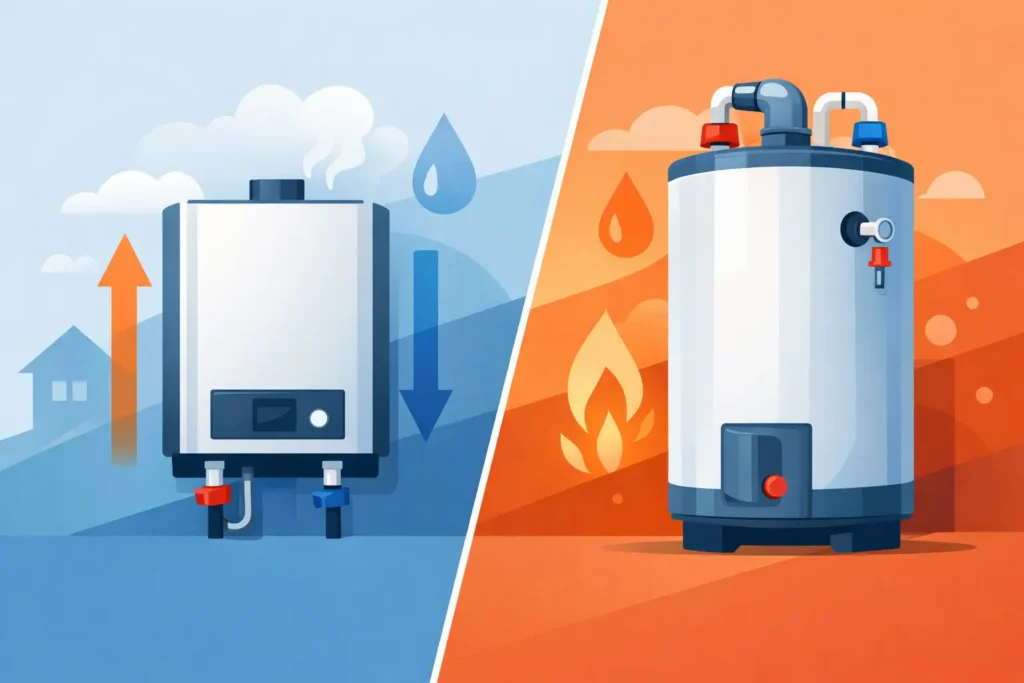
A traditional tank water heater stores a set amount of hot water, commonly 40, 50, or 80 gallons. The unit heats that water and keeps it ready in the tank. When someone opens a hot-water tap, the stored supply moves through the plumbing system and cold water enters the tank to be heated.
A tankless water heater heats water only when you call for it. Cold water flows through a heat exchanger, and the unit fires up to warm it as it passes through. There is no stored reserve of hot water sitting in a tank.
That basic difference affects nearly every part of the decision: upfront price, energy use, available hot water, maintenance needs, and installation requirements.
When a Tank Water Heater Is the Better Fit
A standard tank water heater remains a smart, practical choice for many Tampa Bay homes. It has a lower upfront cost, a familiar design, and replacement is often straightforward when the home already has the proper connections in place.
A 50-gallon tank is commonly enough for a household with moderate hot-water use. If your family does not regularly run multiple showers, laundry, and the dishwasher at the same time, a properly sized tank can deliver reliable comfort without the higher installation cost of a tankless system.
Tank units also make sense when a water heater has failed unexpectedly and the budget is tight. A direct replacement can often be completed faster with fewer changes to gas piping, venting, electrical service, or plumbing lines. That matters when the old unit is leaking and the household needs hot water restored quickly.
The trade-off is recovery time. Once the stored hot water is used, the tank needs time to heat a new supply. A busy morning with several showers can drain an undersized tank. Bigger is not always better, either. An oversized tank can cost more to purchase and keep warm.
Traditional tanks generally last about 8 to 12 years, depending on water quality, maintenance, and installation conditions. Florida’s hard water can leave sediment at the bottom of the tank, forcing the system to work harder and increasing wear. Regular flushing can help, especially if you notice popping sounds, reduced performance, or discolored water.
When Tankless Water Heaters Make Sense
Tankless units are a strong option for homeowners who want a longer-term upgrade and regularly need hot water for extended periods. Because the heater produces hot water on demand, you do not run out simply because the tank is empty.
That does not mean a tankless heater provides unlimited hot water under every condition. It has a flow-rate limit. If the unit is too small, it may struggle when two showers, a washing machine, and a dishwasher all demand hot water at once. Proper sizing is everything.
For example, a household with two bathrooms may need a different system than a large home with four bathrooms and teenagers who all shower before school. A qualified plumber should calculate the expected demand, local groundwater temperature, fuel source, and the fixtures likely to run at the same time. Picking a unit based on a box-store label alone can create expensive frustration.
Tankless water heaters cost more upfront, particularly if the installation requires a larger gas line, new venting, electrical upgrades, or changes to the water lines. Gas tankless models need enough fuel supply to fire at high output. Electric tankless models can require substantial electrical capacity, which is not always practical in an older home.
When the system is appropriately sized and maintained, tankless units can last 15 to 20 years or more. They also take up far less space than a large tank, making them useful for homes where the water heater sits in a tight closet, laundry area, or garage corner.
Energy Use: Savings Are Real, but Not Automatic
Tank water heaters use energy to maintain the temperature of stored water, even when nobody is using it. Those standby losses are one reason tankless systems can be more efficient. A tankless unit heats water only when a faucet, shower, or appliance calls for it.
Still, the savings depend on your actual usage. A small household with modest hot-water demand may see a meaningful reduction in energy use from a tankless unit. A large family with constant hot-water demand may save less than expected, even though they gain greater convenience.
Fuel type also matters. Natural gas is common in some Tampa Bay neighborhoods, while many homes rely on electric water heaters. An electric tankless installation can be efficient, but its electrical requirements may make the total project cost much higher than a conventional electric tank replacement. This is why the cheapest unit price does not tell the full story.
Ask for a clear, upfront estimate that includes every required modification. The price should cover the equipment, permits when needed, labor, venting, gas or electrical work, drainage considerations, and haul-away of the old unit. No homeowner should learn about major add-ons after the work has started.
Maintenance Matters More in Tampa Bay
Hard water is tough on both types of water heaters. Minerals settle inside a tank and can build up inside a tankless heat exchanger. Skipping maintenance shortens equipment life and can reduce performance.
A tank water heater benefits from periodic flushing to remove sediment. It is also worth checking the anode rod, a component designed to protect the tank from corrosion. Replacing that rod before it is completely worn out can add useful life to the unit.
Tankless systems need descaling. During this service, a technician circulates a cleaning solution through the unit to remove mineral buildup from the heat exchanger. Many Tampa Bay homeowners should plan on annual service, though the right schedule depends on local water conditions and household use.
Neither system is maintenance-free. The better choice is the one you are willing to maintain. A neglected tankless heater will not deliver the long life people expect, and a neglected tank can fail early from corrosion or sediment damage.
Questions to Ask Before You Choose
Start with your daily routine. How many people live in the house? Do multiple showers run at once? Is the laundry typically done during morning or evening shower time? Are you planning to add a bathroom, replace a soaking tub, or install a large shower system?
Then look at the home itself. Does it have natural gas or propane available? Is there adequate electrical capacity? Where will the unit be installed, and are venting changes required? A home in an older part of Pasco County may need a different installation plan than a newer home near The Shops at Wiregrass.
Finally, consider your timeline. If you expect to remain in the home for many years and want longer equipment life, a tankless system can be worth the higher upfront investment. If you need a dependable, cost-conscious replacement now, a quality tank water heater may be the sensible call.
Get the Size Right Before You Buy
The best water heater is not the most expensive one. It is the one that meets your home’s demand without wasting money on unnecessary capacity or leaving your family with lukewarm water.
At H.I.P. Home Service & Drain, we look at the real installation conditions before recommending a replacement. That means checking demand, fuel or electrical requirements, venting, space, and the condition of the existing connections. You get a clear price before work begins, not a long sales pitch after someone arrives.
If your current heater is leaking, making rumbling noises, producing rusty water, or failing to keep up, do not wait for the tank to burst. A quick inspection can tell you whether repair, a properly sized tank replacement, or a tankless upgrade makes the most sense for your home.