
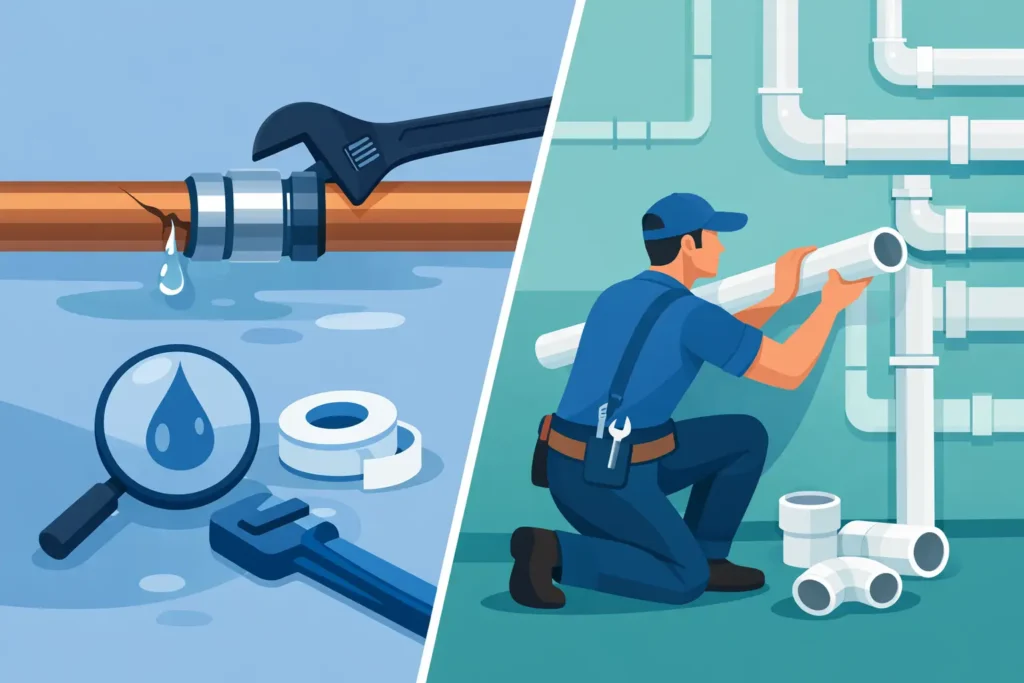
A pinhole leak under the sink can feel like a simple plumbing repair. Then another one shows up behind a bathroom wall six months later. That is when spot repair versus repiping becomes more than a budget question. It is a question of whether you are fixing one isolated failure or paying to chase a pipe system that is wearing out.
For Tampa Bay homeowners, the right answer depends on the pipe material, the age of the home, where leaks are occurring, and what the diagnostics show. A good plumber should explain those facts plainly, quote the work before it starts, and never turn a small leak into a scare tactic.
When a Spot Repair Is the Right Call
A spot repair means repairing or replacing a short damaged section of pipe. It is often the smartest, most cost-effective choice when the problem is truly isolated.
Maybe a pipe was damaged by a nail during a remodel. Maybe one fitting failed under a sink. A single frozen or burst section can also be repaired without replacing an entire plumbing system. In these cases, the surrounding pipe is in good condition, the cause is clear, and there is no pattern of failures elsewhere in the house.
A targeted repair also makes sense when the damaged line is accessible. Repairing a visible line in a garage, laundry room, or under a raised home is usually less invasive than opening walls or working through a slab. The job can often be completed quickly, with less disruption and a lower upfront cost.
That does not mean a repair should be a guess. Before replacing a short section, a plumber should identify the source of the leak. Water pressure, pipe corrosion, poor original installation, shifting soil, and hidden damage can all cause trouble. Fixing the wet spot without finding the reason behind it is how homeowners end up calling again.
The Warning Signs That Point to Repiping
Whole-home repiping replaces aging or failing water supply lines throughout the home. It is a larger project, but it can stop the cycle of leak repairs, wall damage, insurance headaches, and surprise water bills.
Recurring leaks are the biggest warning sign. One leak may be bad luck. Two or three leaks in different areas of the house usually deserve a deeper conversation. If plumbers keep cutting into drywall to repair new pinholes, the pipe system may be telling you it has reached the end of its useful life.
Older galvanized steel pipe is another concern in many established Tampa Bay homes. Galvanized pipe corrodes from the inside out. Over time, that corrosion restricts water flow and weakens the pipe wall. You may notice low pressure at fixtures, rusty or discolored water, or frequent leaks near joints and fittings.
Copper can last a long time, but it is not immune to problems. Pinhole leaks can develop from corrosion, water chemistry, high velocity, and other conditions. In homes with repeated copper pinholes, replacing one small section may only move the problem down the line.
Slab leaks deserve special attention. Many Florida homes sit on concrete slab foundations, and water lines may run beneath them. A warm area on the floor, unexplained sound of running water, a high water bill, or moisture near the foundation can point to a hidden leak. Once a slab leak is confirmed, rerouting or repiping may be more practical than repeatedly breaking concrete to reach aging lines.
Spot Repair Versus Repiping: Compare the Real Cost
The cheaper job today is not always the less expensive choice over the next few years. Spot repair costs less upfront because it addresses only the failed section. When the plumbing system is otherwise healthy, that is exactly what a homeowner should pay for – no more.
But repeated repairs add up fast. Each new leak can mean service costs, drywall removal, paint, flooring repair, water damage cleanup, and time away from work. A leak inside a wall does not wait for a convenient time. If the home has a history of failures, a planned repipe can be easier on the budget than a string of emergency calls.
Repiping also gives you a more predictable result. Rather than wondering which old line will fail next, you start fresh with properly installed modern piping. The project costs more at the beginning, but it can protect the home, improve reliability, and reduce the risk of water damage caused by deteriorating supply lines.
The honest answer is that neither option is automatically better. A plumber who recommends repiping after one isolated, accessible leak without examining the system may be overselling. A plumber who keeps patching a clearly failing system may be avoiding a harder conversation. You deserve the facts either way.
What a Proper Evaluation Should Include
Deciding between repair and replacement starts with diagnosis, not a sales pitch. A licensed plumber should ask about the home’s age, prior leaks, pipe material, water pressure, and any changes in water color or flow.
Leak detection equipment can help locate hidden problems without tearing up the house blindly. Acoustic and thermal tools are especially useful for suspected slab leaks and leaks behind walls. Camera inspections may also help when drain issues are part of the picture, though drain piping and water supply piping are separate systems with different repair decisions.
Your technician should also inspect the failed section itself. Is the pipe wall thin? Is there obvious corrosion? Did a fitting fail because of poor installation? Is the leak next to another weak area? Those details matter more than a generic rule about how old the house is.
For a repipe recommendation, ask what will be replaced, what piping material will be used, how walls will be accessed, and how the home will be protected during the work. You should know whether drywall repair is included, what permits are required, and what labor warranty comes with the installation. Clear answers are part of a professional job.
How Repiping Works in a Lived-In Home
Homeowners often delay repiping because they picture their house being torn apart for weeks. The work is significant, but a well-planned residential repipe is far more controlled than that.
Modern repiping commonly uses PEX or copper, depending on the home and installation needs. New lines are routed through walls, ceilings, attics, or other accessible paths, then connected to fixtures. Small, planned openings may be necessary, but the goal is to avoid unnecessary demolition and keep the home usable throughout the project.
A professional crew should protect floors and work areas, communicate the daily schedule, and explain when water will be temporarily shut off. The best time to repipe is before a major leak forces the decision. Planned work gives you time to compare the scope, prepare the home, and avoid making choices at 2 a.m. with water on the floor.
Questions to Ask Before You Approve the Work
Whether you need one repair or a whole-home repipe, ask direct questions. How many prior leaks make this a pattern? What condition are the existing pipes in? Is the quoted repair likely to solve the problem long term? What could cause another failure? What is included in the price?
For a repipe, also ask about permits, pipe material, wall access, restoration responsibilities, warranty coverage, and the expected timeline. A trustworthy plumber will not dodge these questions or bury the answers in fine print.
For homeowners in Wesley Chapel and across Tampa Bay, hard water, aging pipes, slab foundations, and fast-growing neighborhoods create different plumbing challenges from one home to the next. H.I.P. Home Service & Drain approaches the decision with the same standard every time: find the real problem, give you an upfront price, and recommend the repair that makes sense for your house.
If the leak is isolated, repair it right and move on. If the failures are multiplying, do not keep feeding money into a pipe system that is asking to be replaced. A clear diagnosis now can protect your walls, your water bill, and your peace of mind later.