A drain can look clear one day and send dirty water back into a shower the next. That is when a sewer camera inspection Tampa homeowners can count on stops the guessing. Instead of treating the same clog over and over, a technician can see what is happening inside the line and recommend the repair that actually fits the problem.
For Tampa Bay homeowners, that matters. Older neighborhoods can have aging sewer materials and root intrusion. Newer homes are not immune either. Construction debris, shifted soil, flushed wipes, grease buildup, and poor pipe connections can all create trouble below the slab or yard. A camera does not fix the line by itself, but it gives you the evidence needed to make a smart call before a small drain issue becomes a messy backup.
What a Sewer Camera Inspection Tampa Service Shows
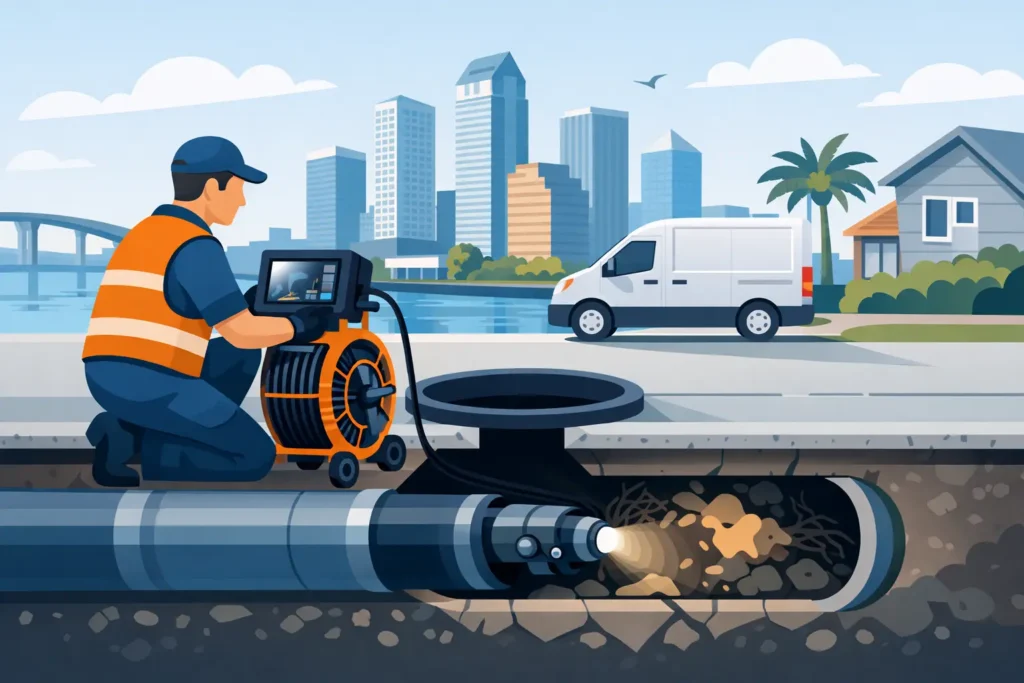
A plumbing camera is a small, waterproof, high-resolution camera attached to a flexible cable. After accessing the drain through a cleanout or another appropriate entry point, the technician guides it through the sewer line while watching a live video feed. The camera head includes a locator signal, so the technician can identify where a problem sits below the floor or yard.
This is not a quick peek for show. It is a diagnostic tool. It helps separate a simple blockage from a damaged pipe, which matters because those problems call for very different repairs.
A camera inspection can reveal several common issues:
- Root intrusion, where roots enter through small pipe joints or cracks and grow into a thick blockage.
- Grease, soap residue, wipes, paper products, or other buildup restricting the line.
- Cracked, broken, offset, or corroded pipe sections that allow waste and water to escape.
- Bellies or low spots where a section of pipe has sagged and repeatedly collects debris.
- Foreign objects, construction material, or damaged connections that keep causing backups.
The video also shows whether a drain cleaning solved the issue or merely opened a narrow path through it. That distinction can save a homeowner from paying for repeated service calls without addressing the underlying cause.
When It Is Time to Put a Camera in the Line
One slow sink does not always mean the main sewer line has failed. It could be a local clog in that fixture’s branch line. But when more than one fixture acts up, the main line deserves attention.
Watch for toilets that bubble when the washing machine drains, water rising in a shower after flushing, recurring clogs in different bathrooms, sewage odor near a cleanout, or wastewater backing up at the lowest drain in the home. These are common signs that water is struggling to leave the property.
A camera inspection is also useful after a severe blockage has been cleared. If the line was packed with roots or heavy scale, clearing it may restore flow for now. The camera can show whether the pipe is otherwise sound or whether a crack, separated joint, or sagging section will bring the same problem back soon.
Homebuyers should consider an inspection when purchasing an older Tampa Bay home, especially if the sewer line’s age and material are unknown. A standard home inspection may identify visible plumbing concerns, but it cannot see the buried pipe from the house to the municipal connection or septic system. Finding a damaged sewer line before closing is very different from finding it after move-in.
Why Tampa Bay Sewer Lines Have Their Own Challenges
Florida’s warm, wet conditions are good for landscaping. They are also good for tree roots. Roots naturally seek moisture, and even a tiny opening in a sewer pipe can attract them. Once inside, they expand and catch toilet paper and other debris until water has nowhere to go.
Soil movement can be another factor. Underground lines need proper slope to carry waste away. When a pipe settles, shifts, or was installed with a poor grade, a low area can hold water and solids. Cleaning may improve flow temporarily, but it cannot correct a belly in the pipe.
Hard water is part of the local picture, too. Mineral scale can build inside certain pipe materials and reduce the opening over time. In older homes around Tampa, Lutz, Land O’ Lakes, Zephyrhills, and nearby communities, aging cast iron or galvanized components may need closer attention. The right recommendation depends on what the camera shows, not what someone assumes from the age of the house.
What Happens During the Inspection
A good inspection begins with questions. Which fixtures back up? How long has it been happening? Did the problem start after heavy rain, remodeling, or a previous drain cleaning? Those details help the technician choose the best access point and understand what to look for.
If the line is too full to pass the camera, it may need to be cleared first. A cable machine or hydro-jetting can remove an active blockage so the camera can travel through the pipe. That is not an upsell. A camera cannot inspect a section it cannot reach, and a responsible plumber should explain that before starting work.
Once the line is open enough, the camera travels through the pipe while the technician watches for buildup, damage, standing water, intrusions, and connection problems. The locator identifies the approximate position and depth of a concern. That information is especially valuable when deciding whether a repair requires digging, whether a targeted repair may work, or whether a larger replacement is worth discussing.
You should get plain language along with the technical findings. “There is a blockage” is not enough. Ask where it is, what it appears to be, whether the pipe is damaged, and what repair options make sense. The goal is not to scare you into the biggest job. It is to show you what is there and quote the work honestly.
Camera Inspection, Drain Cleaning, and Repair Are Different Jobs
These services work together, but they are not interchangeable. Drain cleaning removes a clog. Hydro-jetting uses high-pressure water to cut through grease, sludge, roots, and buildup when the pipe condition supports it. A camera inspection identifies the pipe’s condition and verifies the result.
For example, a line full of grease may be a strong candidate for hydro-jetting and better kitchen-drain habits afterward. A line with a collapsed section will not stay fixed because it was cleaned. The obstruction may be gone, but the damaged pipe still catches debris. In that case, repair or replacement is the real fix.
There is a trade-off with aggressive cleaning methods. Hydro-jetting can be highly effective, but a badly deteriorated pipe may require careful evaluation first. The camera helps a licensed plumber avoid treating every sewer problem with the same tool.
Do Not Let Recurring Backups Become the Normal
Homeowners sometimes learn to work around a troublesome drain. They flush twice, avoid using the washer at certain times, keep a plunger nearby, or call for a basic clog removal every few months. That routine is frustrating, and it can hide a worsening sewer issue.
Sewage backups can damage flooring, baseboards, cabinets, and personal belongings. They also create a sanitation problem that should be handled quickly. If wastewater is coming up through a tub, shower, or floor drain, stop running water in the home and call for service. Do not keep flushing or start another load of laundry to test it.
At H.I.P. Home Service & Drain, the approach is simple: inspect the line, explain what the camera found, provide an upfront price, and complete the work with our own technicians. No call-center runaround. No vague diagnosis followed by a surprise bill.
A sewer camera inspection is most valuable before the damage spreads, not after. If your drains keep sending the same warning, get a clear look inside the line and make the next repair count.