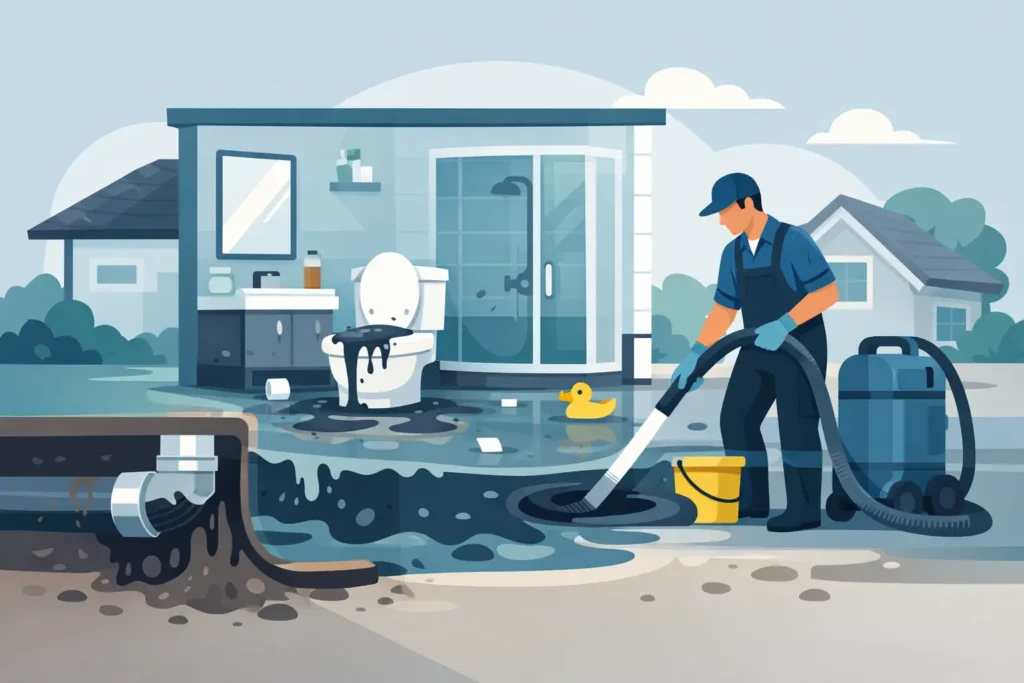
A sewer backup is not a mess you put off until the weekend. When wastewater comes up through a shower drain, toilet, tub, or floor drain, you need sewer backup cleanup Wesley Chapel homeowners can act on right away. The first goal is simple: stop more wastewater from entering the home. The second is finding the blockage or failure that caused it.
Sewage can carry bacteria, viruses, and contaminants. It can also soak into drywall, flooring, cabinets, insulation, and belongings faster than most homeowners expect. Treat it as a plumbing emergency, not a stubborn clog.
What to Do When Sewage Backs Up Into Your Home
First, keep everyone out of the affected area. Children, pets, and anyone with a weakened immune system should stay well clear of standing wastewater. Do not walk through it to investigate the problem.
Then take these immediate steps:
- Stop using all plumbing fixtures. Do not flush toilets, run the dishwasher, shower, or start a load of laundry.
- If it is safe to do so, turn off the water supply to toilets or fixtures that may add more water to the system.
- Avoid using chemical drain cleaners. They will not solve a main sewer blockage and can create a dangerous situation for anyone working on the line.
- Call a licensed residential plumber for emergency drain diagnosis and clearing.
If wastewater is close to outlets, appliances, or your electrical panel, do not touch anything electrical in the area. Shut off power only if you can do it safely from a dry location. Otherwise, wait for qualified help.
Do not try to clean raw sewage with a mop and household disinfectant while the backup is still active. Until the drain line is cleared and the source is stopped, the problem can return with the next flush.
Why Sewer Backups Happen in Wesley Chapel Homes
The cause matters. Clearing the standing water without addressing the line that failed only buys time.
In newer Wesley Chapel neighborhoods, a backup may come from a heavy buildup of wipes, grease, paper products, or other material caught in a branch drain or main line. “Flushable” wipes are a frequent offender. They do not break down like toilet paper, and they can snag on small imperfections inside the pipe.
Older homes around Pasco County may have a different problem. Root intrusion can push into joints and cracks, creating a net that catches toilet paper and waste. Aging pipe, offset connections, corrosion, or a partially collapsed sewer line can also cause repeat backups. A home with a septic system has its own set of possibilities, including a full tank, drain field trouble, or a blocked line between the house and tank.
Florida weather can add pressure, too. Heavy rain does not automatically cause a home sewer backup, but poor drainage, damaged cleanouts, and compromised sewer connections can make an already weak system show its age.
Sewer Backup Cleanup Starts With the Right Diagnosis
A plunger may help a single clogged toilet. It is not the answer when several fixtures are backing up at once. If the toilet gurgles when the washing machine drains, or sewage rises in a tub after flushing, the restriction is usually farther down the line.
A professional drain technician should determine whether the blockage is in a fixture drain, branch line, main sewer line, or septic connection. That is where camera inspection earns its keep. A drain camera can show roots, buildup, a broken pipe, bellies in the line, or an object lodged where it should not be.
The proper clearing method depends on what the camera and the line conditions reveal. Mechanical cabling can cut through many obstructions. Hydro-jetting uses controlled high-pressure water to scour grease, sludge, and root debris from suitable pipe. It is powerful equipment, but it is not a one-size-fits-all answer. A severely damaged, collapsed, or fragile line may need repair instead of aggressive cleaning.
That distinction saves homeowners from paying for the wrong fix. A line that repeatedly clogs every few months is sending a message. It needs more than another quick cable job.
What Professional Cleanup Should Include
Once the plumbing issue is stopped, the affected area needs sanitation and drying. The scope depends on where the sewage traveled, how long it sat, and what materials were exposed.
Nonporous surfaces such as tile, sealed concrete, and some plastic items can often be cleaned and disinfected correctly. Porous materials are tougher. Carpet padding, unsealed wood, swollen laminate, wet drywall, insulation, and upholstered items may retain contamination even after surface cleaning. Those materials may need removal by a qualified restoration crew.
A plumber’s role is to get the wastewater moving in the right direction again and identify the condition of the sewer line. For a significant indoor sewage loss, homeowners may also need a water-damage or biohazard restoration company to handle extraction, removal of contaminated materials, antimicrobial treatment, and drying documentation. That is not an upsell. It is the difference between making a room look clean and making it safe to use again.
Take photos before cleanup begins if you may file an insurance claim. Keep invoices, written findings, and any camera inspection results. Coverage varies by policy and by the source of the backup, so documentation gives you a better starting point when speaking with your insurer.
When a Sewer Backup Is an Emergency
Call for help immediately when sewage is entering living areas, multiple drains are backing up, or you cannot use a toilet without wastewater appearing elsewhere. The same goes for repeated backups, even if they seem small. A recurring gurgle or slow-draining tub can be an early warning before the next full backup.
H.I.P. Home Service & Drain provides residential emergency plumbing response in Wesley Chapel and across the Tampa Bay area. The team uses in-house technicians, stocked trucks, and diagnostic equipment to locate the problem before recommending work. You get a quoted price before repairs begin, not a long sales pitch after the floor is already wet.
How to Lower the Odds of Another Backup
The best prevention is not complicated, but it has to be consistent. Keep grease, coffee grounds, food scraps, wipes, feminine products, paper towels, and hygiene products out of drains and toilets. Put them in the trash instead.
If your home has mature trees near the sewer route, schedule an inspection when drains start slowing down. Do not wait until a root problem becomes a Saturday-night sewage problem. Homes with a history of backups may benefit from periodic drain cleaning or camera inspections, especially before buying a home with older plumbing or after a major landscaping project.
Know where your sewer cleanout is located, too. It is often outside near the home, but it can be buried under mulch, landscaping, or debris. Keeping it accessible can save valuable time when a technician arrives.
A sewer backup feels personal because it happens inside your home. The right response is practical: stop using water, keep people away from the affected area, get the line diagnosed, and make sure contaminated materials are handled properly. Fast action protects your home, your family, and the part of the problem you cannot see behind the walls or underground.