A kitchen sink that starts draining slowly is annoying. A toilet that bubbles when the washer empties is different. Those are the kinds of root intrusion sewer line symptoms Tampa Bay homeowners should take seriously, especially when more than one drain is acting up at the same time.
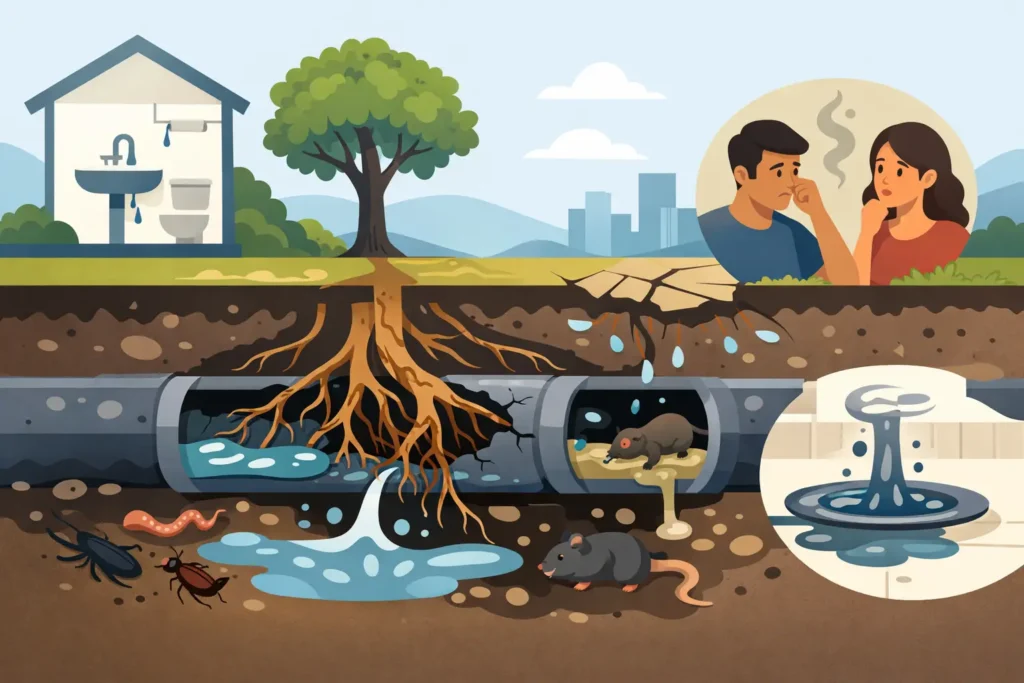
Tree roots can work their way into tiny gaps at sewer-pipe joints, cracks, or failing connections. Once inside, they catch toilet paper, grease, and other waste moving through the line. The blockage grows from there. What begins as an occasional slow drain can turn into a sewer backup in a shower, tub, or bathroom floor drain.
What Root Intrusion Looks Like Inside a Sewer Line
Roots do not usually crush a sound pipe from the outside. They find moisture escaping through an existing weak spot, then follow it. Older clay, cast-iron, Orangeburg, and poorly connected pipe sections are common trouble areas, but newer lines are not immune if a joint shifts or a pipe is damaged.
Florida’s warm weather and fast-growing landscaping give roots plenty of opportunity. Large oaks, palms, crepe myrtles, and mature shrubs near a sewer route can all contribute. The tree is not necessarily the problem. The condition of the pipe is what allows roots to enter.
Once roots reach the inside of the pipe, they act like a net. Paper hangs up. Grease sticks. Solids collect. Water may still get through for a while, which is why many homeowners mistake root intrusion for a normal clog. The difference is that the problem keeps returning.
Root Intrusion Sewer Line Symptoms You Should Not Ignore
The clearest warning sign is a recurring main-line clog. You have the drain cleared, things seem normal, and then the same bathrooms or fixtures back up again weeks or months later. A basic cable machine may punch a temporary opening through the roots without removing the underlying cause.
Pay close attention if several fixtures are affected. A clog in one sink is often local to that fixture. But a toilet that gurgles, a shower that drains slowly, and water rising in a tub after flushing point farther down the system, often in the main sewer line.
Other common signs include:
- Toilets that bubble, burp, or lose water from the bowl when another fixture drains
- Sewage odors near drains, in the yard, or around a cleanout
- Dirty water coming up through a tub, shower, or low floor drain
- Slow drains throughout the home rather than in one room
- Green, unusually lush patches of grass along the sewer-line path
- A wet or soft area in the yard without a clear irrigation leak
A bad smell or wet patch does not prove roots are involved. It could be a broken sewer pipe, a failed cleanout cap, a septic issue, or another drainage problem. That is why guessing is expensive. A camera inspection shows what is actually in the line and where it is located.
The Difference Between a Drain Clog and a Sewer-Line Problem
A plunger may handle a single toilet that was overloaded with paper. A hair clog may slow one shower. Those issues generally stay isolated to one fixture or one branch drain.
Root intrusion tends to create whole-home drainage symptoms. The lowest drain in the house often becomes the first place sewage appears because gravity sends backed-up wastewater there. In many Florida homes, that may be a shower, tub, or first-floor bathroom.
Do not keep flushing, running the dishwasher, or doing laundry when a suspected main-line blockage is causing backup. More water has nowhere to go except back into the home. Stop using water if possible and arrange service before the cleanup gets bigger.
Why Temporary Clearing Is Not Always Enough
A drain cable can restore flow quickly, and sometimes that is the right immediate move during a backup. But it is not automatically a long-term repair. Cutting through root growth leaves small roots behind, and they can regrow into the opening.
Hydro-jetting uses high-pressure water to scour buildup and cut away root masses more thoroughly than a basic cable in many situations. It can be an excellent maintenance and restoration option when the pipe is structurally sound. It is not the best answer for every line, though. A badly cracked, collapsed, severely corroded, or fragile pipe needs to be evaluated before high-pressure cleaning.
Chemical root killers also have limits. Some products may slow regrowth when used correctly, but they cannot repair separated joints, holes, bellies, or broken pipe sections. They should never be treated as permission to ignore recurring backups. The pipe still needs a proper diagnosis.
Camera Inspection Finds the Real Problem
A sewer camera inspection removes the guesswork. A technician sends a camera through the drain or cleanout to view the pipe interior. The video can reveal fine roots, dense root balls, cracks, offsets at joints, scale buildup, standing water, and collapsed sections.
Just as useful, the inspection helps locate the issue. That matters before anyone starts digging in a yard, cutting concrete, or recommending replacement. A root blockage near an accessible cleanout may be handled very differently from a damaged section beneath a driveway or slab.
At H.I.P. Home Service & Drain, the goal is to show homeowners what is in the line, explain the options plainly, and quote the work before it begins. No vague diagnosis. No long sales pitch built around a drain emergency.
Repair Options Depend on Pipe Condition
There is no honest one-size-fits-all answer for root intrusion. The right fix depends on the pipe material, the amount of root damage, the location, and whether the line has failed before.
If the pipe is intact and roots have entered at minor joints, professional cleaning followed by periodic maintenance may be the practical choice. This costs less upfront and can keep the line moving, but it requires attention. Ignoring the schedule can put you right back in a backup situation.
If the camera shows a localized crack, separated joint, or failed short section, spot repair may make more sense. The damaged area is excavated and replaced rather than replacing an entire line. This can be a strong value when the rest of the pipe is in good shape.
When roots are entering at multiple joints or the line is old, brittle, sagging, or repeatedly clogging, a larger replacement may be the more durable investment. It costs more than clearing roots, but repeated emergency calls and property damage add up too. A technician should explain the trade-off clearly, not pressure you into the biggest job.
Protecting the Line After Service
After the line is cleared or repaired, avoid sending grease, wipes, paper towels, feminine products, and heavy food waste down drains. Even products labeled flushable can catch on remaining root fibers or rough pipe walls.
Landscaping also deserves consideration. You do not always need to remove a mature tree. But before planting near a known sewer route, choose plants with less aggressive root systems and understand where the pipe runs. If you have a history of root intrusion, schedule inspection and cleaning before the rainy season or before holiday guests put extra demand on the plumbing.
When to Call for Fast Help
Call for service right away if sewage is backing up indoors, multiple drains stop working, or you smell sewage around the house or yard. These are not wait-and-see problems. Protect floors, keep children and pets away from contaminated water, and stop using fixtures until the line is checked.
For slower, recurring symptoms, do not wait until the next backup forces the issue. A camera inspection can separate a simple blockage from root intrusion and identify whether the pipe needs cleaning, repair, or replacement. A clear answer now is usually cheaper than a sewer cleanup later.
Your sewer line works quietly until it does not. When the same drains keep warning you, listen before a small root problem turns into a mess inside the house.