Water spreading across a kitchen floor, a toilet backing up into the tub, or a water heater dumping from the garage is not a problem to put on tomorrow’s list. Plumbing emergencies can damage cabinets, flooring, drywall, and personal belongings fast. In Tampa Bay, where many homes sit on slab foundations and hard water works on pipes year after year, a small-looking issue can become an expensive one without quick action.
The first goal is not to diagnose everything yourself. It is to stop the immediate damage, keep your family safe, and get a qualified plumber involved before the situation gets worse. A real emergency plumber should answer the phone, show up prepared, explain what failed, and give you a clear price before work begins.
What Counts as a Plumbing Emergency?
Not every drip requires an after-hours call. A faucet that leaks slowly into the sink can usually wait for a scheduled repair. But when water is escaping where it should not, sewage is coming back into the home, or your household has lost a critical plumbing function, waiting creates risk.
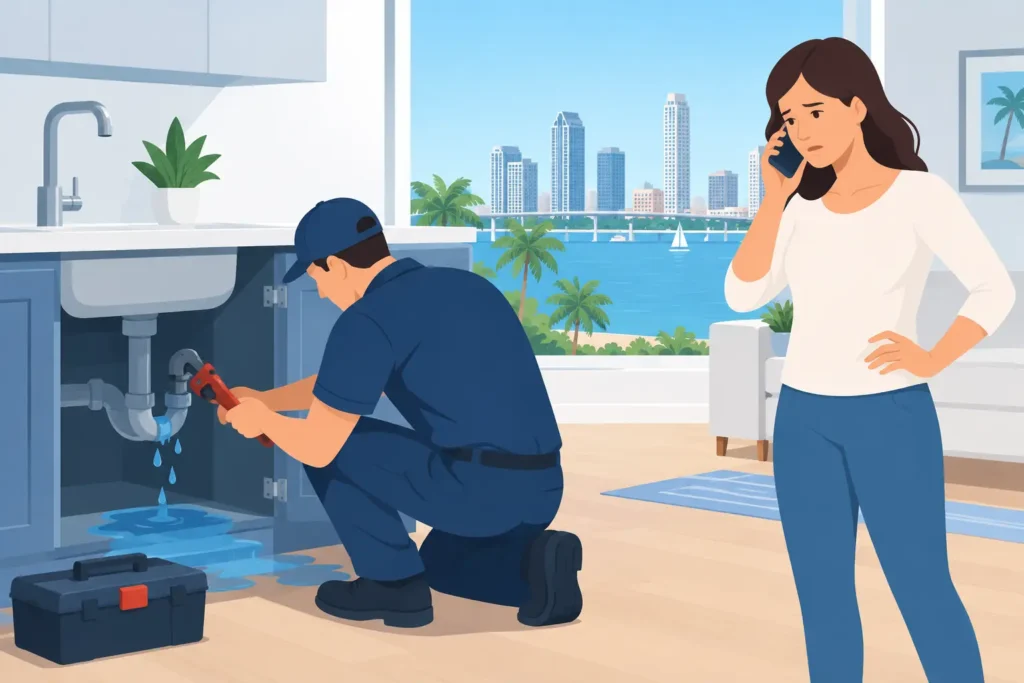
A burst pipe is an emergency. So is a supply line that has come loose under a sink, behind a toilet, or at the water heater. These failures can release gallons of water in minutes. Shut off the nearest fixture valve if it works. If it does not, turn off the home’s main water supply. Most homes have a main shutoff near the water meter, exterior wall, garage, or water heater, but the location varies by neighborhood and home age.
Sewage backups also need immediate attention. If flushing one toilet causes water to rise in a shower or tub, the problem is often in the main sewer line rather than that toilet alone. Do not keep flushing or running water to “test” it. That only adds more wastewater to the backup. Keep children and pets away from the affected area, as sewage carries bacteria and contaminants.
A failed water heater can be urgent, especially when it is leaking heavily, making loud popping sounds, or releasing hot water. Turn off its water supply if you can do so safely. For an electric unit, shut off power at the breaker before touching anything near standing water. For a gas unit, avoid adjusting gas connections yourself. If you smell gas, leave the area and call the gas utility or emergency services first.
First Steps During Plumbing Emergencies
A calm response makes a real difference. Start by shutting off the water source. For a toilet overflow, the small valve behind the toilet may stop the flow. For a broken kitchen or bathroom line, use the fixture shutoff beneath the sink if it is accessible and not corroded. For major leaks, go straight to the main shutoff.
Next, protect the area without putting yourself at risk. Move electronics, rugs, and valuables away from water. Use towels or a wet-dry vacuum for clean-water leaks when it is safe to do so. Avoid using a household vacuum on water. If water is near outlets, appliances, or the electrical panel, do not step into it or touch electrical equipment. Shut off power only if you can reach the panel without crossing wet areas.
Then document what you see. A few photos or a short video can help show the source, the extent of the leak, and any damage before cleanup begins. This can also be useful if you need to speak with your homeowner’s insurance carrier later.
Do not pour chemical drain cleaner into a backed-up line. Those products rarely solve a severe blockage and can leave caustic liquid sitting in the pipe when a technician starts work. Do not try to force a drain cable through a toilet or main line unless you know exactly what you are doing. A damaged porcelain trap, broken pipe, or pushed blockage can turn a drain call into a larger repair.
Why Tampa Bay Homes Face Different Plumbing Problems
Local plumbing issues are not random. Tampa Bay’s hard water leaves mineral scale inside water heaters, fixtures, and supply lines. Over time, that scale can reduce water flow, shorten water-heater life, and contribute to valve or fixture failures. Regular flushing helps conventional water heaters, while tankless systems need periodic descaling to keep performing as intended.
Older homes may have aging galvanized pipe, worn cast-iron drain lines, or repeated pinhole leaks in copper lines. A single pinhole leak can look harmless at first. Behind a wall or under a slab, it can quietly waste water for weeks and raise your bill before visible damage appears. Warm spots on floors, damp carpet edges, mildew smells, the sound of running water when everything is off, and unexplained high water bills all deserve a closer look.
Tree roots are another familiar problem, particularly in established neighborhoods. Roots seek moisture and can enter drain-line joints or cracks. The result may be slow drains at first, followed by recurring clogs or a full sewer backup. Clearing the line can restore flow, but a camera inspection helps identify whether roots, grease buildup, damaged pipe, or a pipe belly caused the blockage. The right repair depends on what the camera finds.
When a Clog Is More Than a Clog
One slow bathroom sink is usually a local drain issue. Multiple fixtures draining slowly at the same time point to something bigger. Watch for toilets that bubble when the washing machine drains, showers that fill when a toilet is flushed, or water appearing at a cleanout outside. Those are signs the main line may be restricted.
A proper diagnosis beats repeated quick fixes. A cable machine can cut through many blockages, while hydro-jetting uses high-pressure water to clear heavy buildup from suitable drain lines. Neither method is automatically right for every home. Older, cracked, or compromised pipes may need a camera inspection first. The goal is to clear the problem without creating a new one.
If a drain has been cleared several times and keeps backing up, ask what is causing the repeat failure. A trustworthy plumber should be able to explain whether the issue is roots, pipe damage, grease, scale, or an installation problem. “It’s flowing now” is not always the same as “it’s fixed.”
The Price Conversation Should Happen Before Repairs
Emergency work is stressful enough without guessing what the bill will be. Homeowners should expect a technician to assess the issue, explain the repair options, and provide upfront pricing before work starts. The price should not shift because you are standing in a wet kitchen at 9 p.m.
Be cautious of vague promises of extremely low service calls that turn into a long menu of surprise charges after someone arrives. You also deserve to know who is doing the work. Residential plumbing repairs should be handled by licensed, insured professionals, not outsourced through a call center to whoever is available.
At H.I.P. Home Service & Drain, the approach is simple: local technicians, stocked trucks, clear answers, and no subcontractor shuffle. That matters when the water is off, the floor is wet, and you need the repair handled right the first time.
Problems That Can Wait Until Morning
It depends on the conditions, but a few issues are usually safe to schedule during regular hours. A dripping faucet, a single slow drain with no backup, a toilet that runs but still flushes, or a water heater that works but has reduced hot-water capacity may not require an emergency visit. Put a bucket under a small, contained drip and avoid using the affected fixture until it can be repaired.
The line changes when there is active water damage, sewage exposure, no usable toilets in the home, no hot water for a household with young children or vulnerable residents, or a leak that cannot be isolated. If you are unsure, describe exactly what is happening when you call. A straight answer from a local plumber is better than guessing.
A Small Amount of Prevention Goes a Long Way
Know where your main water shutoff is before a pipe breaks. Test it occasionally, especially if it has not been moved in years. Keep the area around water heaters and under sinks accessible. Have recurring slow drains inspected rather than treating them with bottle after bottle of chemicals.
Pay attention to changes in your home. A new water stain, a musty smell, a sudden jump in the water bill, or a water heater that starts rumbling is your home asking for attention. Acting early gives you more repair options and usually more control over the cost.
When water or sewage is already where it does not belong, do the safe basics, stop using the plumbing, and call for help. Fast action protects the home you worked hard to own.