
A pipe failure rarely waits for a convenient time. It shows up as a wet ceiling, a rising water bill, weak hot-water pressure, or a cabinet full of water at 10 p.m. When homeowners ask about PEX versus CPVC plumbing, they usually want one clear answer: which material is less likely to cause the next expensive surprise?
For many Tampa Bay homes, PEX is the stronger all-around choice for a whole-home repipe. That does not make CPVC a bad material in every situation. The right decision depends on the age of the home, where the pipes run, the condition of the existing system, local code requirements, water conditions, and the scope of the repair.
PEX Versus CPVC Plumbing at a Glance
PEX and CPVC are both plastic plumbing materials used for hot and cold water supply lines. Neither is metal, so neither has the same rust problems that affect old galvanized pipe or the pinhole leak concerns common with aging copper in some homes.
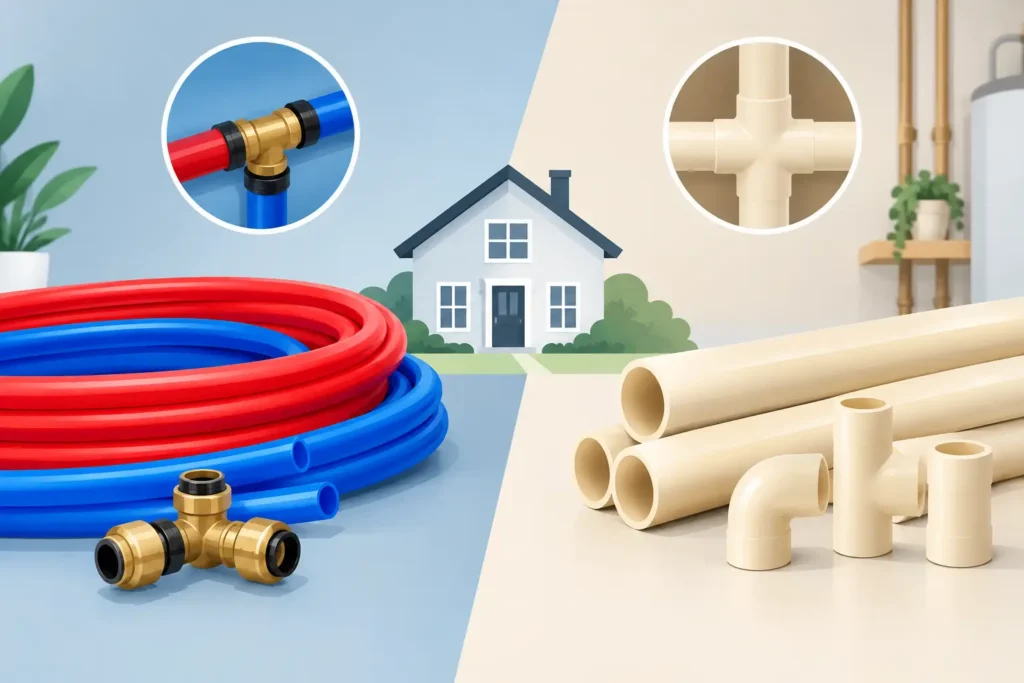
PEX is a flexible cross-linked polyethylene tube. It bends around corners, can run in long continuous sections, and needs fewer fittings than rigid pipe. CPVC, or chlorinated polyvinyl chloride, is a rigid plastic pipe joined with primer and solvent cement. It has been used in Florida homes for decades and is common in many older subdivisions.
The big difference is flexibility. PEX moves. CPVC does not. That matters when a home shifts slightly, a pipe is routed through a tight wall cavity, or water pressure changes quickly when a valve closes.
Why PEX Is Often the Better Repiping Material
A full repipe is not just about replacing old pipe with new pipe. It is about reducing weak points, improving access for future service, and giving the home a water system that can handle everyday use without constant trouble.
Fewer fittings can mean fewer leak points
Every fitting is a connection, and every connection deserves careful installation. Because PEX can bend around framing and through longer runs, it often requires fewer elbows and couplings than CPVC. Fewer connections inside walls and ceilings can reduce the number of potential failure points.
That does not mean PEX is leak-proof. Poor fittings, incorrect installation, damage from nails, or a bad connection can still cause a major leak. The advantage is that a properly designed PEX system usually has fewer glued joints hidden throughout the house.
PEX handles movement better
Florida homes deal with heat, humidity, slab foundations, and occasional temperature swings around water-heater areas, garages, and exterior walls. PEX has some give. It expands and contracts more easily than rigid CPVC, which can help it tolerate minor building movement and pressure changes.
That flexibility is especially useful during a repipe, when technicians may need to route new lines through attics, walls, and ceilings with minimal drywall access. A flexible pipe can often be installed with less cutting than a rigid system.
Better fit for modern manifold systems
PEX can be installed in a trunk-and-branch layout like traditional plumbing, or it can be run from a central manifold. A manifold system gives individual fixtures their own supply lines, similar to separate circuits at an electrical panel.
This approach can make future isolation easier. If a line serving one bathroom needs work, it may be possible to shut down that line without turning off water to the entire home. Not every house needs a manifold, but PEX makes that option practical.
Where CPVC Still Makes Sense
CPVC has earned its place in residential plumbing. Many homes in Wesley Chapel, Land O’ Lakes, Lutz, Zephyrhills, and across Tampa Bay have CPVC that has performed well for years. If a section is accessible and the rest of the system is in good shape, a targeted CPVC repair may be the sensible choice.
It is rigid and familiar
CPVC is straightforward for visible, exposed runs where rigid pipe is appropriate, such as certain water-heater connections or utility-area piping. It is also familiar to many homeowners because it was widely installed in Florida construction for years.
A professional repair can restore service without turning a small problem into a full-house project. If one joint is leaking under a sink or in an accessible garage wall, replacing the damaged section may be enough.
CPVC can cost less for a small repair
For a limited repair, CPVC materials can be inexpensive and readily available. But material price should not be the only factor. Access, labor, the number of brittle sections nearby, and the condition of the existing pipe matter more than the cost of one stick of pipe.
If CPVC has become brittle, discolored, cracked, or repeatedly failed in different parts of the house, patching it again can become false economy. A low-cost repair does not feel low-cost after the third ceiling cut.
The Main CPVC Concern: Age and Brittleness
CPVC does not rust, but it can become more brittle over time. Heat exposure, water chemistry, installation stress, and normal aging can all affect how it performs. Older CPVC can crack when disturbed during a repair, especially at fittings and joints.
That is why a leak in one area sometimes reveals a larger problem. A plumber may open a wall to repair one failed joint and find pipe that is fragile enough to warrant a broader conversation about repiping.
Hard water is another local factor. Tampa Bay water can leave mineral scale inside pipes, around valves, and at fixtures. Scale does not automatically mean your CPVC must be replaced, but it can contribute to restricted flow and put more stress on aging plumbing components. Water-heater maintenance, including flushing when appropriate, also helps protect the overall system.
Water Flow, Noise, and Daily Performance
Homeowners often notice plumbing performance before they see a leak. Maybe the shower drops to a trickle when the washing machine starts. Maybe hot water takes too long to arrive. Maybe pipes bang when a faucet shuts off.
PEX can help reduce water hammer because the tubing has flexibility. Proper pipe sizing, secure supports, pressure regulation, and correctly installed valves still matter. No pipe material can fix a poorly designed system by itself.
Water flow depends mostly on pipe size, layout, mineral buildup, fixture demand, and water pressure. A repipe is an opportunity to correct undersized lines and poor routing left behind by prior repairs. That is where an experienced residential plumber adds value: looking at the whole system instead of swapping pipe and calling it done.
What About Heat and Florida Attics?
Both PEX and CPVC are rated for domestic hot-water use when installed correctly. The installation details matter. PEX should be kept away from direct sunlight because ultraviolet exposure can damage it. Pipes in an attic also need proper support, protection from sharp edges, and insulation where conditions call for it.
CPVC is rigid and may be more vulnerable to cracking if it is stressed or improperly supported. It also relies on solvent-welded joints that need proper preparation and curing. Rushing a repair is never a good idea, especially when the connection will be hidden behind drywall.
For either material, a licensed plumber should follow current local requirements and manufacturer installation standards. The right pipe installed carelessly is still the wrong repair.
When to Repair and When to Repipe
A single leak does not automatically mean you need a whole-home repipe. If the pipe is newer, the failure is isolated, and the system has no history of recurring leaks, a focused repair can be the honest recommendation.
A repipe becomes more reasonable when leaks keep appearing in different rooms, water pressure is declining, visible pipes are brittle or deteriorated, or you are already opening multiple walls and ceilings. Homes with aging galvanized supply lines, repeated pinhole leaks, or a mix of old materials are often better candidates for a planned replacement than another emergency patch.
A proper evaluation should include the leak location, pipe material, age of the plumbing, water-pressure readings, visible condition of accessible lines, and the history of past repairs. It should also include a clear price before work starts. No vague estimate. No surprise add-ons after the walls are open.
The Best Pipe Is the One Installed for Your Home
PEX is usually the preferred material for modern whole-home repiping because it is flexible, efficient to route, and less dependent on a large number of fittings. CPVC can still be a practical option for specific repairs or existing systems that remain in good condition.
The decision should not be made from a photo, a guess, or a high-pressure sales pitch. H.I.P. Home Service & Drain evaluates the problem in front of you, explains the options in plain language, and gives you an upfront price before the work begins.
If you are seeing repeated leaks, unexplained water bills, weak pressure, or cracking CPVC, do not wait for the next pipe to fail behind a wall. Getting a clear diagnosis now gives you time to choose the repair that protects your home, your budget, and your peace of mind.