
A repipe is not the kind of project homeowners plan for on a quiet Saturday. It usually starts with another pinhole leak, a water bill that makes no sense, rusty water, or a pipe that fails under a slab. When comparing PEX versus copper repiping cost, the material price matters, but it is not the whole job. Your home’s layout, the condition of the existing plumbing, wall access, and Tampa Bay water conditions can move the final number substantially.
The right choice is not always the cheapest pipe. It is the pipe that solves the problem without creating a new one, installed by a licensed team that gives you a clear price before work begins.
Why Repiping Prices Vary So Much
A whole-home repipe replaces aging supply lines that carry water to faucets, toilets, showers, appliances, and water heaters. The estimate is built around far more than footage of pipe. A single-story home with an accessible attic is a different project from a two-story home with plumbing buried behind tile, cabinets, or a finished ceiling.
The biggest cost factors include the number of bathrooms and fixtures, whether the home is on a slab foundation, the accessibility of pipe routes, drywall and ceiling repairs, permit requirements, and the condition of shutoff valves and fixture connections. If a home has galvanized pipes, prior patchwork repairs, or repeated slab leaks, the plumber may also need to reroute lines rather than follow failing paths.
That is why phone quotes without an inspection can be a problem. A low number can look good until the crew arrives and starts adding charges for access, valves, wall openings, or repairs that should have been discussed from the start. A proper repipe estimate should explain what is being replaced, how the new lines will be routed, what restoration is included, and what could change the price.
PEX Versus Copper Repiping Cost: The Basic Difference
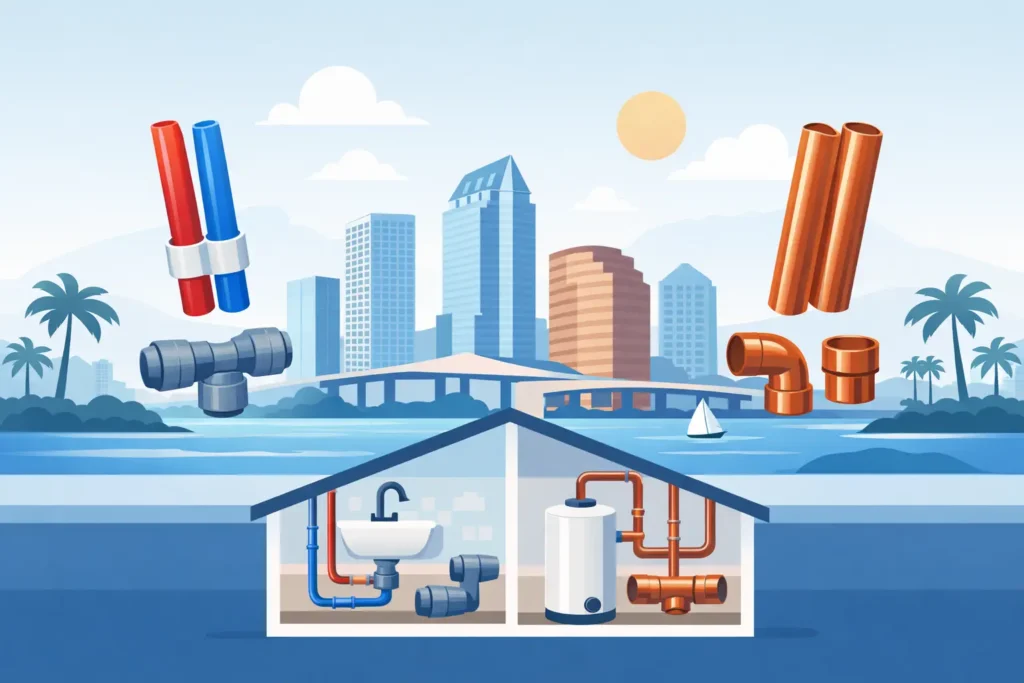
PEX is flexible cross-linked polyethylene tubing. Copper is a rigid metal pipe with a long history in residential plumbing. Both can work well when properly installed, but they have very different labor demands and price points.
PEX usually costs less for a whole-home repipe. The material itself is generally less expensive than copper, and its flexibility lets installers make long runs with fewer fittings. Fewer fittings can mean less labor, fewer potential connection points, and less cutting into walls or ceilings in many homes.
Copper generally costs more because copper is a commodity metal and requires more labor-intensive installation. It must be cut, fitted, and joined at each change in direction. In a home with tight framing, numerous branches, or difficult access, those extra connections and installation time add up quickly.
For many Tampa Bay homeowners, PEX offers the more budget-conscious path to a complete repipe. But cost should not be the only deciding factor. Your existing plumbing, water chemistry, home design, and long-term plans all deserve a look.
What You Are Paying for With PEX
PEX is popular for repipes because it is efficient to install and performs well in many residential applications. Its flexibility allows plumbing lines to route through attics and wall cavities with less disruption than rigid pipe may require. That can reduce labor and the amount of drywall repair needed afterward.
PEX also does not corrode like metal pipe. For homes dealing with recurring pinhole leaks, that is a meaningful advantage. Tampa Bay water can be hard, and mineral-heavy water is not kind to every plumbing material over time. PEX is not immune to poor installation or damage, but it does not develop the same internal corrosion issues associated with aging galvanized pipe and, in certain conditions, copper.
There are trade-offs. PEX must be protected from direct sunlight and installed with the correct supports, fittings, and connections. It is not a shortcut material. A cheap install with poor routing, weak supports, or improper transitions can still cause headaches. The material saves money when it is installed correctly, not when corners are cut.
What You Are Paying for With Copper
Copper has a proven track record, and some homeowners prefer it because it is metal, familiar, and durable when water conditions are favorable. It is rigid, fire-resistant, and commonly accepted by buyers who value traditional plumbing materials.
The higher copper repiping cost often reflects both material and craftsmanship. Copper installation requires precise work at every fitting. That added labor can be worthwhile for a homeowner who specifically wants copper or for a house where the piping plan makes sense for rigid lines.
Still, copper is not automatically the premium answer for every home. Copper can be affected by water chemistry, and certain conditions may contribute to corrosion or pinhole leaks over time. If your home has already experienced repeated copper failures, replacing it with more copper without addressing why those leaks occurred deserves a serious conversation.
Tampa Bay Conditions Matter More Than Most Homeowners Realize
There is no universal “best” repiping material because homes do not have universal conditions. Around Wesley Chapel, Land O’ Lakes, Lutz, Zephyrhills, Tampa, and nearby communities, homes can face hard water, aging plumbing systems, slab foundations, and different water sources or treatment setups.
Hard water leaves mineral scale in fixtures, water heaters, and plumbing components. It may not decide the material choice by itself, but it should be part of the assessment. A repipe is also a good time to inspect the water heater, pressure regulator, shutoff valves, and any water-treatment equipment. High water pressure can shorten the life of nearly any plumbing system, regardless of whether it is PEX or copper.
If you have a slab leak, the best solution may be a reroute through the attic or walls rather than breaking into the slab to repair one failed section. That choice can affect the cost more than the difference between PEX and copper. It can also prevent you from chasing leak after leak through aging lines below the home.
When PEX Is Usually the Practical Choice
PEX is often the practical fit when the goal is to replace failing supply lines efficiently while keeping demolition and labor costs under control. It is especially worth considering in homes with accessible attic routes, multiple fixture branches, or repeated corrosion-related leaks.
It can also make sense for homeowners planning to stay put but watching the budget. A well-installed PEX repipe can deliver reliable water flow and eliminate the constant worry of old galvanized or failing copper lines without putting unnecessary money into material costs.
The key phrase is well-installed. Ask how the plumbing will be routed, what type of PEX system and fittings will be used, whether new shutoff valves are included, and how the installer will test the system before closing walls. A good answer should be plain and specific.
When Copper May Be Worth the Higher Cost
Copper may be worth considering if you have a strong material preference, your home’s plumbing layout supports it without excessive demolition, and an evaluation does not show water conditions likely to cause repeat corrosion concerns. It may also appeal to homeowners who want a more traditional all-metal system and are comfortable with the higher upfront investment.
However, paying more for copper does not make sense simply because someone says it is “better.” Better for what? Better under which water conditions? Better for your particular home? Those are the questions that should guide the decision.
A trustworthy plumber should be able to explain both options without turning the conversation into a pressure pitch. If one material is clearly better for your home, you should hear why. If either option would work, you should get an honest explanation of the cost difference and trade-offs.
Do Not Compare Estimates Line by Line Without Comparing Scope
Two repipe estimates can have very different totals because they cover different work. Before choosing based on price, make sure each proposal addresses the same scope. You need to know whether it includes permits, new angle stops and supply lines, shutoff valves, water-heater connections, pressure testing, drywall access and patching, cleanup, and warranty coverage.
Also ask who will perform the work. Residential repiping affects nearly every room in the house. You want licensed, insured technicians who protect floors, communicate clearly, and stay accountable through the final test. No homeowner wants to discover that the salesperson disappeared and the work was handed to an unknown subcontractor.
At H.I.P. Home Service & Drain, the goal is straightforward: inspect the home, explain the real options, provide upfront pricing, and complete the work with our own team. No call-center runaround. No vague number that changes after the walls are open.
A Better Way to Make the Decision
Start with the reason you need a repipe. Repeated pinhole leaks, rusty water, poor pressure, a slab leak, and aging galvanized plumbing can point to different priorities. Then look at the route the new plumbing will take and the condition of related components. Material is one part of the plan, not the plan itself.
PEX is commonly the lower-cost option and often the sensible choice for a modern whole-home repipe. Copper can be a good fit when its higher price matches your home, your preferences, and your water conditions. The best estimate is not the one with the lowest headline number. It is the one that clearly shows what will be done, protects your home during the work, and leaves you with plumbing you do not have to think about every time you turn on a faucet.