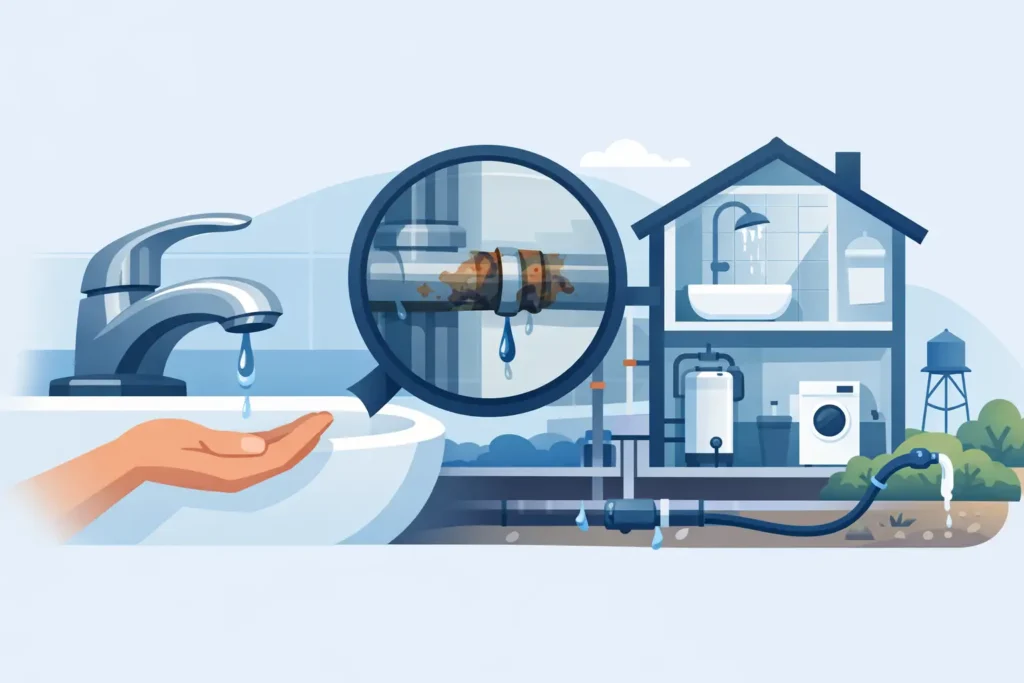
A shower that barely rinses shampoo, a kitchen faucet that takes forever to fill a pot, or a washing machine that seems to run all day can turn a normal morning into a headache. Low water pressure is more than an annoyance. It can point to a simple clogged fixture, but it can also be the first warning of a hidden leak, failing pressure regulator, or aging pipe problem.
The key is figuring out whether the issue is limited to one fixture or affecting the whole house. That distinction tells you a lot before anyone touches a wrench.
First, Know the Difference Between Pressure and Flow
Homeowners often use “pressure” to describe any weak stream of water. Technically, water pressure is the force pushing water through your plumbing. Water flow is how much water actually makes it out of the faucet or showerhead.
A mineral-clogged showerhead may have normal pressure behind it but poor flow at the spray holes. A partly closed main shutoff valve can reduce flow throughout the house. A leak in a supply line may cause both low flow and a noticeable drop in pressure when more than one fixture is running.
You do not need to diagnose the physics of it. Just pay attention to the pattern. Does the problem affect hot water, cold water, or both? Is it one bathroom, one side of the house, or every fixture? Does the water weaken only when the dishwasher, sprinkler system, or another shower is on? Those details matter.
Low Water Pressure in One Fixture Usually Has a Local Cause
If every other faucet in the house works normally, start with the fixture giving you trouble. In many Tampa Bay homes, hard-water minerals collect in faucet aerators and showerheads over time. Sediment can also build up after a water shutoff, plumbing repair, or utility work in the neighborhood.
Remove the aerator from the end of the faucet and rinse out visible grit. Soaking it in a descaling solution can help with mineral buildup. For a showerhead, check whether the spray nozzles are blocked. If cleaning improves the stream, you likely found the problem.
If it does not, the fixture’s internal cartridge, supply stops, or flexible supply line may be restricted. A faucet that has weak hot water but normal cold water is especially likely to have a local issue or sediment affecting the hot-side plumbing. Older fixtures can also fail internally, even when they look fine from the outside.
Be careful with old shutoff valves under sinks and behind toilets. A valve that has not been operated in years may seize, leak, or fail to reopen fully. If it feels stuck, do not force it and create a bigger repair.
When the Whole House Has Weak Water Flow
When low water pressure shows up at multiple fixtures, the cause is usually farther upstream. Start with the simple possibilities. Confirm that the home’s main shutoff valve is fully open. This valve may be near the water meter, in a garage, or where the water line enters the home. If your house has a water softener or whole-home filtration system, check whether a clogged filter or malfunctioning unit is restricting water flow.
A pressure regulator is another common culprit. Many homes have one installed near the main water line to reduce incoming municipal pressure to a safer level for the house. When a regulator starts failing, pressure may become weak, inconsistent, or unusually high at certain times. You might notice a strong burst when you first turn on the faucet, followed by a weak stream.
The municipal supply can also be part of the equation. Nearby utility work, a water-main repair, or a temporary issue in the neighborhood can affect service pressure. If your neighbors are seeing the same thing, call the utility first. If the issue is only at your house, it is time to look at the home’s plumbing system.
Tampa Bay Plumbing Problems That Can Reduce Pressure
Local water conditions and housing age make a difference. Newer homes in Wesley Chapel, Land O’ Lakes, and nearby developments can still have fixture-scale buildup, clogged filters, or pressure-regulator trouble. Older homes across Tampa Bay may have a more serious issue inside the pipes.
Galvanized steel pipes corrode from the inside out. As rust and mineral deposits narrow the pipe interior, water has less room to move. The outside of the pipe can appear solid while the inside is heavily restricted. The result is often a gradual loss of pressure that gets worse over the years.
Copper pipes can develop pinhole leaks, particularly where water chemistry and age have taken a toll. A hidden leak under a slab, behind a wall, or in a ceiling can reduce available pressure and raise your water bill at the same time. Watch for warm flooring, damp spots, musty odors, a meter that moves when water is off, or the sound of water running when no fixture is in use.
Tree roots do not usually cause low pressure in water lines, but they can damage drain lines. That is a different problem with different symptoms. Slow drains, gurgling, sewage odors, and backups call for a drain inspection, not a pressure adjustment.
Do Not Turn the Pressure Up Without Testing It
It is tempting to adjust a regulator or make changes at the water meter when the shower feels weak. That can backfire. Excessively high water pressure can strain appliance hoses, toilet fill valves, water heaters, faucets, and pipe connections. It may solve one complaint while creating leaks elsewhere.
A plumber can test static pressure and running pressure, then determine whether the issue is the regulator, pipe restriction, a leak, or a fixture problem. The answer is not always a major repair. Sometimes a filter replacement, cartridge repair, valve correction, or new showerhead is all it takes. Other times, a camera inspection, acoustic leak detection, or a repiping plan is the honest next step.
That is why a real diagnosis matters. Replacing parts until something works is expensive guesswork.
Signs You Should Call a Plumber Soon
A sudden pressure drop deserves more attention than a shower that has slowly weakened over several years. Call for help promptly if low pressure comes with a high water bill, visible moisture, discolored water, banging pipes, water heater trouble, or a pressure change that affects the entire house.
You should also call if water pressure falls sharply whenever another fixture runs. A small dip can be normal in some homes. A major drop, such as a shower turning to a trickle when someone flushes a toilet, may indicate an undersized line, a failing regulator, a serious restriction, or a plumbing system that needs closer inspection.
If you see active water leaking from a pipe, ceiling, wall, or slab area, shut off the home’s main water supply if you can do so safely and request emergency service. Waiting for a hidden leak to “settle down” can mean damaged flooring, drywall, cabinets, and insulation.
A Straight Answer Beats a Fast Guess
At H.I.P. Home Service & Drain, the goal is to find the actual cause before recommending a repair. That may mean checking fixture flow, testing pressure, inspecting shutoff valves, or using leak-detection equipment when the signs point to a hidden problem. You get the price before work begins, not a long sales pitch after someone is already in your home.
Weak water flow does not always mean your plumbing is failing, but it is worth paying attention to the pattern. Take note of which fixtures are affected and whether the issue is getting worse. A clear description helps a qualified plumber get to the right repair faster, and it can keep a small restriction from becoming a much bigger water-damage problem.