A water bill jumps for no clear reason. The floor near the kitchen feels warm. You hear water moving when every faucet is off. That is when homeowners start reading leak detection reviews – usually while hoping the problem is smaller than it feels. Reviews can help, but only if you know what to look for beyond a star rating.
A hidden leak is not a job for guesswork, a sales pitch, or a technician who wants to start cutting drywall before locating the source. For Tampa Bay homeowners, the right review tells you whether a plumbing company found the leak accurately, explained the options plainly, and left the home in better shape than they found it.
How to Read Leak Detection Reviews
Start with the details, not the average score. A five-star review that says “Great service!” is nice, but it does not tell you whether the company can handle a slab leak, a pinhole leak behind a wall, or a water line leaking under a driveway. Look for reviews written by people who describe a problem similar to yours.
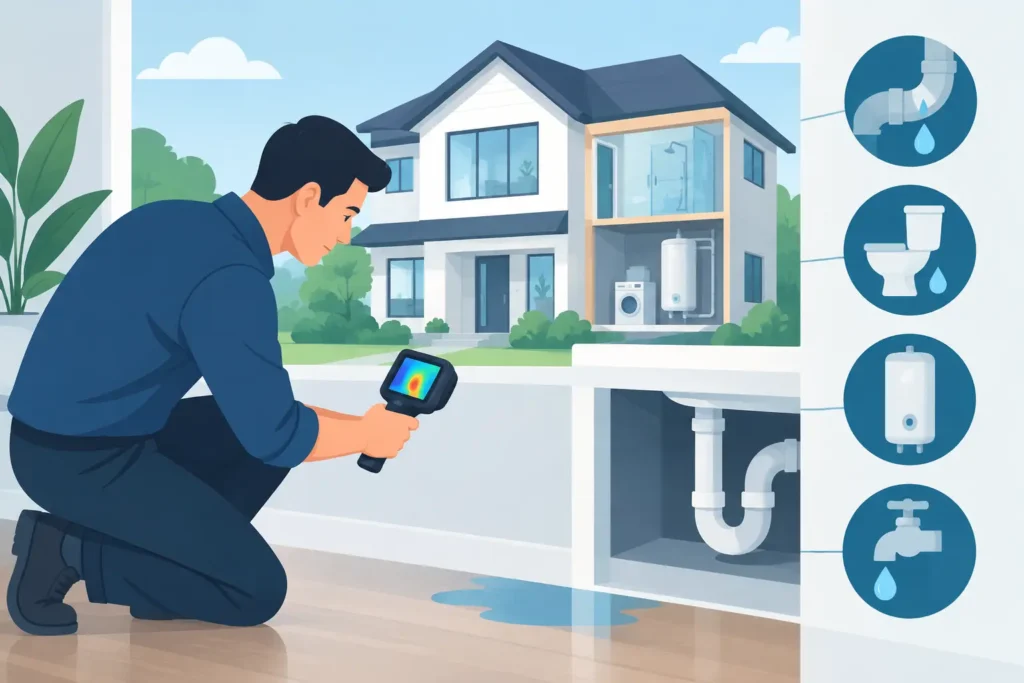
The most useful reviews often mention what the technician did before recommending a repair. Did they use acoustic listening equipment, thermal imaging, pressure testing, moisture detection, or a camera inspection when the situation called for it? A good leak detection visit starts with evidence. The goal is to narrow down the source without tearing up floors, walls, or landscaping unnecessarily.
Pay attention to language around communication, too. Homeowners should know what the technician found, how certain the diagnosis is, what repair choices are available, and what each choice costs. “They explained everything” matters more than it may sound. A hidden leak is stressful. Clear answers keep it from becoming an expensive guessing game.
Look for Proof of Diagnosis, Not Just Fast Arrival
Fast service matters when water is actively damaging a home. But speed alone is not enough. A company can show up quickly and still misdiagnose the problem. The strongest reviews describe both: a prompt response and a careful inspection.
For example, a homeowner may report a high water bill and assume there is a leak under the slab. Sometimes that is correct. Sometimes the issue is a running toilet, a leaking irrigation connection, a failed water heater relief valve, or a small leak in an exterior line. A responsible plumber tests before declaring a slab leak.
This is especially relevant in Wesley Chapel, Land O’ Lakes, Lutz, Zephyrhills, and other growing areas where homes can have different plumbing materials and layouts depending on when they were built. Older homes may have aging galvanized lines or recurring pinhole leaks. Newer homes can still develop failures at fittings, valves, and buried lines. The right diagnostic method depends on the symptom and the plumbing system.
Reviews that mention a technician finding the exact issue before discussing repairs are worth extra attention. So are reviews from homeowners who say the plumber ruled out more obvious causes first. That is not wasted time. It is how you avoid paying for the wrong repair.
What Leak Detection Reviews Often Miss
Online reviews rarely tell the whole story. A homeowner may be thrilled that a leak was found, but not mention whether the quoted repair price changed later. Another may be upset about the cost without explaining that the job involved a difficult underground line, extensive access work, or an emergency after-hours call.
Read for patterns rather than treating one comment as the complete truth. If multiple customers mention upfront pricing, clean work areas, calls returned quickly, and repairs that held up, that is meaningful. If the same complaints appear repeatedly – surprise charges, vague diagnoses, missed appointments, or pressure to replace more plumbing than necessary – take those seriously.
A fair review process also means understanding the difference between diagnosis and repair. Leak detection is the work of locating and confirming the problem. Repair is a separate step, and it can range from replacing a short exposed section of pipe to rerouting a line or addressing a leak beneath a slab. A reputable company should explain that difference before work begins.
Pricing Comments Need Context
Homeowners understandably focus on price. Nobody wants a plumbing surprise, especially after a high water bill or water damage has already created stress. Still, the lowest advertised number is not always the lowest final cost.
When reading reviews, look for comments such as “the price was explained before work started” or “there were no surprises on the invoice.” Those phrases point to a company that respects the homeowner’s decision. A clear quote lets you compare options without getting trapped by a low service-call offer that turns into a long list of add-ons.
It also helps to notice whether reviewers felt pushed into a large repair. Some leaks require major work. A leaking line beneath a slab can call for a direct repair, a reroute, or repiping in certain situations. There is no one-size-fits-all answer. What matters is whether the plumber showed the evidence, explained the trade-offs, and gave you room to make an informed choice.
A direct repair may cost less upfront but may not make sense if the surrounding pipe has a history of failures. A reroute can avoid breaking concrete, but it may involve opening walls or ceilings. Whole-home repiping is a bigger investment, yet it can be the practical answer for a home with repeated leaks in failing pipe. Good reviews often reveal whether a company explains those choices honestly instead of steering every customer toward the most expensive option.
Clean Work and Respect for Your Home Matter
Leak detection can involve attics, garages, closets, crawl spaces, bathrooms, and sometimes areas near finished flooring. The plumbing company is not only working on pipes. They are working inside your home.
Look for reviews that mention shoe covers, protective coverings, cleanup, respectful technicians, and care around pets or family schedules. Those are not minor extras. They are signs of a team that treats residential service work seriously.
The same goes for follow-through. If access must be created for a repair, ask who is responsible for each stage and what will be restored. Plumbing companies may repair the plumbing connection but not perform specialty flooring, drywall texture, or painting work. That is normal when it is explained in advance. What is not acceptable is finding out after the job that nobody discussed the access point or the next steps.
Check Whether the Company Handles the Work In-House
Some companies operate like a lead-generation machine. You fill out a form, a call center routes the job, and whoever is available shows up. That setup can work for simple tasks, but hidden leaks demand accountability.
Reviews that consistently name the company’s own technicians and describe reliable communication are a good sign. You want to know who is entering your home, who is diagnosing the problem, and who will answer if you have a question after the repair. Licensed, insured plumbers using their own equipment and trucks have a clearer line of responsibility than a rotating network of subcontractors.
At H.I.P. Home Service & Drain, that accountability is part of the job: local residential technicians, clear pricing before work begins, and no call-center runaround when a homeowner needs answers.
Know When to Stop Reading and Call
Reviews are useful research, but they should not delay an urgent response. Call a plumber promptly if you have water coming through a floor or wall, a sudden loss of water pressure, a meter that continues moving with all fixtures off, a warm spot on the slab, mildew odor with no obvious source, or a water bill that has climbed sharply.
If water is actively flowing, shut off the home’s main water supply if you can do so safely. Move belongings away from the affected area. Then call for professional diagnosis. Do not assume a small damp spot will stay small. Water can travel along framing, beneath flooring, and through soil before it becomes visible.
The best leak detection review is not the one with the most dramatic story. It is the one that shows a company arrived, found the real source, gave a straight answer, quoted the work clearly, and stood behind the repair. When your home is showing signs of a hidden leak, look for that kind of record – then get the problem checked before a quiet drip turns into a major repair.