A kitchen sink that backs up every few weeks is not “just one of those things.” Neither is a toilet that gurgles when the washing machine drains. When homeowners ask about hydro jetting versus snaking, they usually want one answer: what will fix the clog for good without damaging the pipe or wasting money?
The honest answer is that it depends on what is inside the line and what condition the pipe is in. A drain snake can be the smart, fast solution for a simple blockage. Hydro jetting can clean far more of the pipe wall and handle buildup that a snake leaves behind. The right choice starts with diagnosis, not a sales pitch.
Hydro Jetting Versus Snaking: The Real Difference
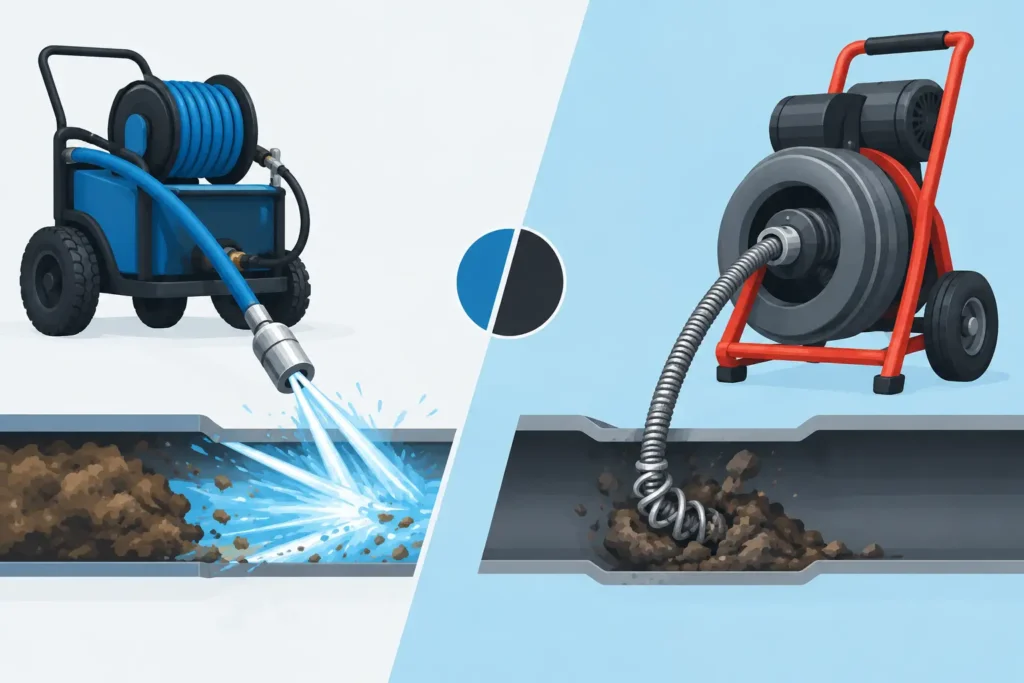
Snaking, also called cabling or augering, uses a flexible steel cable with a cutting head or retrieval tool on the end. A technician feeds the cable through the drain to break apart, punch through, or pull out a blockage. Think of it as creating a path through the clog so water can move again.
Hydro jetting uses a specialized hose and nozzle that sends highly pressurized water through the drain line. The nozzle jets water forward to break up the obstruction and backward to scour the inside of the pipe as it moves. Rather than making a hole through the clog, it washes away grease, sludge, soap residue, loose scale, and many root intrusions across much more of the pipe interior.
That does not mean hydro jetting is automatically better. It is a stronger cleaning method, but strong equipment belongs in capable hands. Before jetting an older, damaged, or questionable pipe, a professional should inspect the line and confirm it can handle the service.
When a Drain Snake Is the Better Call
A snake is often the right first move when the obstruction is close to the fixture or clearly caused by a single item. Hair in a bathroom drain, a small wad of paper, a toy flushed by a child, or a localized toilet stoppage may not need a full pipe cleaning.
Snaking is also useful when the goal is to restore flow quickly while identifying the bigger issue. If the cable hits roots, heavy grease, or a damaged section of line, that tells the technician and homeowner more than guessing ever will. A camera inspection can then show whether the pipe needs cleaning, repair, or replacement.
For Tampa Bay homeowners, this matters because not every home has the same plumbing. A newer home near Wiregrass may have PVC drain lines in good condition. An older home in Pasco County may have aging cast iron, galvanized components, bellied pipe, offset joints, or root intrusion near the sewer lateral. The tool should match the line.
A snake also has limits. It can punch a channel through grease without removing the greasy coating stuck to the pipe wall. Water starts flowing, everyone is relieved, and then the buildup catches more debris. A few weeks or months later, the same drain is slow again.
What Hydro Jetting Handles Best
Hydro jetting is usually the stronger option for recurring whole-home drain problems. If more than one fixture is slow, the toilet bubbles, sewage backs up in a shower, or the kitchen line clogs again after repeated snaking, there is often a larger buildup issue farther down the line.
It is especially effective against grease. Kitchen grease does not simply disappear when hot water sends it down the sink. As it cools, it sticks to the pipe and traps food particles, detergent residue, and other debris. Over time, the opening inside the pipe gets smaller. A cable may open the center. Hydro jetting is designed to clear the coating around it.
Jetting can also address many root-related clogs. Florida’s warm climate and mature landscaping mean roots actively seek moisture around tiny cracks, loose joints, and aging connections. Water pressure can cut through and flush out smaller root masses. But it cannot repair a broken line or permanently stop roots from returning through a failed joint. If a camera reveals significant root entry or pipe damage, repair is the real fix.
Hard-water scale is another local factor. Mineral deposits can build up inside certain pipe materials, reducing flow and giving debris something to cling to. Hydro jetting may improve the line when scale is loose enough to be cleaned, but severely corroded or deteriorated pipe may need a different solution.
Camera Inspection Comes Before Pressure
No responsible plumber should treat every clogged line like a target for maximum pressure. Hydro jetting is safe and effective when the pipe is structurally sound enough for it. It is not the first choice for a line that is cracked, collapsed, badly corroded, or already compromised by age.
That is why a camera inspection is valuable, especially for recurring sewer backups. The camera shows where the blockage is, what likely caused it, and whether the pipe has standing water, roots, scale, breaks, or a belly. It turns a vague “my drains keep backing up” complaint into a clear repair plan.
A good technician will explain what the camera sees in plain English. You should not get pushed into a service you do not need, and you should not be told a line is fine without any evidence. The price should be quoted before work begins, not revised after your kitchen is already torn apart.
Cost Is About the Problem, Not Just the Tool
A basic snaking service generally costs less than hydro jetting because the equipment and setup are simpler. If the clog is simple and isolated, paying for jetting may be unnecessary. Homeowners deserve that straightforward answer.
But choosing the least expensive service every time can cost more when a drain repeatedly clogs. A cable service that restores flow for a month is not a long-term bargain if grease or roots are still lining the pipe. In that case, hydro jetting may reduce repeat service calls and protect the home from a much messier backup.
The right estimate should account for access, the affected drain line, the severity of the blockage, whether a camera inspection is needed, and the condition of the piping. Be cautious of anyone offering a suspiciously low drain-cleaning price without asking questions. The cheap number can be the hook for a long upsell once someone is in the house.
Do Not Treat Chemical Cleaner as a Third Option
Store-bought chemical drain cleaners are not a substitute for either method. They often sit in the pipe without fully removing the blockage, can create heat, and may damage certain pipes or fixtures over time. They also make the job more hazardous for the person who eventually has to open the drain.
If you have already used a chemical cleaner, tell the technician before work starts. Do not run more product down the drain while waiting for help. For a minor sink clog, a plunger or manual drain tool may be reasonable. For recurring backups, foul odors, or sewage coming up through a tub or shower, stop using water and call a licensed plumber.
Signs You Need More Than a Quick Snake
A slow drain is annoying. A pattern is a warning. Pay attention when several drains slow at once, water backs up in a different fixture, toilets gurgle, or the clog returns shortly after service. Those symptoms often point to a main drain or sewer-line issue rather than hair caught near one sink.
The same is true when a home has a known history of roots, older cast-iron piping, or frequent kitchen-line blockages. Repeatedly forcing a cable through the same trouble spot may buy time, but it does not answer why the clog keeps forming.
For these situations, H.I.P. Home Service & Drain can inspect the line, explain what is actually happening, and recommend the least invasive solution that makes sense. No outsourced crew. No call-center runaround. Just a clear diagnosis and an upfront price before work begins.
A Clean Drain Should Stay Clean
The best drain-cleaning decision is not the most aggressive one. It is the one that fits the blockage, the pipe, and the history of the home. A snake is often perfect for a simple, localized clog. Hydro jetting earns its place when the line needs real cleaning, not just a temporary opening.
If a drain keeps making the same problem come back, do not keep feeding it chemicals or hoping it clears itself. Ask what is in the pipe, ask whether the line has been inspected, and choose the fix that gives your home a real chance to stay flowing.