A drain that keeps backing up is rarely “just a clog.” If you have already plunged, snaked, or poured cleaner down the line and the problem comes right back, hydro jetting Tampa Bay homeowners rely on may be the better answer. It cleans the pipe wall, not just a narrow path through the blockage.
That distinction matters in homes across Wesley Chapel, Land O’ Lakes, Lutz, Tampa, Brandon, and the rest of the Bay area. Grease, soap residue, scale from hard water, wipes, and tree roots can build up over years. A basic cable machine may restore flow for now. Hydro jetting is designed to remove the buildup that keeps causing trouble.
What Hydro Jetting Actually Does
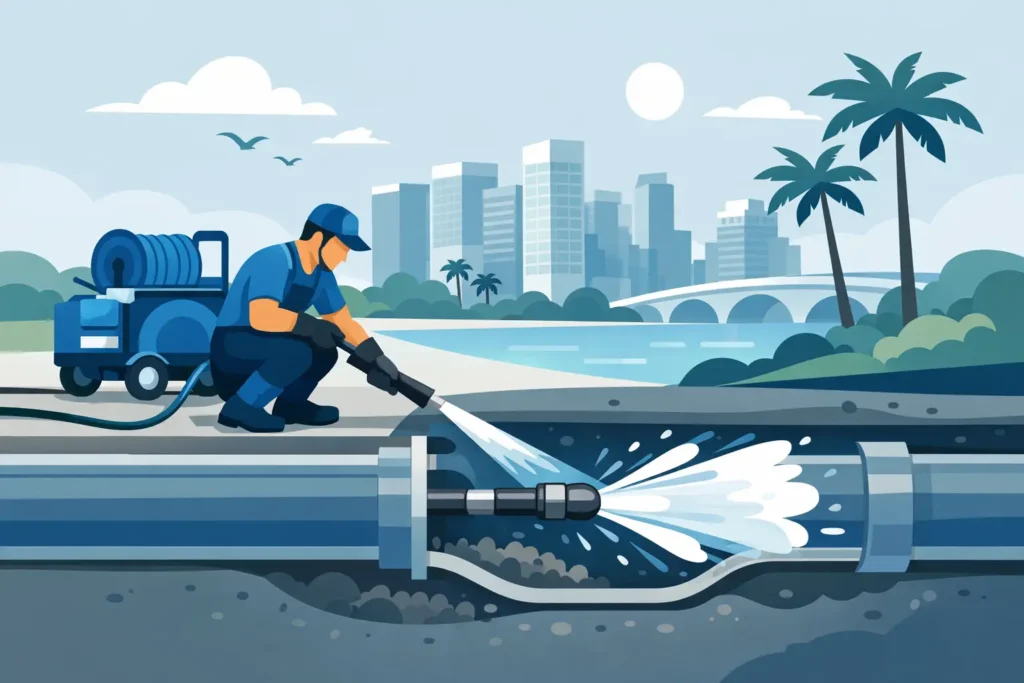
Hydro jetting uses a specialized hose and nozzle to send high-pressure water through a drain or sewer line. The nozzle pushes forward while rear-facing jets wash debris back toward the access point. It can cut through grease, sludge, soft root growth, mineral scale, and packed organic debris without adding harsh chemicals to the plumbing system.
This is not a garden hose trick, and it is not a one-size-fits-all service. The technician controls water pressure based on the line, the material, the condition of the pipe, and what the inspection shows. Used properly, hydro jetting can clean a long section of pipe far more thoroughly than a standard drain snake.
A cable machine has a place. It is often the right first tool for a simple toilet stoppage or a localized clog. But a cable generally punches a hole through the material. If the inside of the pipe is still coated with grease or scale, that opening can close again quickly. Jetting addresses the residue left behind.
Signs Your Tampa Bay Home May Need Hydro Jetting
Recurring backups are the clearest sign. You clear the kitchen sink, then it slows down again a few weeks later. The shower drains slowly whenever the washing machine runs. The toilet bubbles when another fixture empties. Those patterns can point to a partial blockage farther down the line.
Kitchen drains are common candidates, especially in busy households. Even careful homeowners send a little cooking grease, food residue, and detergent film down the drain over time. In older homes, rough pipe interiors give that material more places to cling.
Main sewer lines can also collect roots. Florida’s warm climate supports aggressive root growth, and roots look for moisture wherever they can find it. A tiny crack or loose pipe joint can become an entry point. Hydro jetting can clear roots that have entered the line, but it cannot repair a broken pipe or seal a failed joint. If roots keep returning, camera findings may point to a repair or replacement instead.
Other warning signs include foul drain odors, gurgling fixtures, water pooling around a floor drain, and multiple drains slowing down at once. A single slow bathroom sink may be a local hair-and-soap clog. Several fixtures acting up usually deserves a closer look at the main line.
Why Camera Inspection Comes First
The fastest solution is not always the right solution. Before high-pressure cleaning, a camera inspection helps confirm what is inside the pipe and whether the pipe can safely handle jetting.
That matters with aging galvanized lines, severely corroded cast iron, cracked PVC, collapsed sections, or lines that have shifted underground. Water pressure will not fix structural damage. In the wrong pipe, it can expose a weakness that was already there.
A proper inspection gives homeowners a straight answer: Is this grease and scale? Is it root intrusion? Is there a belly in the line where waste collects? Is the pipe broken? You should not have to approve a major drain service based on guesswork.
For a sound pipe with heavy buildup, jetting is often a strong value because it can delay repeat service calls. For a pipe that is deteriorated or damaged, the honest recommendation may be repair first. That is not an upsell. It is the difference between cleaning a line and pretending the line is healthy.
Hydro Jetting Tampa Bay Pipes: What the Visit Looks Like
A professional hydro jetting appointment starts with questions about what is backing up, when it happens, and which fixtures are affected. The technician then locates the best access point, often a cleanout, and evaluates the line before putting high-pressure water into it.
Once the condition and blockage are confirmed, the jetting hose is fed into the line. The nozzle selection and pressure are matched to the job. Heavy kitchen grease calls for a different approach than light root intrusion or general scale buildup. The goal is controlled cleaning, not brute force.
As the line is cleaned, debris is flushed out and flow is checked. A follow-up camera inspection can show whether the pipe walls are clear and whether there are underlying defects that need attention. You get evidence of what was found instead of a vague promise that someone “took care of it.”
For homeowners, the practical side should be simple: clear access to the cleanout if possible, keep pets and children away from the work area, and let the technician know about past sewer repairs or known pipe issues. Most of the work happens at the access point, but an indoor backup or difficult cleanout location may require additional preparation.
When Jetting Is Better Than Snaking – and When It Isn’t
Hydro jetting is usually the better choice when the issue is widespread buildup or a recurring blockage in a pipe that is structurally sound. It is particularly effective for grease-heavy kitchen lines, accumulated sludge, scale, and roots that are obstructing flow.
It is not automatically necessary for every clog. A child’s toy in a toilet, a small hair clog near a shower drain, or a single isolated stoppage may be resolved with a conventional drain-cleaning method. Starting with the right diagnostic work keeps homeowners from paying for more service than the problem requires.
Jetting also has limits. It cannot retrieve solid objects lodged in a line. It cannot correct a pipe with poor slope. It cannot rebuild corroded metal or repair a collapsed sewer lateral. When the camera shows structural failure, repair is the durable fix.
Be cautious with anyone who offers hydro jetting as an instant answer without inspecting the line. The right plumber explains the condition of the pipe, the reason for the recommended method, and the price before work begins. No surprise charges after the job is underway.
Keeping the Line Clear After Service
A freshly cleaned drain line deserves better than a quick return to old habits. Avoid pouring grease into the sink, even if you follow it with hot water. Grease cools farther down the pipe and sticks where you cannot see it. Wipe pans into the trash first, use sink strainers, and keep wipes, paper towels, and hygiene products out of every toilet.
If your home has recurring root intrusion or a history of sewer trouble, periodic camera checks may make more sense than waiting for another weekend backup. The timing depends on the pipe condition, nearby trees, and how quickly the issue has returned in the past.
Chemical drain cleaners are not a maintenance plan. They can sit in a blocked line, create heat, damage certain pipe materials, and put whoever opens the line next at risk. For a slow drain that persists, get the cause identified instead of adding another bottle.
A Clear Answer Beats Another Temporary Fix
A sewer backup can turn a normal morning into a mess fast. You need a local team that picks up, shows up, inspects the line, and tells you what is actually wrong. H.I.P. Home Service & Drain provides residential drain service with in-house technicians, upfront pricing, and the equipment to diagnose the problem before recommending the fix.
If your drains keep slowing down, do not wait for the next full backup to force the issue. A camera inspection and the right cleaning method can give you a clear path forward – and a home that drains the way it should.