That rotten-egg or musty smell coming from a sink, shower, or laundry drain is not something to cover up with candles. It is your plumbing telling you something has changed. Knowing how to stop drain odors starts with finding out whether you have harmless drain buildup, a dry trap, a developing clog, or sewer gas getting where it should not be.
For many Tampa Bay homeowners, the fix is simple. Florida heat, humidity, hard water, and long stretches between using a guest bathroom can all make drain odors show up fast. But if the smell returns after cleaning or spreads through the house, it is time to take it seriously.
Start by Identifying the Type of Smell
A sour, mildew-like odor usually points to organic buildup inside the drain. Hair, soap scum, toothpaste, food residue, and grease create a slimy film that bacteria feed on. You may notice this most in bathroom sinks, shower drains, kitchen sinks, and garbage disposals.
A sulfur or rotten-egg smell can come from bacteria in a drain, but it can also indicate sewer gas. Sewer gas should stay behind the water seal in your plumbing traps and move safely out through the vent system on the roof. When that protection fails, the odor can enter the room.
If the smell is strongest only when the water runs, the issue may be in the drain itself. If it is present all day, gets worse after flushing a toilet, or appears near more than one fixture, skip the home remedies and have the plumbing inspected. A sewer gas issue is not a guessing game.
How to Stop Drain Odors From a Dry P-Trap
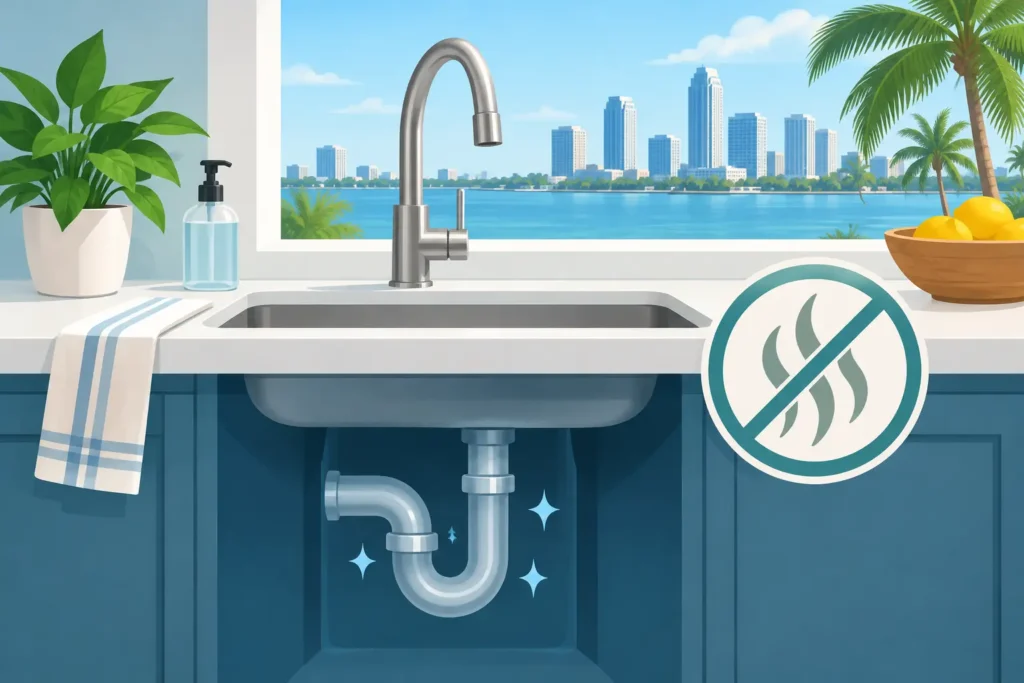
Every sink, shower, tub, and floor drain should have a P-trap: the curved section of pipe below or just beyond the drain. It holds a small amount of water that blocks sewer gas from coming back into your home.
Guest bathrooms, unused showers, laundry-room floor drains, and spare sinks are common trouble spots. In Wesley Chapel and throughout Tampa Bay, an empty home, a vacation schedule, or simply a bathroom nobody uses can let that water evaporate faster than homeowners expect.
Run water into the drain for 30 to 60 seconds. For a floor drain or rarely used fixture, pour in a few cups of water. If the odor disappears and stays gone, a dry trap was likely the problem.
For drains that sit unused for weeks, add a teaspoon or two of mineral oil after adding water. The oil floats on top and slows evaporation. Do not use cooking oil. It can turn rancid and create a new odor problem.
If filling the trap does not help, or the water seems to vanish again within a day or two, there may be a cracked trap, a leaking connection, or a venting problem. That needs a professional repair.
Clean the Buildup That Makes Drains Smell
Drain cleaner is not always the answer. Harsh chemical products can damage older pipes, irritate your skin and lungs, and create a dangerous mess if they sit in a backed-up line. They also do little to remove the sticky buildup coating the pipe walls.
Start with the drain stopper or pop-up assembly. In a bathroom sink, this is often where hair, soap, and toothpaste sludge collect. Pull it out if it is designed to be removed, wear gloves, and clean it with a brush and hot soapy water. A shower drain cover can be cleaned the same way.
Next, flush the drain with hot tap water. For most bathroom drains, follow with a small amount of dish soap and more hot water. This helps loosen oils and residue without attacking the plumbing.
A kitchen sink needs a different approach because grease is usually part of the problem. Never send a pan of cooking grease down the disposal or drain. Even if it leaves as a liquid, it cools and sticks farther down the pipe. Wipe greasy pans into the trash first, then wash them.
For a garbage disposal odor, turn off power at the switch and never put your hand inside. Run cold water, add a few ice cubes and a small amount of dish soap, then run the disposal. Ice helps scrub loose debris from the grinding chamber. Citrus can make the disposal smell fresher for a short time, but it does not fix a clog or heavy buildup.
Avoid mixing baking soda, vinegar, bleach, ammonia, or commercial drain chemicals. Those combinations can produce harmful fumes or leave you with a dangerous chemical backup. Simple mechanical cleaning is usually safer and more effective.
Check for a Slow Clog Before It Becomes a Backup
A drain that smells bad and drains slowly is often holding decaying material somewhere in the line. You may see water pooling around your feet in the shower, hear gurgling after a toilet flushes, or notice the kitchen sink backing up when the dishwasher drains.
A plunger can help with a minor sink or tub clog. For a sink, block the overflow opening with a wet cloth first so the plunger can build pressure. Use steady, controlled strokes rather than hard slamming. If water begins moving normally and the smell fades, you may have cleared a small blockage.
Do not keep plunging or pouring products into a line that is fully backed up. Water can spill into cabinets, under flooring, or across a bathroom before you realize the blockage is deeper in the system.
Recurring clogs deserve more than a quick fix. Hair and soap may be the culprit, but Tampa Bay homes can also deal with root intrusion, aging drain piping, shifted pipe sections, and heavy scale buildup. A camera inspection shows what is actually inside the line. It replaces guessing with a clear answer.
When Sewer Gas May Be the Real Problem
Sewer gas odors are usually stronger, more persistent, and harder to trace to one drain. You may notice them around a toilet base, under a sink, near a washing machine standpipe, or in a bathroom that looks perfectly clean.
Common causes include a dry or damaged P-trap, a failed toilet wax ring, a cracked drain line, a loose cleanout cap, or a blocked plumbing vent. Vent pipes carry sewer gases up and out of the home. When a vent is blocked or improperly installed, pressure changes can pull water from traps or force odors back through fixtures.
A toilet that rocks when you sit on it, leaks around the base, or smells like sewer gas should be addressed promptly. The seal below the toilet may have failed. Caulking around the base to hide the smell is not a repair.
You should also call for help if odors began after a remodel, after heavy rain, or alongside bubbling toilets and multiple slow drains. Those signs can point to a larger drain or sewer issue. In homes with slab foundations, locating a damaged underground line early can prevent a small plumbing failure from becoming a major flooring repair.
Keep Drain Odors From Coming Back
A little routine care goes a long way. Use sink strainers to catch hair and food scraps. Clean shower covers and sink stoppers before buildup becomes visible. Run water in rarely used bathrooms every few weeks, including tubs, showers, sinks, and floor drains.
In the kitchen, keep grease, coffee grounds, rice, pasta, eggshells, and fibrous foods out of the disposal. These materials either stick to pipes or create dense clogs. The disposal is not a second trash can.
If your home has repeated odor and clog problems, do not settle for pouring something down the drain every month. That is usually a sign the line needs to be cleaned properly or inspected. Professional drain cleaning and hydro-jetting can remove buildup from the pipe walls, but the right method depends on the pipe material, the blockage, and what a camera finds.
H.I.P. Home Service & Drain handles residential drain problems with in-house technicians, clear upfront pricing, and the diagnostic tools to find the cause before recommending a repair. No long sales pitch. Just an answer and a plan.
A clean-smelling drain should stay that way. If yours does not, treat the recurring odor as useful information and get the line checked before it turns into a backup at the worst possible time.