
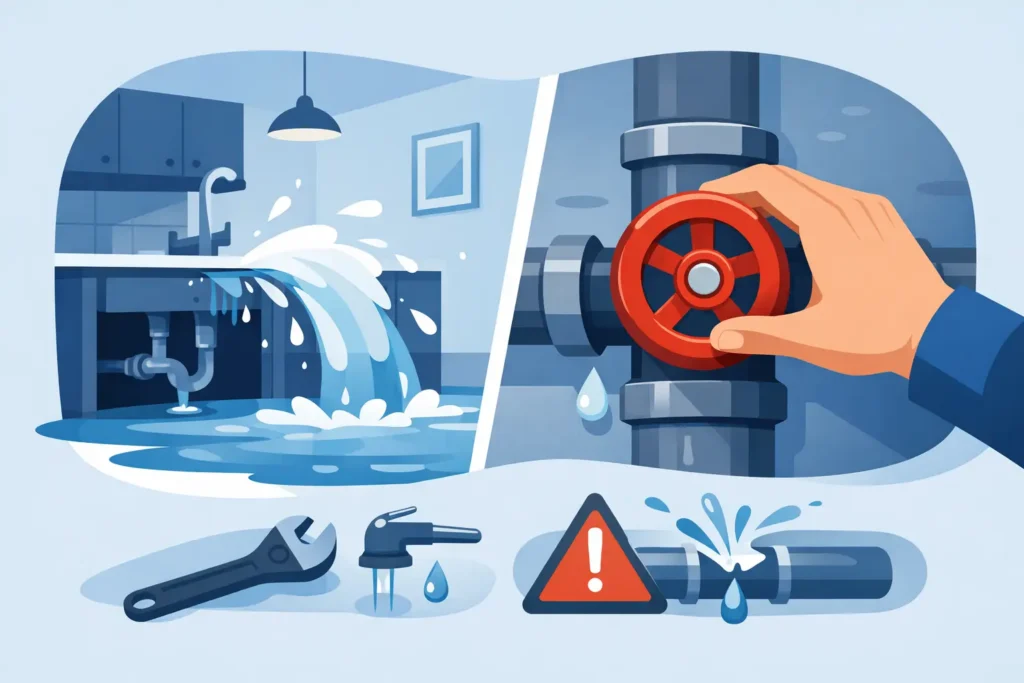
A burst supply line can put gallons of water into a home in minutes. When water is running from a ceiling, pooling near a water heater, or spraying behind a toilet, knowing how to shut off water is more useful than any mop, bucket, or panic-driven phone search. The goal is simple: stop the flow, make the area safe, then get the repair handled.
Every Tampa Bay homeowner should know where the main shutoff valve is before a plumbing emergency starts. Florida homes often have exterior meters, garage water heaters, and shutoff valves tucked behind landscaping or inside laundry rooms. A two-minute walkthrough today can prevent thousands of dollars in water damage later.
How to shut off water at the main valve
The main water shutoff stops water to the whole house. Use it for a burst pipe, a major leak under the slab, water coming through a wall or ceiling, or any situation where you cannot quickly identify the leaking fixture.
In many Wesley Chapel and surrounding Tampa Bay homes, the main shutoff valve is in one of these places:
- On an exterior wall near the water heater, often in the garage or utility area
- Inside a laundry room, mechanical closet, or near the home’s water treatment equipment
- Near the front or side of the house, close to the water meter box
- On older homes, near the point where the water line enters the structure
Look for a pipe with a handle, lever, or round wheel. A lever-style ball valve is the easiest to use. When the handle runs parallel to the pipe, it is normally open. Turn it one-quarter turn until it sits perpendicular to the pipe to close it.
A wheel-style gate valve takes several turns clockwise to close. Turn it gently. If it is stiff, corroded, or starts to leak around the stem, do not force it. Old valves can fail when they have not been moved for years. Shut off water at a different accessible valve if possible, then call a plumber to replace the bad valve.
Once the main is closed, open a cold-water faucet at the lowest practical point in the house, such as a first-floor sink or outdoor spigot. This relieves pressure and lets remaining water drain from the lines. It will not empty every pipe, but it can slow the mess while help is on the way.
Do not confuse the house valve with the meter shutoff
Your water meter is usually in a box near the curb, driveway, or property line. There may be a shutoff valve on the house side of that meter. If your home’s main valve will not close or you cannot find one, that valve may stop the water supply.
The utility-side meter equipment is not yours to operate. Do not use a wrench, pliers, or improvised tool on the city’s curb stop. You can damage the meter, break a fitting, or create a bigger problem. If the leak is severe and your homeowner shutoff is unavailable, contact your water utility and an emergency plumber.
For homeowners on a private well, the setup can be different. Turn off the well pump breaker if water is flowing continuously from a broken pipe and the main valve does not stop it. Do not touch electrical equipment if the floor is wet. Move away from the area and call for help instead.
Shut off water to one fixture when the leak is contained
You do not always need to shut down the whole home. A fixture-specific shutoff keeps water available to the rest of the house while limiting the leak. This is the right move for a dripping toilet supply line, a failed faucet hose, or a leaking washing machine connection.
Toilet shutoff valve
Look behind the toilet near the floor or wall. A small valve connects the home’s plumbing to the flexible supply line feeding the tank. Turn it clockwise until it stops. Then flush once to empty most of the tank.
If water is overflowing from the toilet bowl, do not keep flushing. Shut off the supply valve, remove the tank lid, and push the rubber flapper closed if the tank is still refilling. An overflow caused by a clog is different from a supply-line leak, and shutting off the supply will not remove the clog. It only stops more water from entering the fixture.
Sink and faucet shutoff valves
Kitchen and bathroom sinks usually have two small valves in the cabinet below: one for hot water and one for cold. Turn the appropriate valve clockwise. If you are not sure which side is leaking, close both.
Check the cabinet floor after shutting them off. A slow leak may have soaked particleboard, drywall, or the wall behind the vanity long before it becomes obvious. Dry the area, place a towel or pan beneath the connection, and do not assume a tightened nut is a lasting repair.
Washing machine valves
Washing machine hoses are a common source of sudden water damage. The hot and cold valves are normally in a recessed wall box behind the machine. Turn both clockwise to shut them off.
If the hoses are old, bulging, rusted at the fittings, or leaking, leave the valves off until the hoses are replaced. A hose failure can dump a surprising amount of water before anyone notices, especially when the laundry room is upstairs or near finished living space.
Water heater shutoff
For a leaking water heater, close the cold-water supply valve above the unit. It is usually on the pipe entering the top of the heater. For a tankless unit, the cold isolation valve may be part of a service-valve assembly.
Then turn off the energy source. For an electric water heater, switch off the breaker. For a gas unit, set the control to off if it is safe to reach and you do not smell gas. Do not shut off a water heater and leave its power on. An electric heating element can burn out if the tank loses water, and a damaged gas appliance needs professional attention.
If water is pooling around the water heater, stay alert for electrical hazards. Do not step into standing water to reach a breaker, plug, or appliance. Shut off power from a dry location if possible.
What to do after you turn the water off
Stopping the flow is the first win. The next few minutes matter because water can travel under flooring, into walls, and through ceilings.
Move electronics, rugs, furniture, and valuables away from the wet area. Put buckets under active drips and use towels to contain shallow water. If water is near outlets, fixtures, appliances, or your electrical panel, avoid the area and shut off power only if you can do so safely from a dry location.
Take a few photos after the immediate danger is controlled. They can help document the damage for insurance and help a plumber understand what happened. Do not open walls, cut pipes, or repeatedly turn water back on to “check” the leak. A pipe that failed once can open wider under pressure.
A main shutoff is also a good time to notice whether your home has a pressure problem. High water pressure, aging shutoff valves, corroded pipes, hard-water scale, and pinhole leaks can all contribute to failures. In older Pasco County homes, neglected galvanized lines and hidden slab leaks deserve a closer look. In newer homes, failed fittings, supply hoses, and water-heater connections are still common.
Test your shutoff valve before an emergency
A valve that has not moved in ten years may not work when you need it. Test your main shutoff once or twice a year when you are home, have time to watch for problems, and do not need water for the next few minutes.
Turn the valve off gently, open a faucet, and confirm the flow stops. Turn it back on slowly. Listen for banging pipes and inspect the valve for drips. If the handle is hard to move, the valve does not fully stop water, or it leaks after being operated, schedule a replacement. This is a small repair compared with trying to find a working shutoff during a midnight pipe break.
It also helps to show everyone in the household where the valve is located. Label the valve if it is hidden in a closet or garage. If you will be away for an extended trip, consider shutting off the main water supply, especially if the home will be empty and no system requires water while you are gone.
When a leak will not stop, a pipe has burst, or water is coming from a wall or ceiling, do not wait for regular business hours. H.I.P. Home Service & Drain is a local, family-owned team for Tampa Bay homeowners who need straight answers, a quoted price before work begins, and a repair done by the technician who shows up. Shut the water off, protect the space as best you can, and get the right help moving before a manageable leak turns into a major restoration job.