Grease clogs rarely start with a dramatic backup. More often, the kitchen sink begins draining a little slower after dinner, the garbage disposal sounds strained, and water hangs in the basin longer than it should. Knowing how to remove grease clogs early can save you from a messy kitchen backup and a much harder drain-cleaning job later.
The big mistake is treating grease like a normal food clog. It is not. Grease cools, sticks to pipe walls, and grabs every scrap of food, coffee ground, soap residue, and sludge that follows it. A quick fix may get water moving, but the wrong fix can push the blockage deeper or damage an older drain line.
Why grease clogs keep coming back
Cooking oil, bacon drippings, butter, gravy, and fatty food scraps look harmless when they are warm. Once they enter a cooler drain pipe, they begin to thicken. In Tampa Bay homes, the buildup can be especially stubborn where long kitchen-drain runs, older pipes, or slight pipe bellies allow grease to settle instead of moving cleanly toward the sewer line.
A garbage disposal does not solve the problem. It chops solids into smaller pieces, but it does not liquefy grease. In fact, sending greasy food waste through the disposal can create a sticky paste that coats the disposal trap and the pipe just beyond it.
Hot water alone is not a reliable cure, either. It may soften grease near the sink, only to carry it farther down the line where it cools and hardens again. That is why a drain can seem fixed for a day or two, then slow down all over again.
How to remove grease clogs safely at home
If the sink is draining slowly but is not fully stopped, start with the gentlest approach. Do not pour more oil down the drain to “lubricate” it, and do not reach for a harsh chemical cleaner first.
Begin by removing standing water from the sink. Then take out the sink stopper or disposal splash guard if you can do so safely, and remove visible food debris. If your kitchen sink has a garbage disposal, turn off power at the switch and, when possible, at the breaker before putting hands or tools near the opening.
Next, add a few squirts of grease-cutting dish soap to the drain. Follow it with very hot tap water, not a rolling pot of boiling water. Very hot water can help soften fresh grease close to the sink. Boiling water can be rough on some PVC fittings, aging seals, and vulnerable plumbing connections, especially if the clog has completely stopped the drain.
Let the hot, soapy water work for several minutes. Then test the drain with a moderate flow of water. If it is moving better, repeat the process once or twice. This approach is most useful for a fresh, minor grease buildup. It will not clear a thick clog several feet down the pipe.
Use a plunger the right way
A sink plunger can help break up a partial grease blockage. Use a clean cup-style plunger, not the one from the bathroom. If you have a double-bowl kitchen sink, plug the second drain opening with a wet rag or stopper so you can build pressure in the clogged side.
Add enough water to cover the plunger cup, then use several firm, controlled strokes. Do not pound away wildly. The goal is to move the clog, not loosen a pipe connection under the sink. After plunging, run hot tap water slowly to see whether the drain has improved.
Clean the P-trap only if the clog is close
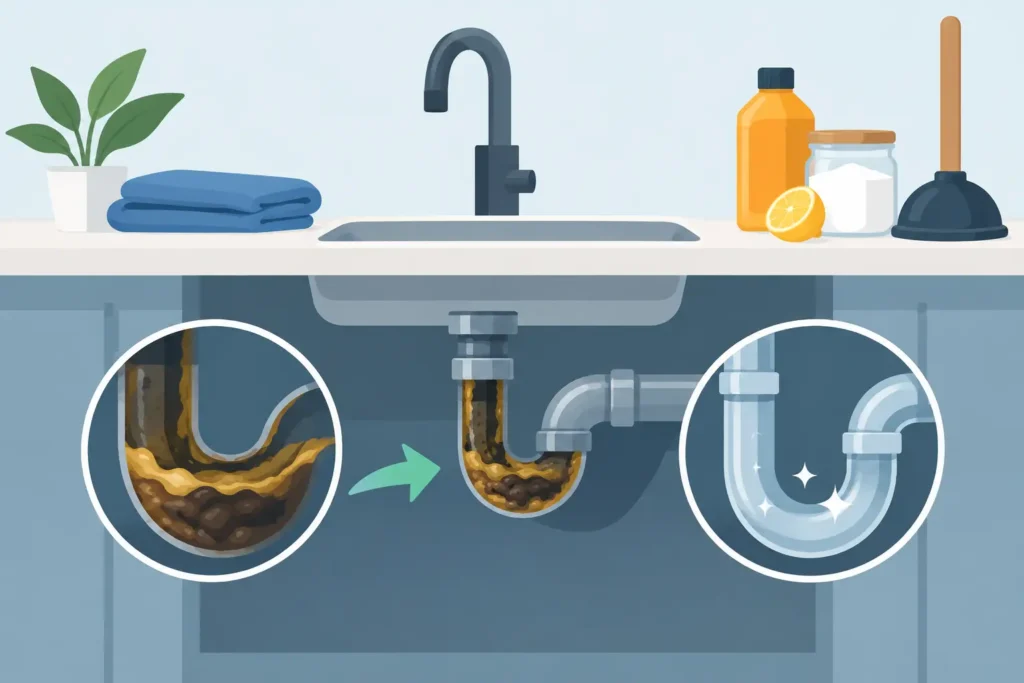
The curved pipe under the sink, called the P-trap, often catches greasy sludge and food debris. If you are comfortable with basic home repairs, place a bucket and towels under the trap, disconnect it carefully, and clean out the buildup.
This only helps if the blockage is in the trap or immediately beyond it. If the trap is clear but the sink still backs up, the clog is farther down the kitchen branch line. Reassembling the trap without checking the washers or overtightening slip nuts can create a new leak, so this is a good point to stop if you are unsure.
What not to pour down a greasy drain
Chemical drain cleaners promise an easy answer, but they are a poor match for many grease clogs. They can sit in standing water without reaching the blockage, generate heat, damage older pipes, and create a safety hazard for whoever works on the drain next. If the cleaner fails, you are left with a clogged pipe full of caustic chemicals.
Avoid pouring these items down the kitchen sink:
- Cooking oil, grease, meat drippings, and butter
- Coffee grounds, flour, rice, and pasta
- Greasy sauces or leftover soup with fat floating on top
- Paint, automotive fluids, or chemical cleaners
Let cooking grease cool in a can or heat-safe container, then throw it away. Wipe greasy pans with a paper towel before washing them. Small habits matter because grease buildup is usually a repeat offender, not a one-time accident.
When a grease clog is no longer a DIY job
A kitchen sink that will not drain after basic plunging and cleaning usually needs professional equipment. The same is true when the dishwasher backs up into the sink, dirty water rises in a nearby laundry drain, or more than one fixture is draining slowly. Those signs can point to a blockage farther down the branch line or in the home’s main sewer line.
Watch for these warning signs:
- The sink backs up every time the dishwasher runs.
- Water comes up in another drain when the kitchen sink is used.
- You smell sewage, not just old food, near drains or outside cleanouts.
- The clog returns within days after temporary fixes.
- The drain is fully stopped and chemical cleaner has already been used.
At that point, forcing more water into the line can turn a drain problem into a cabinet, floor, or sewage cleanup problem. A professional drain machine can cut through compacted debris, while a camera inspection can show whether grease is the real issue or whether there is a damaged pipe, root intrusion, or a low spot holding waste.
For thick grease buildup in a drain line, hydro-jetting may be the better answer. It uses controlled high-pressure water to scour buildup from the inside of the pipe instead of simply punching a small hole through the clog. It is not the right tool for every pipe, though. Older, damaged, or fragile lines should be inspected first so the cleaning method matches the condition of the plumbing.
Prevent the next kitchen drain clog
The best prevention is simple: keep fats, oils, and grease out of the drain in the first place. Run cold water when using the garbage disposal, feed it small amounts at a time, and keep fibrous or starchy food scraps out of it. Disposal blades are not a substitute for a trash can.
If your kitchen drain has a history of clogs, schedule cleaning before it becomes an emergency. This is especially worthwhile in older Pasco County homes, homes with long kitchen drain runs, or households that cook often. Repeated clogging is your plumbing telling you there is buildup somewhere in the line.
H.I.P. Home Service & Drain handles residential drain problems with the right equipment, clear upfront pricing, and no call-center runaround. If a grease clog has moved beyond the sink trap, a proper diagnosis beats another bottle of chemicals every time.
A slow kitchen sink is easier to deal with when it is still just slow. Keep grease out, stop before you risk damaging the plumbing, and get the line checked when the same clog keeps returning.