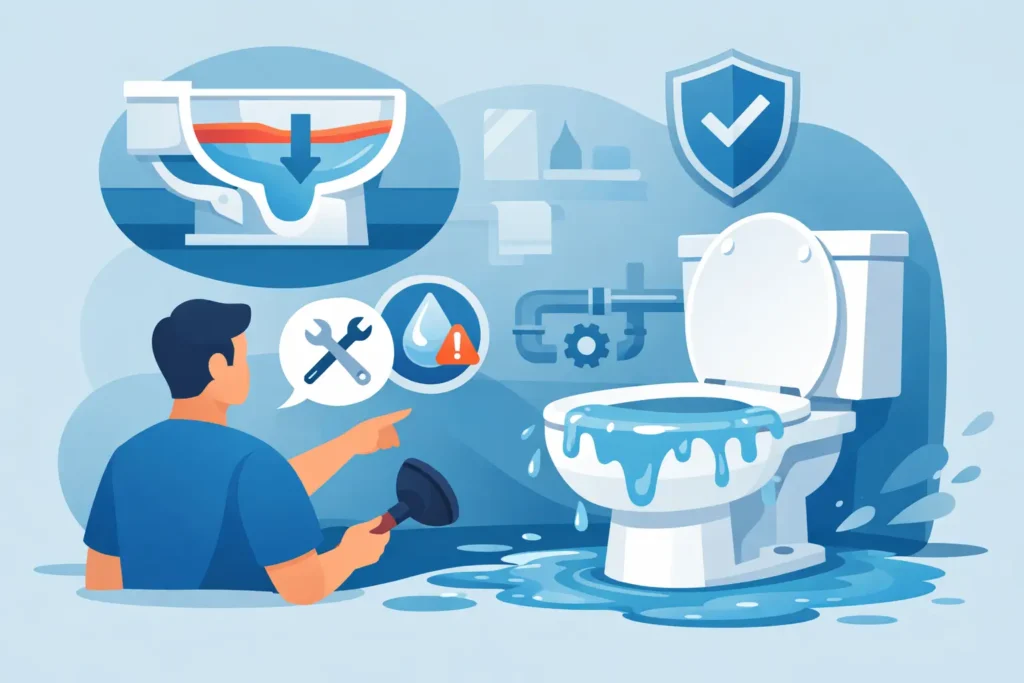
A toilet rarely overflows without giving you a chance to stop it. The bowl starts filling too high, the flush seems weak, or water drains away slower than usual. Knowing how to prevent toilet overflow means recognizing those warnings early, using the fixture correctly, and dealing with drain trouble before a small clog turns into a bathroom cleanup.
For Tampa Bay homeowners, the cause is not always what is sitting in the toilet bowl. A recurring overflow can point to a blocked branch line, root intrusion in an older sewer line, a damaged pipe, or a main drain problem affecting more than one fixture. The goal is simple: stop the immediate mess, then find the real reason it happened.
How to Prevent Toilet Overflow When Water Starts Rising
If the water rises after you flush, do not flush again to “see if it clears.” That second flush is how a close call becomes water across the floor.
First, remove the tank lid and push the rubber flapper down over the drain opening at the bottom of the tank. This stops more water from entering the bowl. Then turn the shutoff valve behind or beside the toilet clockwise. Every homeowner should know where this valve is and make sure it still turns. A valve that has seized from age or corrosion is no help during an emergency.
If the bowl is high but not spilling, give it time. Water may slowly move past a partial clog. Once the level drops, use a flange plunger – the style with the fold-out rubber sleeve – to create a tight seal in the toilet drain. Use steady, controlled strokes for 15 to 20 seconds. Wild plunging can splash contaminated water and does not clear a tougher blockage any faster.
Do not reach for chemical drain cleaner. Those products can damage seals and older pipes, create hazardous splashes, and leave a dangerous chemical sitting in the bowl if the clog remains. A toilet auger is the better next step for a blockage close to the fixture, but repeated clogs usually need more than another round of DIY tools.
Stop the Clogs That Cause Most Overflows
Toilets are built for human waste and toilet paper. That is the entire list. Products labeled “flushable” often do not break down quickly enough to move safely through a home’s drain system. Wipes, paper towels, cotton swabs, facial tissues, feminine products, dental floss, and children’s toys can all create a blockage that catches more material behind it.
Keep a covered trash can within reach, especially in bathrooms used by children or guests. It is a basic step, but it prevents the awkward moment when someone flushes something because there was nowhere else to put it.
Use the Right Amount of Toilet Paper
Too much toilet paper in one flush can block a low-flow toilet or a line that already has buildup. That does not mean your toilet is bad. It may mean the drain is partially restricted, the toilet has a weak flush, or the household is using a paper product that does not break apart easily.
Use reasonable amounts and flush between larger loads when needed. If a toilet clogs often with normal use, do not accept it as a household quirk. A properly working toilet and drain line should handle ordinary use without regular plunging.
Teach Kids the One-Flush Rule
Young kids are curious, and toilets make an easy experiment. Small toys, toothbrush caps, washcloths, and large wads of paper can lodge in the trapway, the curved passage inside the toilet. One clear house rule helps: only toilet paper and waste go in, and flush once unless an adult says otherwise.
If a child tells you something went down the toilet, do not keep flushing. Shut off the water if needed and address it while the object may still be close to the fixture. It is usually far easier to remove an item from the toilet than retrieve it after it moves deeper into the line.
Keep the Toilet Tank Working Properly
Not every overflow comes from a clog. A toilet can also overflow because its tank components fail and allow water to run continuously. Lift the lid occasionally and look for a fill valve that keeps running after the tank should be full. Check that the float shuts off the water at the proper level and that the overflow tube is not constantly receiving water.
A worn flapper can cause a toilet to cycle on and off, wasting water and putting extra strain on aging components. It usually will not make the bowl overflow by itself, but it is a sign the toilet needs attention. Replacing a simple tank part early is cheaper and cleaner than waiting for a failure during a busy morning.
If you have hard water, common across many Tampa Bay homes, mineral buildup can affect fill valves and flush performance. A slow or incomplete flush leaves solids behind and makes a future clog more likely. A plumber can inspect the toilet, clear mineral obstruction, and determine whether repair or replacement makes more sense.
Watch for Problems Beyond the Toilet
A toilet that backs up once after an obvious paper overload is different from a toilet that repeatedly gurgles, drains slowly, or backs up when you run the shower. Those symptoms may point to the home’s main sewer line rather than the toilet itself.
Pay close attention if you notice several fixtures acting up at the same time. For example, flushing the hall bathroom toilet should not make the nearby tub gurgle. Running the washing machine should not cause water to rise in a shower drain. When that happens, water is meeting resistance farther down the system and finding the lowest available exit.
In older neighborhoods, roots can enter tiny gaps in sewer pipes and slowly form a dense blockage. In homes with aging cast iron, galvanized connections, or shifting underground piping, scale, corrosion, cracks, and pipe offsets can also catch waste. Newer homes are not immune either. Construction debris, improper installation, or a foreign object can cause a localized problem.
A camera inspection is often the fastest way to stop guessing. It shows where the blockage is, whether the pipe is damaged, and whether drain cleaning is enough. Hydro-jetting can be effective for heavy buildup and roots, but it should be recommended based on the pipe’s material and condition. More pressure is not automatically the right answer for every older line.
Warning Signs You Should Not Ignore
Call for professional drain service before an overflow if you see a pattern like this:
- The toilet needs plunging more than once or twice with normal use.
- Water rises high in the bowl before draining back down.
- You hear gurgling from toilets, tubs, or sinks after water is used elsewhere.
- Sewage odors appear indoors or around an exterior cleanout.
- More than one drain is slow, clogged, or backing up at the same time.
These are not problems to cover up with air freshener or repeated chemical cleaner. They are signals that something in the drain system is restricted or failing.
When It Is Time to Call a Local Plumber
If sewage has reached the bathroom floor, keep children and pets away from the area. Avoid using water anywhere in the house until the problem is assessed, especially if multiple drains are involved. Water from another fixture can feed the backup and make the cleanup worse.
A licensed plumber can clear the line, inspect it with a camera when needed, and explain the cause before recommending a repair. You should get a clear price before work begins, not a vague promise followed by a long upsell pitch. At H.I.P. Home Service & Drain, our local team handles residential drain problems with our own technicians, stocked trucks, and straightforward answers.
Your best protection is paying attention to the first warning, not waiting for the floor to prove there is a problem. Keep the shutoff valve accessible, treat repeat clogs as a repair issue, and make the call before the next flush has nowhere to go.