A sewer smell that shows up after a hot Florida afternoon, a shower, or a load of laundry is not something to cover with air freshener. It is your plumbing system telling you that a water seal, drain connection, vent, or sewer line may need attention. This homeowner guide to sewer odors will help you narrow down the cause, take sensible first steps, and recognize when it is time to get a licensed plumber involved.
When a sewer odor needs immediate attention
Most sewer odors are caused by a plumbing defect, not an instant emergency. Still, sewer gas is not something your family should breathe for days while hoping it disappears. It can contain methane, hydrogen sulfide, and other unpleasant gases. High concentrations can cause headaches, nausea, dizziness, or eye irritation.
If the smell is strong enough to make anyone feel sick, get people and pets into fresh air. Open windows if it is safe to do so, avoid flames or sparks near the suspected area, and call for help. A smell that resembles rotten eggs could also be a natural-gas issue, so treat it seriously and contact your gas utility or emergency services if you suspect a gas leak.
For a mild but persistent odor, start by noticing exactly where and when it appears. That information can save time during an inspection. Is it strongest in one bathroom? Does it happen only when the washing machine drains? Is it coming from a floor drain in the garage or laundry room? The pattern matters.
Homeowner guide to sewer odors: Start with the easy causes
A dry P-trap
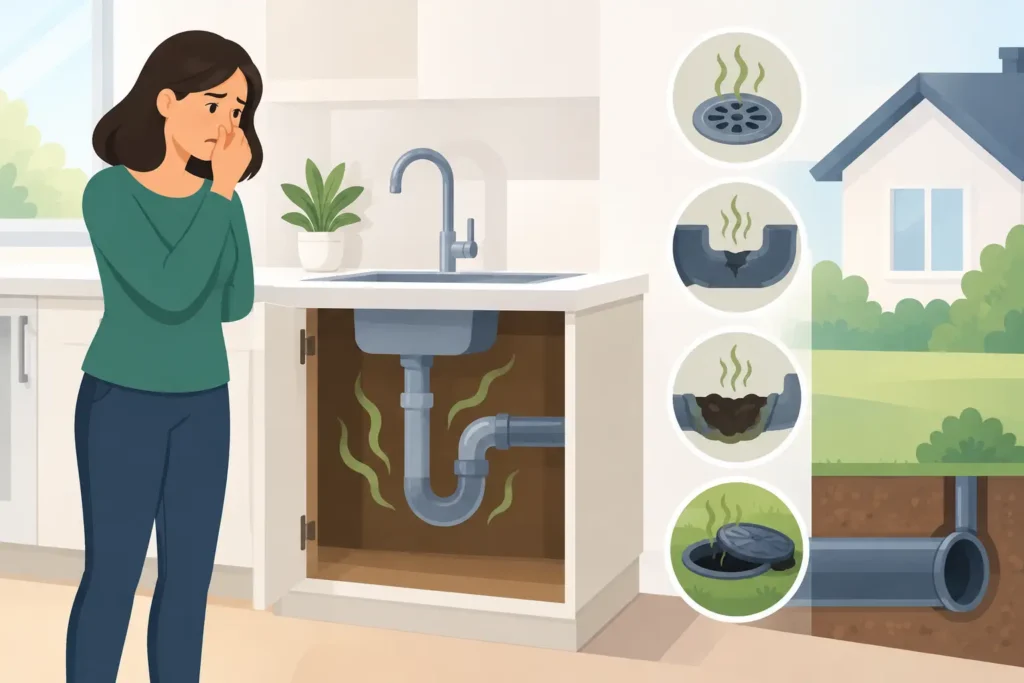
A P-trap is the curved section of pipe under a sink, shower, tub, floor drain, or laundry drain. It holds water, and that water blocks sewer gas from moving back into the home. When a fixture goes unused for weeks, especially in a guest bath or rarely used garage drain, the water can evaporate.
This is one of the simplest causes to check. Slowly run water into every sink, tub, shower, and floor drain that does not get regular use. Let enough water run to refill the trap. For a floor drain, a few cups of water may be enough. Give it a day or two and see whether the odor stays gone.
If the smell returns quickly, the trap may be leaking, cracked, improperly installed, or being siphoned dry because of a venting problem. Adding water repeatedly may mask the symptom, but it will not repair the underlying issue.
A loose toilet or failed wax seal
A toilet should sit solidly on the floor. If it rocks, shifts, leaks around the base, or smells strongest near the floor behind it, the wax ring or seal underneath may have failed. That seal keeps sewer gas and wastewater inside the drain connection.
A failed toilet seal does not always create a visible puddle. In some cases, the odor is the first warning. Do not keep tightening bolts or stuffing material around the base. Overtightening can crack the porcelain, and a bad seal needs to be removed and replaced correctly. The toilet may also need to be reset if the flange below it is damaged or sitting at the wrong height.
A dirty drain or overflow opening
Not every nasty drain smell is full-strength sewer gas. Hair, soap residue, toothpaste, grease, and bacteria can build up inside a bathroom sink overflow or a slow-moving drain. That buildup can smell sour, musty, or sewage-like when water passes through.
Clean the visible drain stopper and remove debris where you can reach it. A careful cleaning may help a minor odor. But skip the harsh chemical drain cleaner. Chemical products can damage older pipes, create dangerous fumes, and complicate a later repair. If the drain is slow, gurgling, or keeps smelling bad after cleaning, it may need professional drain clearing.
A missing or damaged cleanout cap
Many homes have a sewer cleanout outside, often near the foundation, landscaping, or side yard. It provides access to the sewer line for cleaning and camera inspections. A missing, loose, or cracked cap can allow sewer odor into the yard, garage, or even the home through nearby openings.
You can look for an obvious missing cap from ground level, but do not force fittings or dig around buried plumbing. If a cap has blown off because of pressure in the line, that can point to a blockage farther down the sewer pipe.
When the odor points to a drain or sewer-line problem
One smelly fixture is often a local problem. Several fixtures acting up at once is different.
Watch for toilets that bubble when a shower drains, water backing up into a tub, gurgling sinks, or slow drains in more than one room. Those signs can mean a blockage in a main drain line. In Tampa Bay, roots, shifting soil, aging pipe, wipes, grease, and buildup are common reasons a sewer line stops flowing the way it should.
The lowest drain in the home usually shows trouble first. In a single-story house, that may be a shower, tub, or floor drain. If wastewater is coming back through a drain, stop running water. Do not flush toilets, start the dishwasher, or run the washing machine. More water can turn a manageable backup into a contaminated cleanup.
A main-line clog does not always mean the pipe must be replaced. That depends on what a camera inspection finds. A concentrated clog may clear with proper drain cleaning or hydro-jetting. Root intrusion, a separated pipe, heavy scale, or a collapsed section may call for a repair instead. The right answer comes from seeing inside the line, not guessing from the driveway.
Do not ignore plumbing vent problems
Your drain system needs vent pipes to move air and maintain the water seals in P-traps. When a vent is blocked or improperly installed, drains can gurgle, flush poorly, or pull water out of traps. That can leave a sewer smell even though the drain itself is not clogged.
Leaves, nesting material, and debris can block a roof vent. Older homes may also have venting layouts that need correction after remodeling or previous plumbing work. This is not a good reason to climb onto the roof. Roof access is risky, and poking an object into a vent can make a blockage worse or damage the pipe.
A plumber can test the drainage system, inspect accessible vent connections, and determine whether the problem is a vent restriction, a drain blockage, or both. That distinction matters because clearing the wrong pipe may give you a temporary improvement and leave the odor behind.
Check the yard if you are on septic
Many Tampa Bay homes are connected to municipal sewer, but some properties still use septic systems. A septic odor around the tank, drain field, or yard can signal a full tank, a damaged lid or riser, a clogged filter, or a drain-field issue. Wet or unusually green patches near the system are also worth taking seriously.
Do not drive over the tank or drain field, and do not try to open a septic tank yourself. Septic gases can be dangerous, and tank covers are heavier and less secure than they look. A qualified septic provider should inspect the system. If the smell is indoors, a plumbing issue may still be part of the problem, so it is worth checking both sides of the system.
What to tell the plumber
Clear details help a technician diagnose the issue faster. Note where the smell is strongest, when it started, which fixtures are affected, whether drains gurgle, and whether you have seen standing water or a backup. Mention recent heavy rain, remodeling work, a long trip away from home, or repeated clogs.
At H.I.P. Home Service & Drain, the goal is to find the cause before recommending a repair. That may mean checking trap seals and toilet connections first, then using professional drain equipment or a camera inspection when the symptoms point to the sewer line. You should know the price before work begins, not after a long sales pitch.
A sewer odor can be a small fix, such as refilling a dry trap, or an early warning of a larger drainage problem. Trust the pattern, do not pour chemicals into a mystery smell, and act before a bad odor becomes a backup on the bathroom floor.