A burst supply line under the sink can put a lot of water on the floor before you find a phone number, move stored items, and wait for help. Knowing where your shutoff valves are gives you a head start. This guide to water shutoff valves explains which valve to turn, how to test it before an emergency, and when a valve problem needs a licensed plumber.
For homeowners in Wesley Chapel and across Tampa Bay, that small bit of preparation matters. Many homes have valves that have not been touched since installation. Hard water, humidity, age, and mineral buildup can leave them stiff, leaking, or unable to shut off completely when you need them most.
Start With the Main Water Shutoff Valve
Your main water shutoff controls the water supply to the entire house. Turn it off, and water should stop flowing to sinks, toilets, showers, the water heater, washing machine, refrigerator line, and outdoor fixtures supplied by the home’s plumbing.
In many Florida homes, the main shutoff is on an exterior wall near the front of the house, in the garage, utility room, laundry area, or close to the water heater. It may also be inside a covered box near the property line. Do not confuse the home’s main shutoff with the municipal meter valve. The meter-side valve may belong to the utility, and it can require a special key. Use your home-side valve unless a utility representative tells you otherwise.
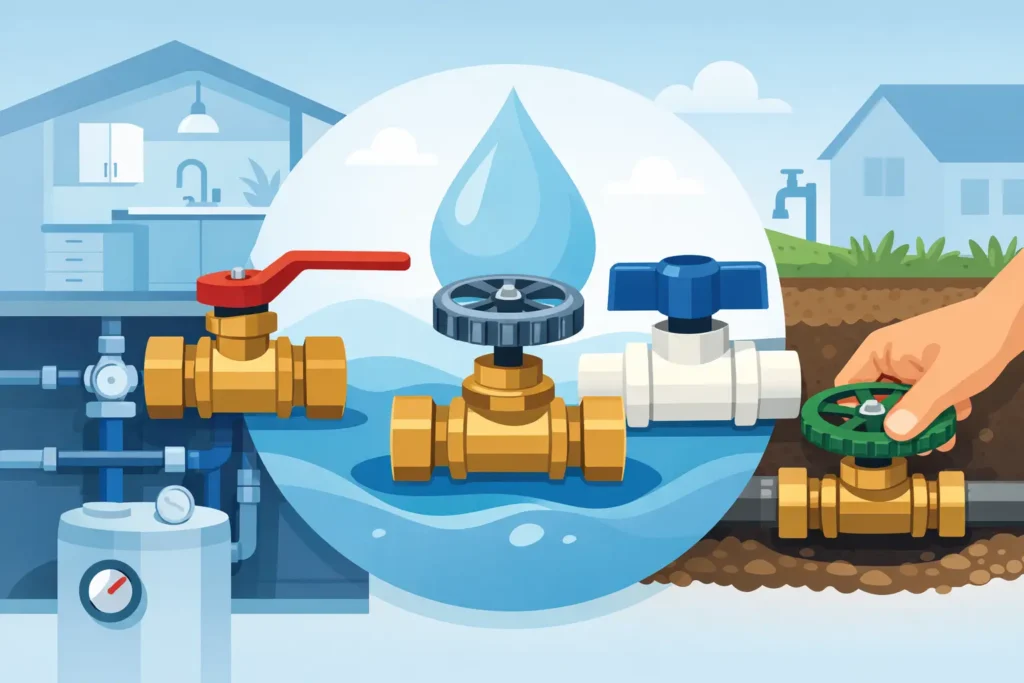
There are two common styles. A gate valve has a round handle that turns several times. A ball valve has a straight lever handle. When the lever runs parallel to the pipe, it is open. When it is perpendicular to the pipe, it is closed. Ball valves usually provide a more reliable, fast shutoff than older gate valves.
If a pipe bursts, turn off the main water valve first. Then open a cold-water faucet at the lowest practical point in the home to relieve pressure and help drain remaining water from the lines. Do not waste time trying to identify the exact source before stopping the flow. Water damage gets expensive fast.
How to Test the Main Valve Safely
Test the valve on a calm day, not during an active leak. Have someone stand by a faucet inside. Close the main valve slowly, then open the cold-water faucet. Water should run briefly and then stop. Flush a toilet after a few minutes to confirm that the supply has been cut off.
Reopen the valve slowly. Opening it too quickly can create pressure shock in older plumbing and may stir up sediment. Once water is restored, check around the valve stem and fittings for drips. If the valve leaks, sticks, turns without changing water flow, or does not fully shut off the house, it is not ready for an emergency.
A Guide to Water Shutoff Valves at Fixtures
Fixture shutoff valves control water to one appliance or fixture without shutting down the entire house. These are the valves you want for a dripping toilet supply line, a failed kitchen faucet, or a washing machine hose leak.
Look beneath bathroom and kitchen sinks. You should see one valve for hot water and one for cold water. Toilets normally have one cold-water valve behind or beside the bowl. Washing machines have hot and cold valves at the wall box. Refrigerators with ice makers may have a small valve behind the fridge, under a nearby sink, or in the cabinet below.
Most fixture valves are either multi-turn stop valves with a small round handle or quarter-turn valves with a lever. Turn a round handle clockwise to close it. Turn a quarter-turn handle until it is perpendicular to the pipe. Never force a seized valve. A hard twist can snap an aging pipe, break the valve, or start a leak where there was not one before.
A fixture valve is useful only if it actually stops the water. If you close the toilet valve and water continues filling the tank, the valve is failing or not fully closed. If the valve begins dripping around the handle after you touch it, place a towel underneath and avoid repeated adjustments. Call for repair before it turns into a bigger problem.
Know Which Problems Call for Which Valve
The right response depends on where the water is coming from. For a toilet that will not stop running but is not overflowing, close the toilet’s individual shutoff valve. For a broken faucet supply hose or a leaking dishwasher connection, use the nearest fixture valve if it works.
Shut off the main valve when water is coming from a burst pipe, a major slab-leak symptom, an unknown location, or a leak that continues after a fixture valve is closed. A sudden drop in water pressure throughout the home can also point to a larger supply-side problem. Get the main off, protect the area from electrical hazards, and call for help.
For a leaking water heater, shut off the cold-water supply valve above the unit if you can safely reach it. If water is actively spraying, the tank is badly corroded, or the valve is inaccessible, use the main shutoff. For an electric water heater, turn off power at the breaker before the tank drains. For a gas model, leave gas controls alone unless you smell gas or a qualified professional instructs you otherwise.
Sewer backups are different. Turning off the main water valve will prevent additional water from entering your drains, but it will not clear a blocked sewer line. Stop using sinks, showers, toilets, and the washing machine until the drain problem is diagnosed.
Watch for Older or Failing Valves
Not every valve deserves a quick repair. Some should be replaced. Older multi-turn valves are common in established Tampa Bay homes, particularly where mineral-heavy water has built up inside the valve over the years. They can look fine until the first time they are turned.
Warning signs include corrosion on the body, green or white mineral crust, a handle that binds, a valve that spins freely, a slow drip at the handle stem, or water that still flows after the valve is closed. You may also find valves hidden behind cabinets, painted over, or installed in a way that makes access difficult. That is not something to ignore just because it is not leaking today.
Replacing a failed valve often means working close to pipe that may be brittle, undersized, or already compromised. The repair can be straightforward, but it depends on the pipe material, the valve location, and whether the home has prior plumbing repairs. Copper, CPVC, PEX, galvanized steel, and mixed piping each need the right fitting and installation method.
Make a Five-Minute Shutoff Plan
Walk through the house and locate the main valve plus the shutoffs for toilets, sinks, washing machine, water heater, and refrigerator line. Take clear photos of each location. If family members, tenants, or a house sitter may be home during an emergency, show them where the main valve is and how it works.
Keep the area around the main shutoff clear. A valve buried behind storage boxes, holiday decorations, or garage equipment is not much help at 2 a.m. If the valve is outside, make sure the cover is accessible and the area is not obstructed by landscaping.
It also helps to label valves that are not obvious. A small waterproof tag can save someone from shutting off the wrong line while water is spreading across the floor. If you have an older home, a recent remodel, or a history of pinhole leaks, ask a plumber to identify and test your shutoffs during another service visit.
When to Call a Plumber Instead of Fighting the Valve
Call for professional help if the main valve will not close, if a shutoff begins leaking when you operate it, or if you cannot tell whether the leak is inside a wall, under a slab, or at a fixture. Those are not good moments for trial and error. A qualified plumber can replace unreliable valves, locate hidden leaks, and confirm the house can be shut down safely in a real emergency.
At H.I.P. Home Service & Drain, we see this problem often: homeowners do the smart thing and try to stop the water, only to find the valve has failed from years of neglect. Our local team can diagnose the leak, replace the valve that caused trouble, and give you a clear upfront price before work begins. No call-center runaround. No long sales pitch.
The best time to find a bad shutoff valve is when your floor is dry and your schedule is your own. Test yours, clear access to it, and fix anything questionable before the next leak decides the timing for you.