
A cold shower at 6:30 a.m. is not the time to debate electric versus gas water heaters. But when a tank starts leaking, stops heating, or reaches the end of its useful life, the replacement choice affects your comfort, utility bills, and installation cost for years.
For Tampa Bay homeowners, the right answer is rarely just “gas costs less to run” or “electric is cheaper to buy.” Your existing hookups, household demand, electrical panel capacity, venting, and even where the heater sits all matter. The best replacement is one that fits the home you have, not the one a salesperson wants to sell you.
Electric Versus Gas Water Heaters: The Real Difference
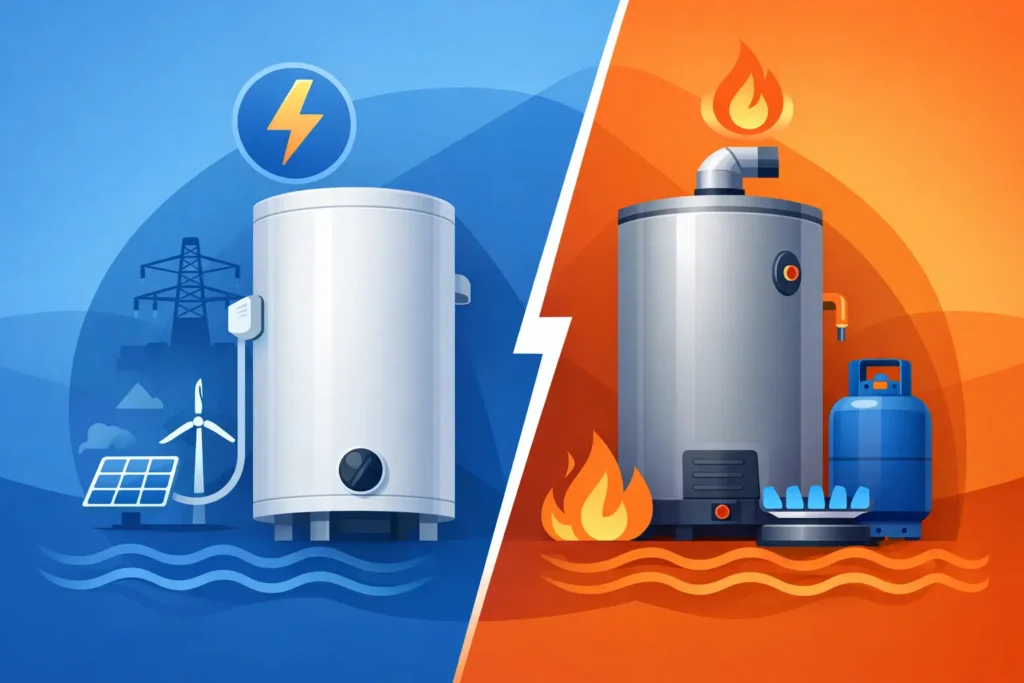
Both standard tank water heaters store and heat a set amount of water, usually 40, 50, or 80 gallons. The difference is how they create heat. An electric model uses heating elements inside the tank. A gas model burns natural gas or propane through a burner beneath the tank and sends combustion gases outside through a vent.
Gas tanks usually heat a new tank of cold water faster. That recovery rate matters when several people shower back-to-back, the dishwasher is running, and someone starts a load of laundry. A properly sized gas heater can often keep up with a busy household using a smaller tank than an electric model.
Electric tanks recover more slowly, but they are simpler. There is no gas line, burner, flue pipe, combustion air concern, or carbon monoxide risk from the appliance. In many newer homes that are already all-electric, that simplicity can make replacement easier and less expensive.
Upfront Cost Depends on What Is Already There
A like-for-like replacement is usually the cleanest path. If your home already has a correctly sized electric circuit and an electric water heater, replacing it with another electric model avoids major changes. The same goes for a gas tank with a safe, code-compliant gas line and venting system.
Switching fuel types is where the price can change fast. Moving from electric to gas may require a gas line extension, shutoff valve, sediment trap, proper venting, roof or wall penetration, and permits. If natural gas is not available, propane adds a tank and fuel-delivery considerations. That is not a quick swap.
Going from gas to electric can also involve more than removing a vent. Most full-size electric tank water heaters need a dedicated 240-volt circuit. If the panel is full, undersized, or far from the heater location, electrical work can become the biggest part of the project.
There is no honest flat answer without looking at the existing setup. A lower-priced water heater can become the more expensive installation if the home needs infrastructure changes.
Monthly Operating Costs Are Not the Whole Story
Natural gas often costs less per unit of heat than electricity, so a standard gas tank may have lower monthly operating costs. That advantage can be meaningful for a large family with heavy hot-water use. But utility rates vary, and a household with modest demand may not see enough savings to justify converting from electric to gas.
Electric water heaters also avoid standby losses through a hot flue. A gas unit vents warm combustion gases outside, while electric units keep more of that heat in the tank. Modern tank insulation helps both types, but efficiency labels do not tell the full story unless they are paired with your actual usage.
If your heater is in a hot Florida garage, attic-adjacent space, or utility closet, location affects performance and service access too. A unit tucked into a tight closet may cost more to replace later, regardless of fuel type. Good installation is not only about connecting pipes and wires. It includes safe clearances, a proper drain pan where needed, a working temperature-and-pressure relief valve, and a discharge line that protects the home.
Household Size and Recovery Rate Matter More Than Tank Size Alone
A 50-gallon label does not mean every 50-gallon water heater performs the same way. Look at the first-hour rating, which estimates how much hot water the unit can provide during a busy hour. This number combines stored hot water with how quickly the heater can recover.
For a one- or two-person household, a 40- or 50-gallon electric tank may be plenty. For a larger household with teenagers, multiple bathrooms, or frequent guests, gas recovery can be a practical advantage. It can reduce the wait between showers without jumping to an oversized tank.
That said, bigger is not automatically better. An oversized tank costs more to buy and keeps more water heated around the clock. A properly sized heater should handle normal peak demand without turning your utility room into a storage space for unnecessary capacity.
Consider the way your family actually uses water. Two showers spread across the morning are different from four showers, a dishwasher, and laundry happening within an hour. A plumber should ask about the household routine before recommending a size.
Gas Water Heaters Need Proper Venting and Safety Checks
Gas water heaters are dependable when installed correctly, but they require more attention to combustion and venting. The vent connector and chimney or direct-vent system must be the right type, properly pitched, securely connected, and clear of damage. Improper venting can allow dangerous combustion gases, including carbon monoxide, to enter the home.
A gas heater also needs adequate combustion air. This is especially important when it is installed in a small closet, enclosed garage space, or a home that has been tightened up with new windows and insulation. Do not block louvers or close off openings designed to provide air to the appliance.
If you smell gas, hear unusual burner noises, see soot, or notice a yellow flame instead of a mostly blue one, shut off the appliance if it is safe to do so and call for professional help. Do not keep relighting it and hoping it settles down.
Electric Water Heaters Have Their Own Limits
Electric models do not need venting, but they depend on sound electrical connections and working heating elements. A failed upper or lower element can leave you with lukewarm water, limited hot water, or none at all. A tripped breaker, bad thermostat, loose connection, or damaged wiring can create similar symptoms.
In older Tampa Bay homes, panel capacity deserves a real look before installing a new electric unit. A technician may be able to replace the heater itself, but the electrical supply still has to safely handle the load. Cutting corners here is not a savings. It is a problem waiting behind a closed panel door.
Electric tanks can be a strong fit for homes without gas service, homes with simple electrical access, and owners who want fewer combustion-related components. They are also often easier to place where vent routing would be difficult.
Florida Water Conditions Affect Both Choices
Fuel type does not protect a tank from hard water, sediment, or corrosion. Across parts of Wesley Chapel and the greater Tampa Bay area, mineral buildup can collect at the bottom of a tank. On gas models, that sediment can create popping or rumbling sounds and make the burner work harder. On electric models, buildup can coat heating elements and shorten their life.
Annual flushing can help remove sediment before it turns into a bigger issue. It is especially worthwhile when the water heater is several years old, the home has noticeable mineral scale, or hot-water performance has started slipping. A water heater that has never been maintained may need a careful inspection before flushing, since disturbing heavy sediment in an aging tank can expose an existing weakness.
Also check the anode rod during appropriate service intervals. This sacrificial metal rod helps protect the tank from corrosion. Once it is depleted, the tank itself becomes the next target.
Should You Consider a Heat Pump Water Heater?
A heat pump water heater is still electric, but it works differently from a standard electric resistance tank. It pulls heat from surrounding air instead of creating all heat directly with elements. In Florida’s warm climate, that can make it highly efficient.
The trade-off is space, noise, and installation conditions. Heat pump units need enough surrounding air, produce some cooling and dehumidification, and require a condensate drain. They are often a great option in a garage or larger utility area, but not always in a cramped interior closet. They also cost more upfront, though efficiency savings and available incentives can improve the math.
Make the Replacement Decision Before the Tank Fails
If your water heater is nearing the end of its expected life, do not wait for the tank to split and flood the garage. Check the manufacture date, look for rust at fittings or around the base, listen for new noises, and watch for inconsistent hot water. Planning the replacement gives you time to compare fuel options instead of making a rushed decision after damage has already started.
A qualified local plumber can inspect the existing gas line or electrical circuit, measure the installation space, verify venting or drainage requirements, and give you a clear price before work begins. At H.I.P. Home Service & Drain, that means explaining what the home needs without a long upsell pitch or a surprise after the work starts.
The practical choice is the heater that safely matches your home, covers your household’s real hot-water demand, and can be maintained without drama. Make that call while the old tank is still working, and your next morning shower stays just that – a shower, not an emergency.