A drain that gurgles after you flush the toilet, run the washer, or empty a sink is not just being noisy. Drain gurgling causes usually come down to trapped air that cannot move through the plumbing system the way it should. Sometimes that points to a small clog near one fixture. Other times, it is an early warning of a main sewer line backup that needs attention before wastewater comes up through a shower or tub.
For Tampa Bay homeowners, waiting it out can turn a manageable drain cleaning into a wet, expensive mess. The sound tells you something is changing inside the pipes. The job is figuring out whether the problem is local, deeper in the line, or above the roof in the vent system.
Why drains gurgle in the first place
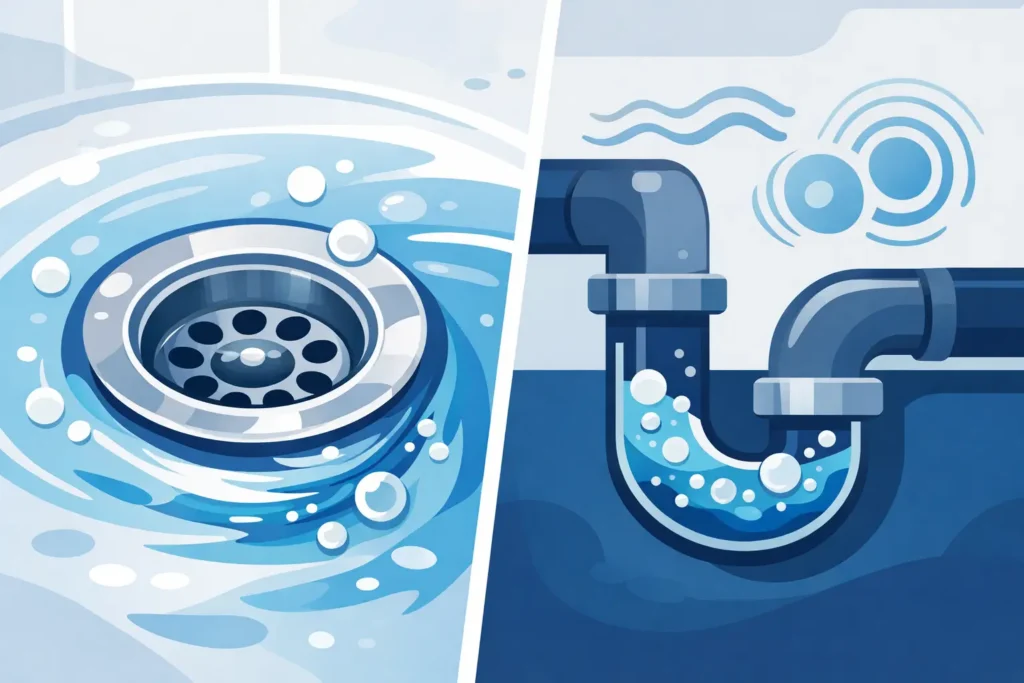
Your plumbing system needs both water flow and air flow. When water rushes down a drain, air must move behind it to keep pressure balanced. Plumbing vents, which run upward and typically exit through the roof, give that air a place to go.
When a clog, blockage, or vent issue restricts that movement, the system pulls air through the nearest available opening. You may hear bubbling in a sink, a glugging toilet, or a shower drain making noise when the washing machine empties. That sound is air fighting to get around an obstruction.
A single gurgling fixture may have a simple, nearby cause. Multiple drains making noise at once are more serious because they often share a problem farther down the drain line.
Common drain gurgling causes in Tampa Bay homes
A partial clog in one drain
Hair, soap residue, toothpaste, grease, food scraps, and paper products do not always create an instant, complete blockage. They often build up slowly, narrowing the pipe until water and air struggle to pass each other. A bathroom sink may gurgle because of a clog around the stopper or trap. A kitchen sink can make the same sound after grease and food waste collect in the branch line.
If only one sink or tub is affected and it still drains, a localized clog is likely. It still deserves attention. Partial clogs collect more debris over time, and store-bought chemical cleaners can damage older pipes, weaken fittings, and create a hazard for whoever opens the line later.
A clogged main sewer line
The main sewer line carries wastewater from every drain in your home to the municipal sewer connection or septic system. When this line is restricted, water looks for the lowest possible exit. That is why a toilet flush may make a first-floor shower drain gurgle, or why laundry water may bubble up in a bathtub.
Main line clogs are commonly caused by wipes, excessive paper products, grease, foreign objects, pipe scale, or a damaged pipe. In older Tampa Bay neighborhoods, aging piping and shifting soil can add to the problem. A camera inspection can show whether the line needs standard drain cleaning, hydro-jetting, or repair.
Tree roots in the sewer pipe
Roots naturally seek moisture. Even a small crack, loose joint, or aging connection can release enough water vapor to attract them. Once roots reach the pipe, they grow into the opening and catch toilet paper and waste. The result is a recurring blockage that often starts with slow drains and gurgling.
Root intrusion is especially common around mature landscaping and older sewer lines. Clearing the roots can restore flow, but it does not automatically fix a cracked or separated pipe. If the same problem comes back, the line should be inspected with a camera rather than repeatedly treated like an ordinary clog.
A blocked plumbing vent
A vent blockage can create gurgling even when the drain pipe itself is fairly clear. Leaves, nesting material, debris, and occasionally small animals can obstruct a roof vent. In some homes, an improperly installed or undersized vent can also cause pressure problems.
Vent work is not a casual DIY project. Getting on a roof carries obvious safety risks, and the source of the sound may still be inside the drain line. A plumber can test the system and separate a venting issue from a sewer blockage without guesswork.
Problems with the sewer line itself
Not every blockage is made of debris. Pipes can crack, sag, shift, collapse, or corrode. A bellied sewer line, for example, holds water and waste in a low section of pipe instead of allowing it to flow away. That standing material creates recurring clogs, odors, and gurgling.
Older galvanized drain piping can corrode from the inside, leaving a rough, restricted passage. Homes on slab foundations may also need a more careful diagnosis when drain issues keep returning. The right repair depends on what a camera actually finds. Clearing a damaged line may provide temporary relief, but it will not make a broken pipe whole again.
Which gurgling sounds need fast help?
Treat gurgling as urgent when it comes with signs that wastewater may back up into the house. Stop using water fixtures if you notice any of the following:
- Water rising in a shower, tub, or floor drain when a toilet is flushed
- Several sinks, tubs, or toilets draining slowly at the same time
- Sewage odors indoors or outside near the cleanout
- A toilet that bubbles, will not flush normally, or refills unpredictably
- Dirty water backing up from a drain, especially on the lowest level of the home
Do not keep flushing, run the dishwasher, or start another load of laundry to “test” the problem. More water can push a partial blockage into a full backup. If sewage is already coming up, keep people and pets away from the affected area and call for emergency plumbing service.
What you can check before calling a plumber
A homeowner can safely do a few basic checks without taking apart pipes or pouring harsh chemicals into the system. First, note which fixture makes the sound and what other fixture triggers it. If the kitchen sink gurgles only when it drains, that is different from a shower gurgling every time the toilet flushes.
Next, look for a simple obstruction at the drain opening. Remove visible hair from a tub or bathroom sink stopper. Clean food debris from a kitchen sink strainer. If you have a garbage disposal, make sure it is empty and operating normally before running water through it.
You can also use a plunger on a sink, tub, or toilet when the problem appears isolated. Use the correct plunger for the fixture, keep enough water in place to form a seal, and avoid aggressive force that could damage a weak fitting. If more than one drain is involved, skip the DIY experiments and schedule a professional diagnosis.
Why chemical drain cleaners are a bad bet
Chemical cleaners are marketed as quick fixes, but they rarely solve the drain gurgling causes that matter most. They cannot remove roots, correct a collapsed pipe, clear a blocked vent, or repair a damaged sewer line. Even against a basic clog, they may burn through a small channel while leaving most of the buildup behind.
The bigger concern is pipe damage. These products can generate heat and sit in a clogged line, which is rough on aging metal pipes, plastic components, seals, and fixtures. They also make a later service call less safe because caustic liquid may still be sitting inside the drain.
A professional drain machine or hydro-jetting system uses the right method for the actual obstruction. Hydro-jetting can be highly effective on grease, scale, and heavy buildup, but it is not automatically the best choice for every old or damaged pipe. That is why inspection comes first.
How a professional finds the real cause
A good service call should not begin with a sales pitch. It should begin with diagnosis. A plumber will ask which drains are affected, inspect accessible fixtures, and check the cleanout when appropriate. For recurring or whole-home symptoms, a sewer camera inspection can locate roots, buildup, cracks, offsets, bellies, or foreign objects.
From there, the repair should match the finding. A branch-line clog may need cable cleaning. Heavy grease or scale may call for hydro-jetting. Roots might need removal followed by a plan to repair the compromised section. A blocked vent requires a different approach entirely.
At H.I.P. Home Service & Drain, the point is simple: identify the failure, explain the quoted repair before work starts, and fix the problem without passing your home to a subcontractor or call center.
Don’t wait for the gurgle to become a backup
A gurgling drain does not always mean disaster is minutes away, but it is never a sound to ignore for weeks. Pay attention to whether the issue is isolated or spreading, avoid chemical shortcuts, and stop using water if drains begin backing up. A prompt inspection can protect your floors, your plumbing system, and your weekend from a preventable sewer mess.