A drain that slowly empties is annoying. A toilet that gurgles when the washer drains, water backing up into the tub, or sewage near a floor drain is a different problem entirely. For drain cleaning Wesley Chapel homeowners can rely on, the goal is not to make the water disappear for a day. It is to find out what is blocking the line and clear it without guessing.
A lot of plumbing companies treat every clog the same. Run a small cable, collect payment, and leave. That may work for a hair clog near a bathroom sink. It will not fix roots in a sewer line, grease buildup in a kitchen drain, or a broken pipe underground. The right fix depends on where the blockage is, what caused it, and the condition of the pipe.
Drain Cleaning Wesley Chapel: Why Clogs Keep Coming Back
Recurring clogs are a warning, not just bad luck. If the same shower, toilet, or kitchen sink keeps slowing down, there is usually material still clinging to the pipe wall or a larger issue farther down the line.
In Wesley Chapel and across Pasco County, mature landscaping can send roots toward sewer pipes looking for moisture. Roots can enter through small separations, aging joints, or cracks, then catch toilet paper and waste until the line starts backing up. Older homes may also have aging pipe materials, while newer homes can still develop trouble from construction debris, improper drain slopes, or heavy household use.
Kitchen drains have their own pattern. Cooking grease may go down warm and liquid, then cool into a sticky layer inside the pipe. Food scraps, coffee grounds, rice, and soap residue build on top of it. A garbage disposal helps break up some waste, but it does not make grease or fibrous foods safe for the drain.
Hard water is another local factor. Mineral scale narrows pipes over time, especially around fixtures and frequently used drain lines. Add soap residue, hair, and toothpaste, and a bathroom drain can go from slow to stopped without much warning.
Know the Difference Between a Small Clog and a Main-Line Problem
One clogged sink is usually a local drain issue. Multiple fixtures acting up at once often points to a blockage in the main sewer line. That distinction matters because plunging the nearest toilet will not clear a problem 40 feet away in a buried pipe.
Call for professional help promptly if you notice several drains slowing at the same time, toilets bubbling when another fixture drains, sewage odors indoors or outside, water coming up through a tub or shower drain, or a cleanout outside holding standing water. These are common signs that wastewater cannot move through the main line as it should.
Do not keep running water to test the problem. A dishwasher cycle, laundry load, or long shower can turn a manageable blockage into an indoor backup. Stop water use where possible and get the line checked before wastewater finds the lowest open drain in the house.
Why Store-Bought Drain Chemicals Often Make Things Worse
Liquid drain cleaners promise an easy fix, but they are a poor answer for many residential clogs. They may burn through a small amount of organic material near the opening, yet leave the bulk of the blockage behind. If the problem is roots, grease farther down the pipe, a collapsed line, or a foreign object, chemicals do nothing useful.
They also create a safety issue. Caustic products can sit in a blocked pipe, splash when a trap is removed, and expose anyone working on the line to chemical burns. Repeated use can be hard on certain plumbing materials and seals. If a drain is fully stopped, skip the bottle and avoid mixing products. Different chemicals can react badly when combined.
A plunger can still be useful for a simple toilet clog, provided there is no sign of a main-line backup. For a sink or tub, removing visible hair from a stopper may help. Beyond that, forceful DIY tools can damage porcelain, scratch fixtures, or push a clog deeper into the system.
The Right Tool Depends on What the Camera Finds
Good drain cleaning starts with diagnosis. A professional cable machine, often called a drain snake, can break apart or retrieve many common obstructions. It is a practical option for hair, paper, small objects, and localized clogs. But cabling is not always the final answer. It can punch a hole through grease or roots while leaving buildup along the pipe wall, which is why the clog may return.
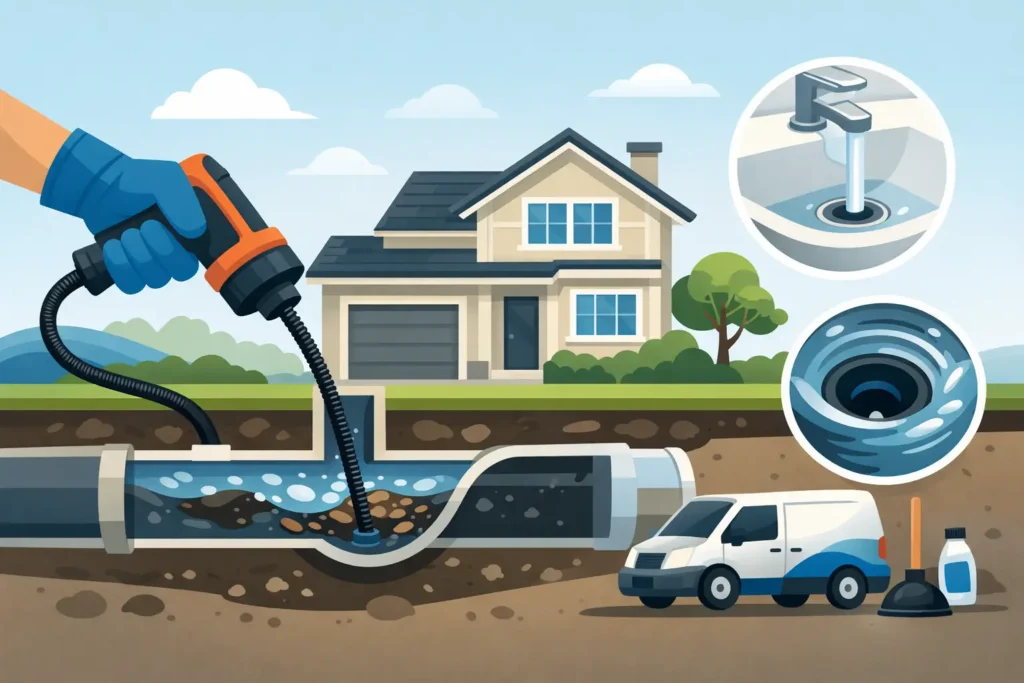
A camera inspection removes the guesswork. A small waterproof camera travels through the line and shows the technician what is actually there. It can reveal root intrusion, grease, scale, shifted joints, cracked pipe, bellies where waste collects, and the location of a blockage. That information prevents a homeowner from paying for the wrong service.
Hydro-jetting uses controlled high-pressure water to scour the inside of suitable pipes. It is especially effective for grease, sludge, mineral buildup, and recurring root growth. The trade-off is that hydro-jetting is not appropriate for every line. If a camera shows a severely damaged, collapsed, or fragile pipe, putting high pressure through it may not be the smart move. The pipe condition comes first.
That is why a real recommendation should include an explanation. You should hear what was found, what method is being proposed, and what the quoted price covers before work begins. No vague diagnosis. No long sales pitch after the technician is already in your driveway.
Preventing the Next Drain Clog
No home is completely immune to drain trouble, but a few habits reduce the chances of an emergency. Keep grease, oil, and fat out of the kitchen sink. Let them cool in a container and throw them away instead. Use a sink strainer for food scraps and a hair catcher in showers, then empty them regularly.
Only toilet paper and human waste belong in a toilet. Products labeled “flushable” can still catch on roots, rough pipe interiors, or partial blockages. Wipes, paper towels, feminine products, cotton swabs, and dental floss are frequent causes of expensive backups.
For homes with a history of roots or repeat main-line clogs, planned maintenance can cost less than waiting for a weekend sewer backup. The right schedule depends on the pipe material, surrounding trees, household size, and previous camera findings. A line that has stayed clear for years does not need aggressive treatment just because a neighbor had a problem. A line with known roots deserves more attention.
What Straight Answers Should Sound Like
When your drains are backing up, you should not have to chase down a call center, wait through a vague arrival window, or agree to work without a clear price. Look for a licensed and insured residential plumber that uses its own technicians, explains the diagnosis in plain language, and gives you an upfront quote.
At H.I.P. Home Service & Drain, the approach is simple: assess the line, explain what the equipment shows, quote the work before it starts, and clear the drain with the method that fits the problem. Stocked trucks, camera inspections, cable equipment, and hydro-jetting capability mean fewer reasons to delay a real answer.
A slow drain rarely picks a convenient time to become a backup. If water is rising, fixtures are gurgling, or the same clog keeps returning, treat it as a plumbing problem worth solving properly. A clean line is good. Knowing why it clogged is what helps keep your home dry, sanitary, and calm.