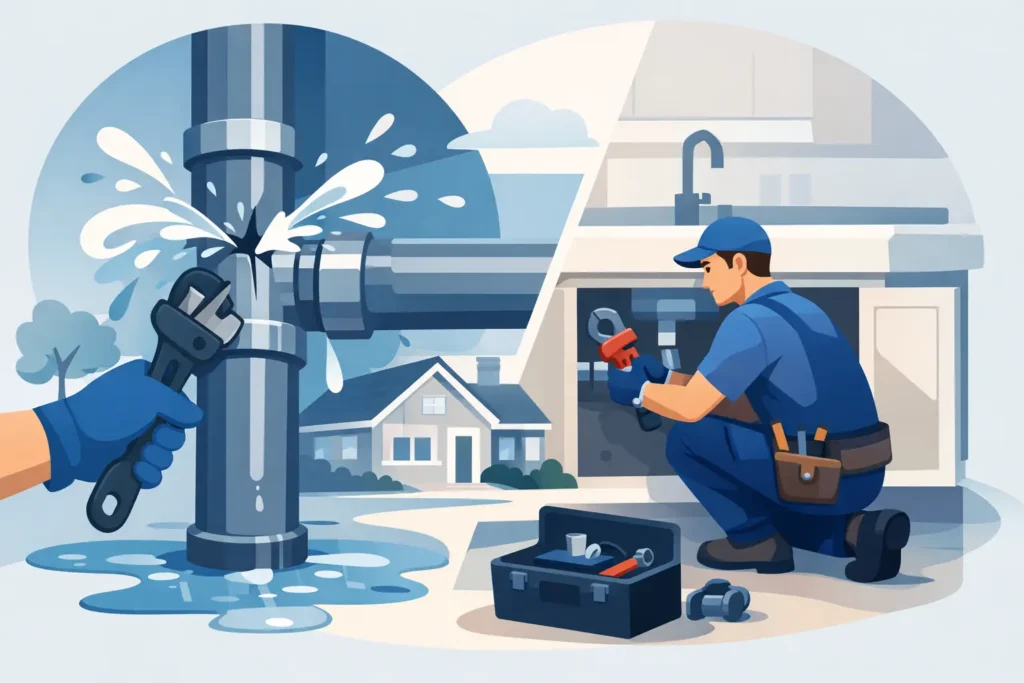
A burst pipe does not wait for a convenient time. It can soak drywall, flood cabinets, ruin flooring, and keep your water meter spinning long after the first panic sets in. When you need burst pipe repair Wesley Chapel homeowners can depend on, the first goal is simple: stop the water, limit the damage, and get the right repair underway without guesswork.
A small split in a pipe can release a surprising amount of water in minutes. The good news is that fast action can make a major difference in what needs to be repaired afterward.
What to Do When a Pipe Bursts
Start by shutting off the main water supply to the house. Most homes have a main shutoff near the water meter, on an exterior wall, in the garage, or where the service line enters the home. If you do not know where yours is, now is the time to find it. Turn the valve clockwise until it stops, or move a lever-style valve a quarter turn so it is perpendicular to the pipe.
Next, open a cold-water faucet at the lowest point in the home, such as a laundry sink or outdoor spigot, if it is safe to do so. This helps relieve pressure and drain standing water from the lines. Keep everyone away from wet areas near outlets, electrical panels, appliances, or extension cords. If water is close to electricity, do not step into it. Call for professional help.
Then move what you can. Towels, buckets, bins, furniture, and valuables should be moved out of the water’s path. Take a few photos of the damage for your records once the immediate danger is under control. Do not cut into walls, remove cabinets, or start tearing out flooring just to find the leak. That can create more damage and make the repair harder to assess.
Finally, call a local residential plumber who can respond with the tools and parts needed to isolate the problem and make a lasting repair. A clamp or tape may slow a drip in a pinch, but it is not a real answer for a ruptured line.
Why Pipes Burst in Wesley Chapel Homes
Florida does not see the deep, sustained freezes that burst pipes in northern states, but burst lines still happen here. In Wesley Chapel and across Pasco County, the usual causes are pressure, corrosion, failing materials, poor connections, and hidden leaks that have been weakening a pipe for a long time.
Older homes may still have galvanized piping or aging copper lines. Galvanized pipe corrodes from the inside, shrinking the water path and weakening the pipe wall. Copper can develop pinhole leaks, especially where water chemistry and years of use have taken their toll. A pinhole leak may start as a tiny wet spot, then give way once pressure builds.
Newer homes are not immune. A bad fitting, poorly supported line, failed shutoff valve, damage from a previous renovation, or a manufacturing defect can cause an unexpected rupture. Pipes in attics, garages, exterior walls, and under sinks are often the first places homeowners notice trouble because water has somewhere visible to go.
High water pressure is another problem worth checking. Pressure that stays too high puts stress on supply lines, fixtures, appliance hoses, and water heaters every day. The burst pipe may be the obvious failure, but the underlying pressure issue can be what caused it. A good repair should look beyond the wet spot when the evidence points to a bigger problem.
What Professional Burst Pipe Repair Should Include
A proper repair starts with finding the full extent of the failure, not just patching the first visible crack. Water can travel along framing, behind drywall, beneath cabinets, and across slab edges. The place where it appears is not always the place where the pipe broke.
A qualified plumber will shut down or isolate the affected line, inspect accessible piping, and identify the pipe material and cause of failure. Depending on the location, that may involve visual inspection, pressure testing, camera equipment, or acoustic and thermal leak detection. The right method depends on whether the line is exposed, inside a wall, under a slab, or connected to an appliance.
From there, the repair may be a targeted section replacement, a new valve or fitting, rerouting an accessible line, or a larger repiping recommendation. Those are not all the same job, and they should not be sold as if they are.
If one old galvanized section has failed but the surrounding system is in good shape, a focused repair may be the sensible choice. If there are repeated pinhole leaks, widespread corrosion, low water pressure, or multiple past repairs, continuing to patch the system can cost more over time than replacing the failing lines. It depends on the pipe material, the home’s age, where leaks have occurred, and what the inspection shows.
The price should be explained before work begins. You deserve a clear scope of work, not a vague arrival fee followed by a long upsell presentation. At H.I.P. Home Service & Drain, the team provides upfront pricing, uses in-house technicians, and handles residential plumbing without routing homeowners through a call center or subcontractor chain.
Burst Pipe Repair in Wesley Chapel Is Not a Job to Delay
Water damage does not need hours to become expensive. Drywall absorbs moisture quickly. Baseboards swell, cabinets delaminate, and flooring can trap moisture below the surface. Even after the water stops, damp materials can create conditions for mold growth if they are not dried properly.
That is why a same-day response matters. A stocked service truck can make the difference between repairing a broken section on the first visit and waiting with the water off while someone tracks down a basic fitting. For an active leak, speed is part of the repair.
Be careful with any company that promises a low price without asking where the leak is, what material is involved, or whether water is still running. No honest plumber can diagnose a burst pipe sight unseen. A straightforward provider will ask practical questions, explain the next step, and give you a real price once the problem has been assessed.
Signs You May Have a Failing Pipe Before It Bursts
Not every burst pipe comes without warning. A sudden jump in your water bill, a water meter that moves when every fixture is off, damp drywall, peeling paint, musty odors, or recurring wet spots can point to a hidden leak. Rust-colored water, reduced pressure, and frequent small leaks can also signal deteriorating pipe.
Pay close attention to repeat failures. One repair in an older home may be isolated. Two or three leaks in different places are often a pattern. The smartest next step may be leak detection and a full condition assessment rather than another emergency patch.
Homeowners should also check washing machine hoses, refrigerator supply lines, water heater connections, and under-sink shutoff valves periodically. These are common weak points because they are easy to ignore until they fail. Replacing a worn hose or corroded valve on your schedule is far better than discovering it after a weekend flood.
After the Pipe Is Fixed, Protect the Rest of the Home
Once the plumbing repair is complete, make sure wet materials are dried thoroughly. Fans and dehumidifiers can help with minor surface moisture, but substantial flooding may require a water-damage restoration professional. Keep receipts, photos, and the plumbing invoice if you plan to speak with your insurance carrier.
Ask whether the failed section suggests a larger concern. Was the line corroded? Was pressure too high? Did a failed valve or appliance connection contribute? A clear answer helps you decide whether to monitor the system, schedule preventive work, or plan for repiping before the next weak spot fails.
A burst pipe is stressful, but you do not have to make every decision in the first five minutes. Shut off the water, keep your family safe, and get a capable local plumber involved. The right repair protects more than one pipe – it gives you a clear picture of what your home needs next.